
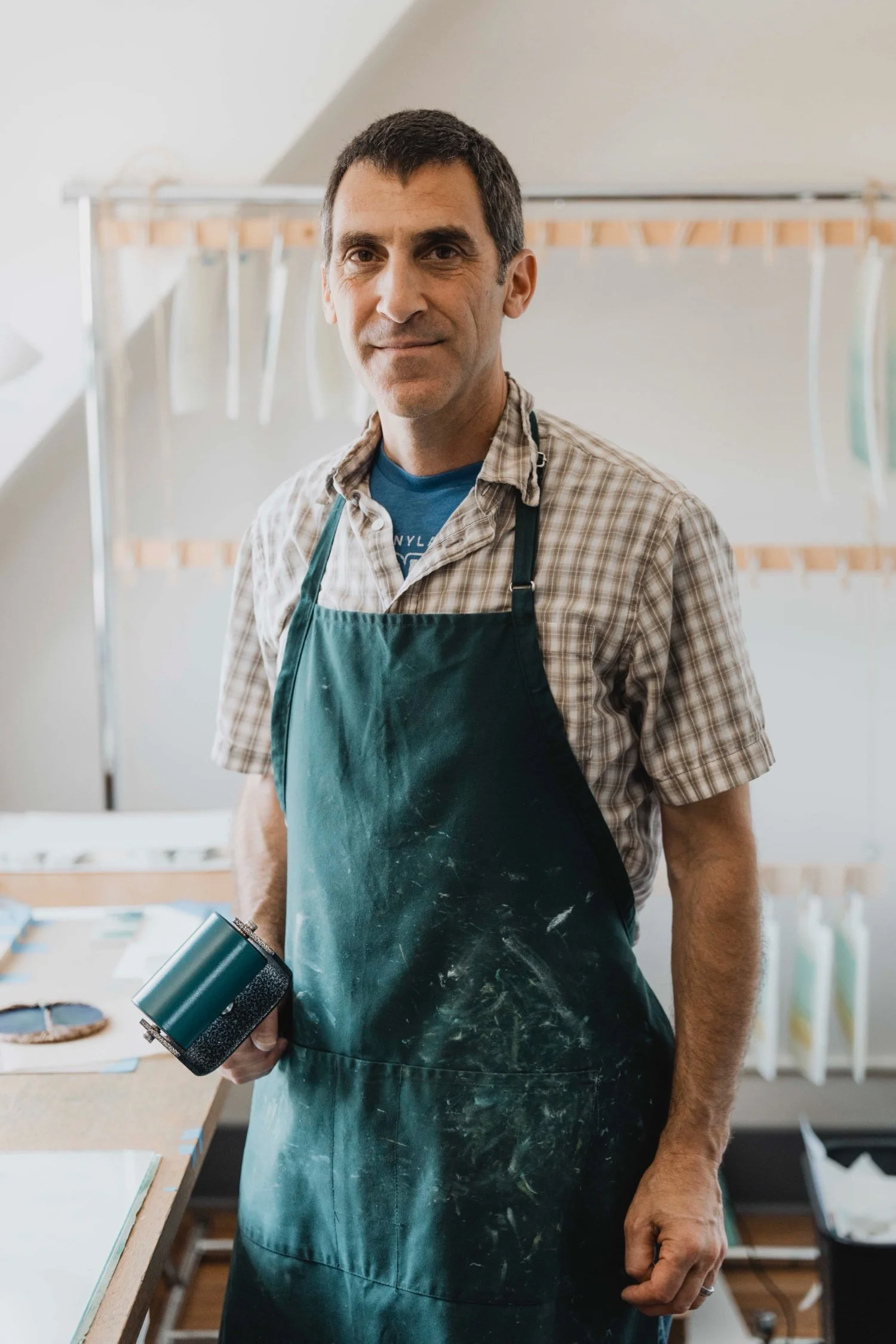
Dan Filler makes beautifully minimal prints at fillerfog design. I jumped over to his studio space to watch some of his process and chat about how nature inspires his work and transitioning from teaching to working full time as an artist.
Tell me who you are and what do you do.
I'm Dan Filler. I'm a woodcut print maker and my subjects are mostly landscapes.
How long have you been a professional artist?
Full time, it’s been three years. It goes by the school year, so it's my third school year, professionally. Not feeding myself yet by any stretch, so luckily, I have a very supportive husband. I did a lot of printmaking when I was younger, and I was an art major in college, and printmaking was my focus, really etching, I did a lot of etching in college. And then taught for two and a half decades, and, at times, I did a lot of printmaking with my students over the years. I was an elementary school teacher for most of it. But didn't really jump back into printmaking, my own printmaking, until three years ago.
What brought about that change?
I never stopped enjoying it. I always wanted to see what I could do as an artist, as a printmaker. You know, “Can make art people who are not related to me wanted?” That kind of thing. Yeah, so there was that was always there. “Just what could I do?” And also I was done teaching. And before I finished fully teaching, I reduced my days, I could start to focus more on my art, too. So, it's kind of a slow transition.
What does your specific style look like?
So I love print making because there's an element of surprise and discovery in it. It's a very, it's a very process oriented art. You have to plan everything out before you start for what I do. But even with that, until you pull the print for the first time, you never really know what it’s gonna look like. And sometimes, you’re like, “oh, shit.” But, when it works, it's just this crazy thrill. I love that part of it, that discovery aspect of printmaking. And I work with wood, rather than linoleum, because I just think the wood grain is so crazy beautiful.
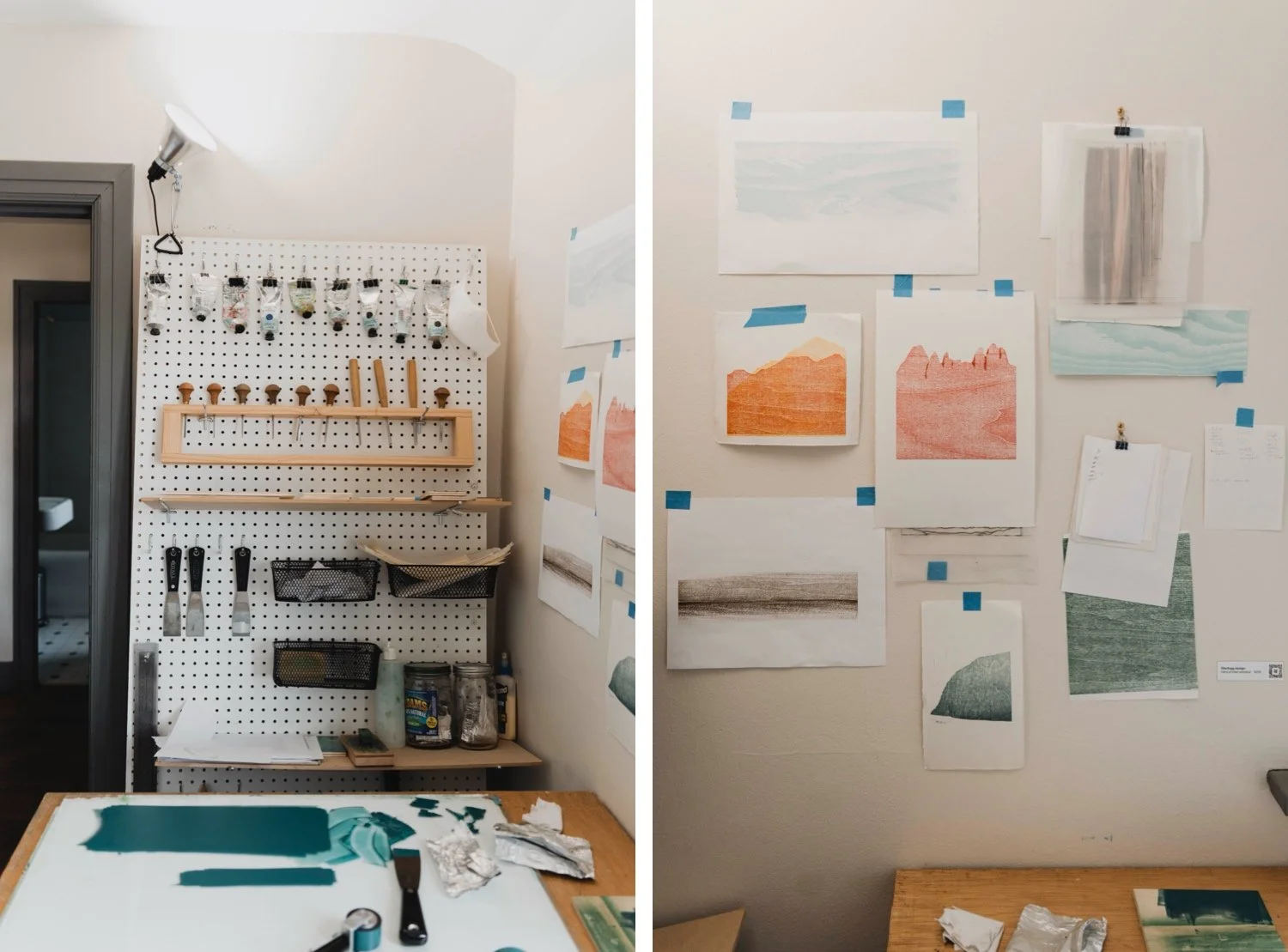
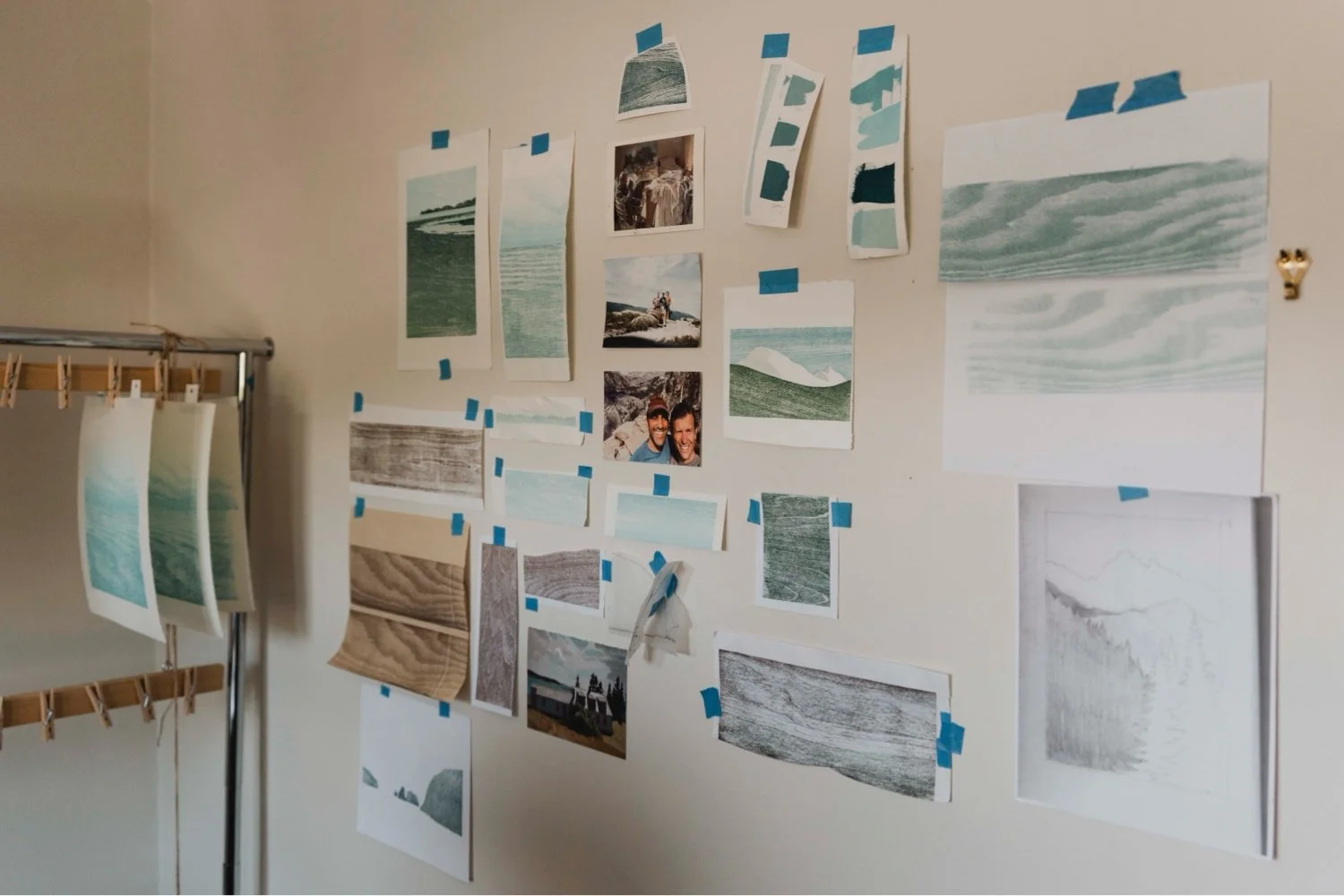
I use it with grain patterns to create my skies, the patterns of the ocean waves, to bring out the geology of a mountain, or just the contours of a hillside. It brings a beauty to the print that I don't feel like create by myself. Some printmakers are extremely good at using their own marks and their carving skills to create the impression of the, you know, the clouds and the texture of the ocean. But for me, I feel like the wood does it better. And it's also too beautiful to hide! Like, I really want to work with it and kind of bring my ideas and the wood grain together. So it's definitely more than the sum of its parts.
That's cool. In any art I’ve done, like photography, I've always been really intimidated by like just a completely blank canvas. So in a sense it's like a collaboration between you and the wood.
Yeah, because it’s not quite as blank that way. And it's funny, so the comment I get most often, like, every third person at an art festival is, like, “your work is so calming.” And I think part of that is the wood, the presence of the wood grain. I don't know if that registers with people, like, why they feel that way, but more and more, I think, that adds to it. Just that natural element in the prints, I think we respond to that.
Walk me through the process of a print from concept to finish.
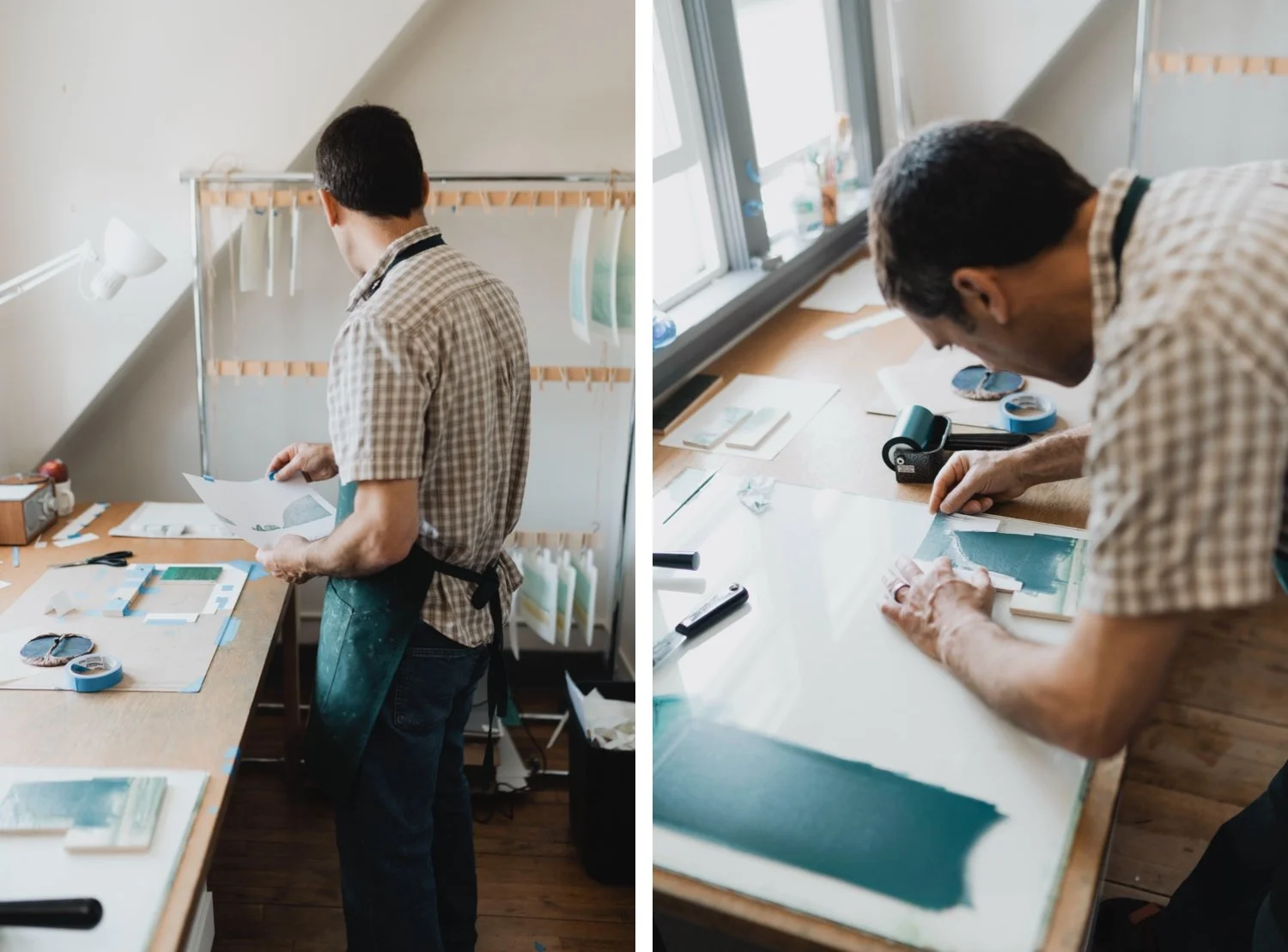
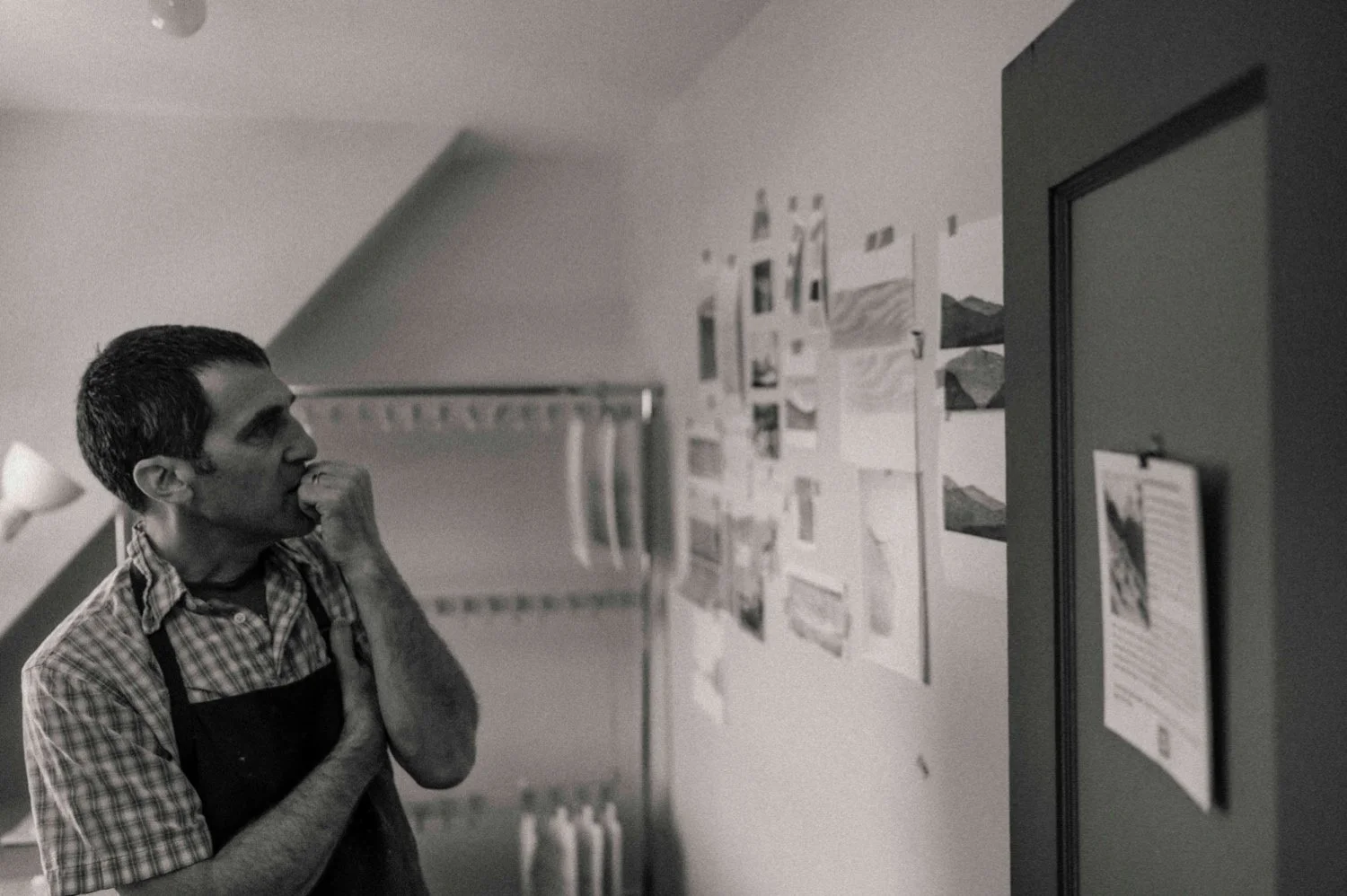
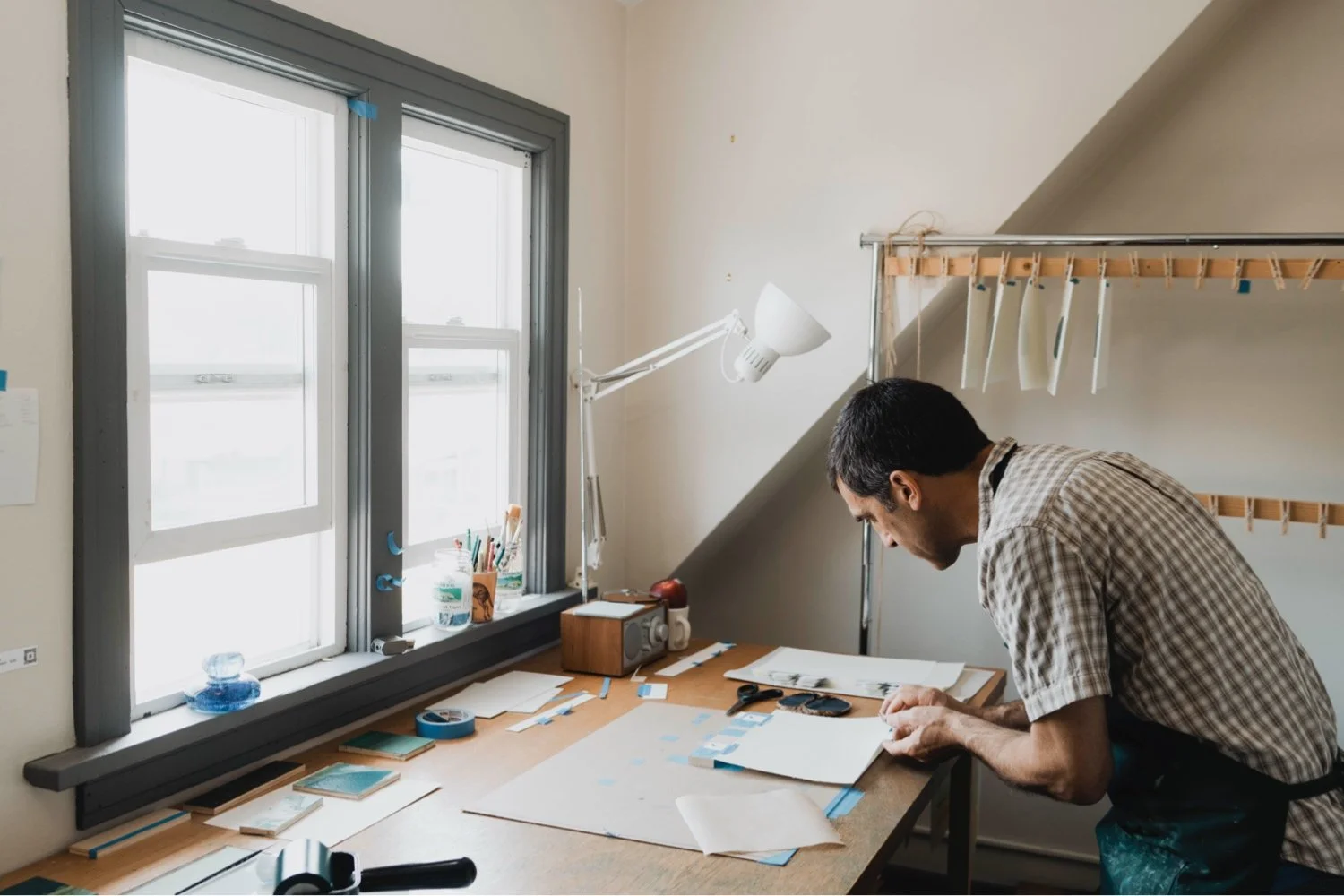
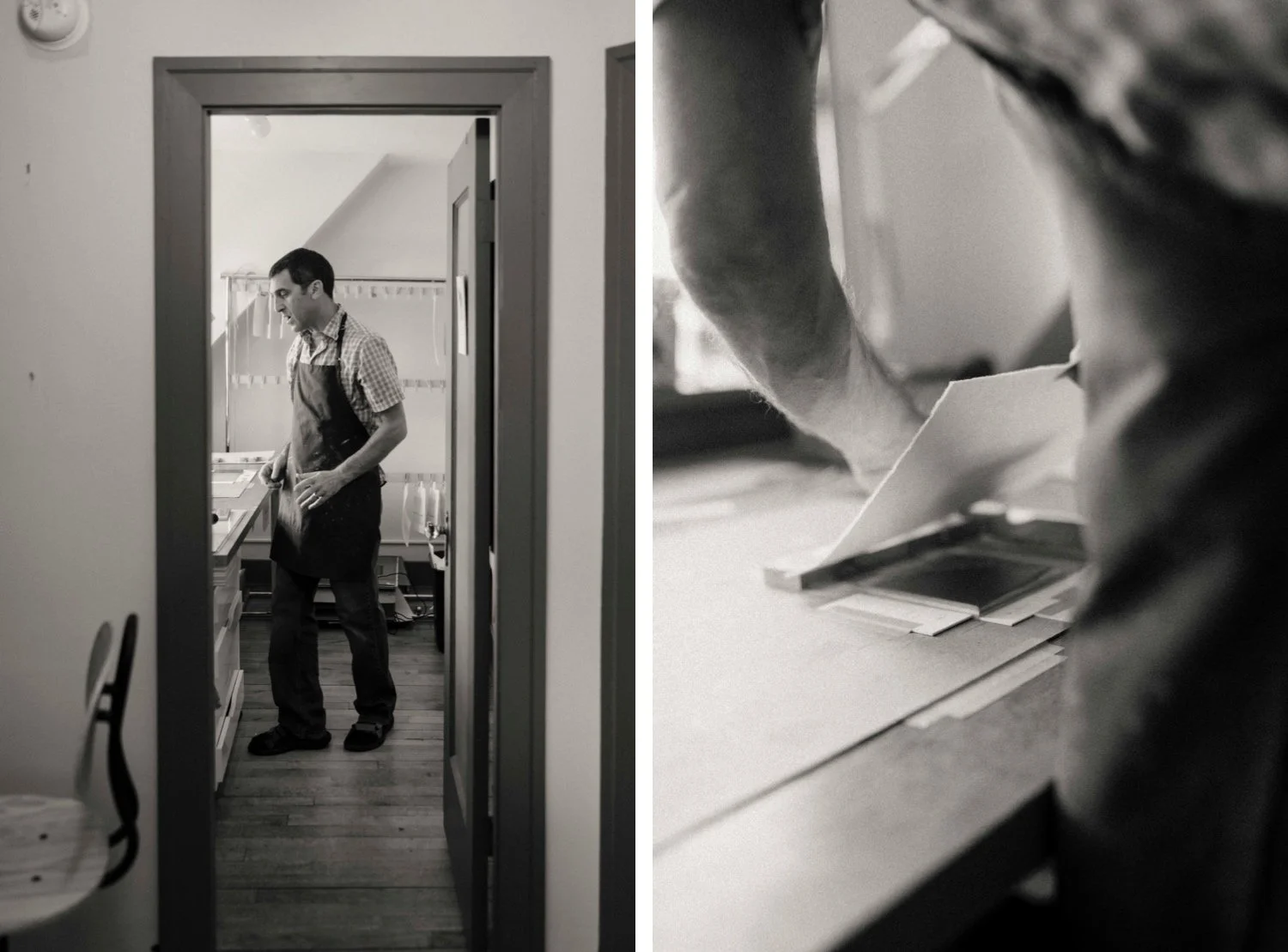
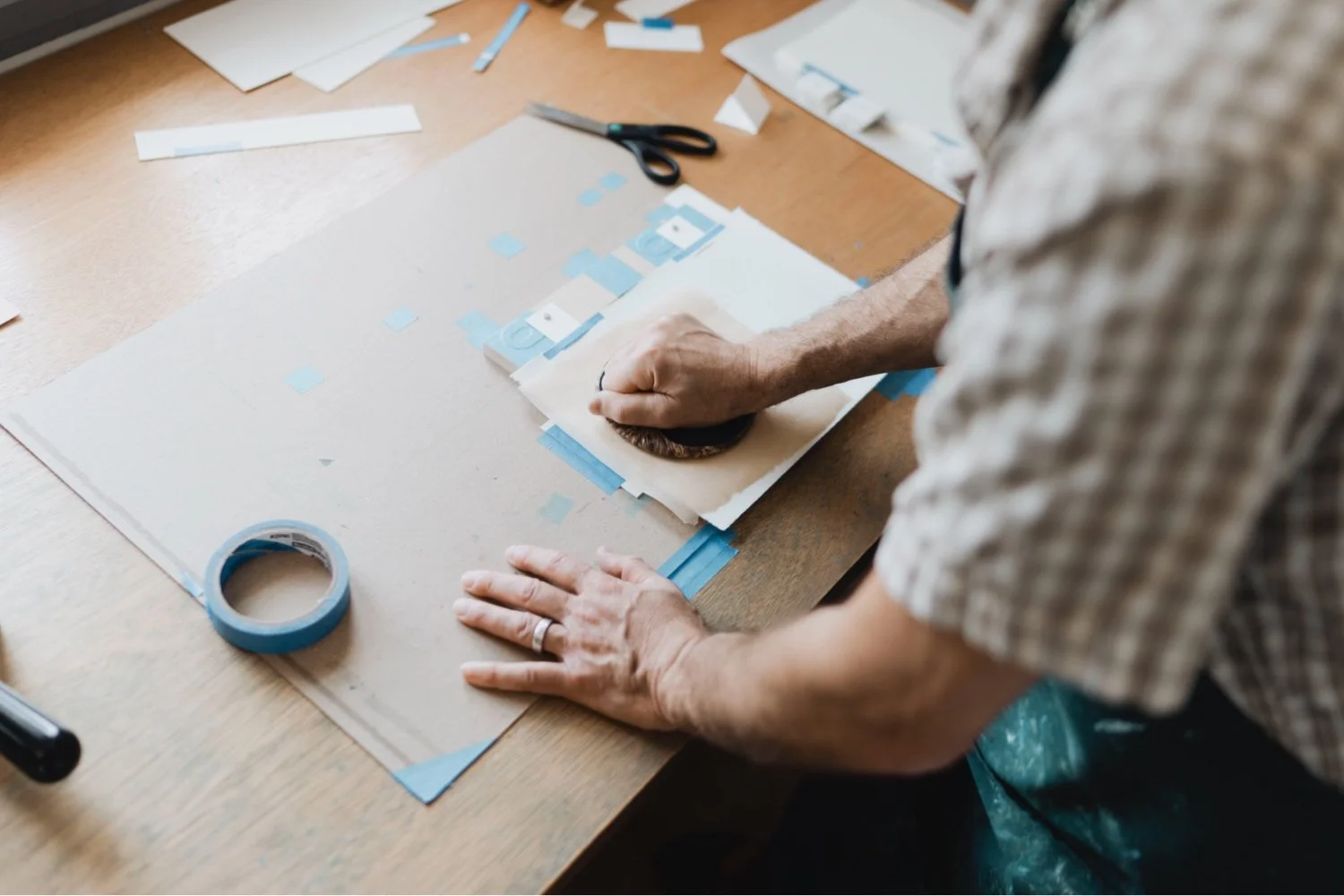
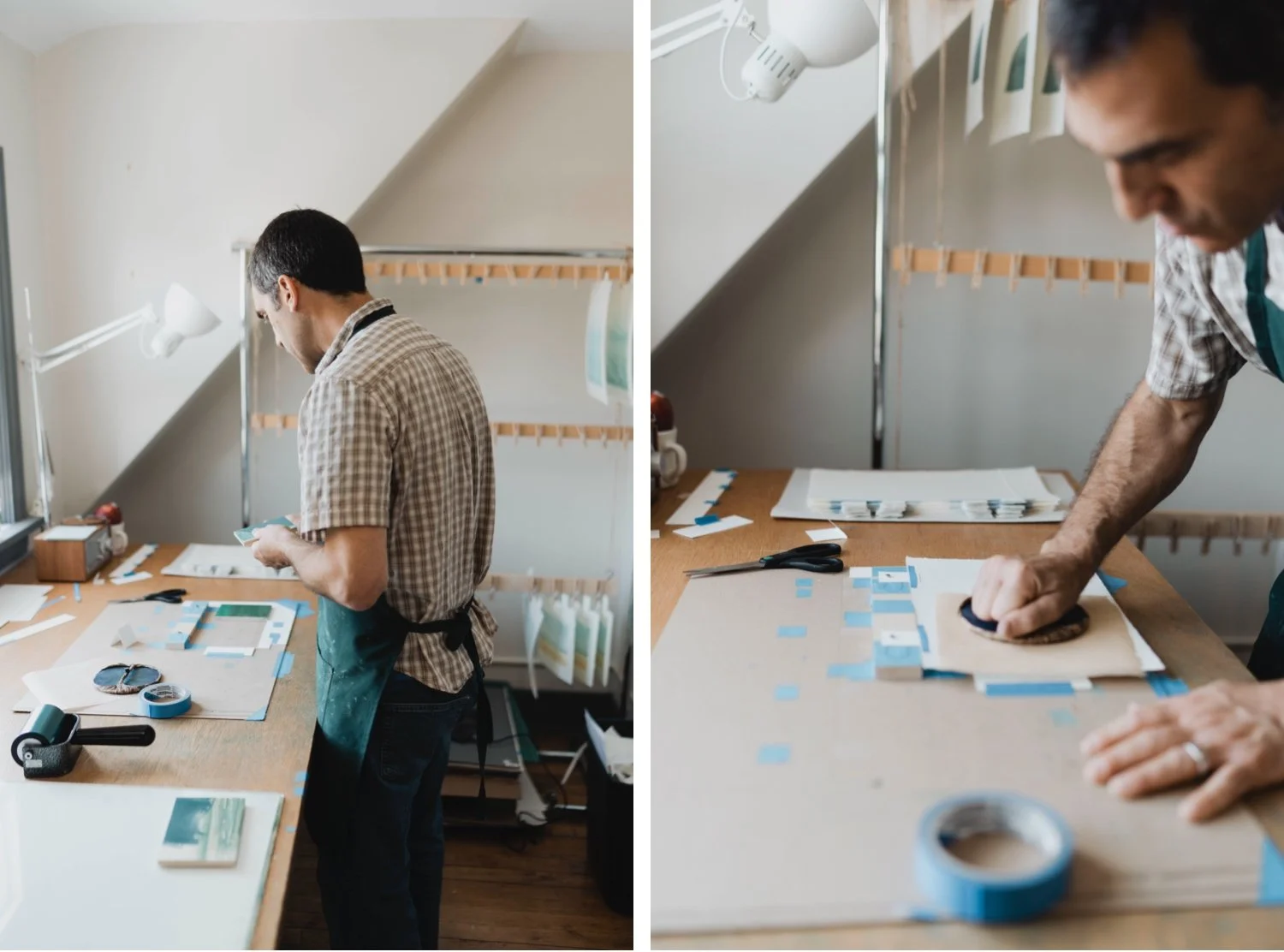
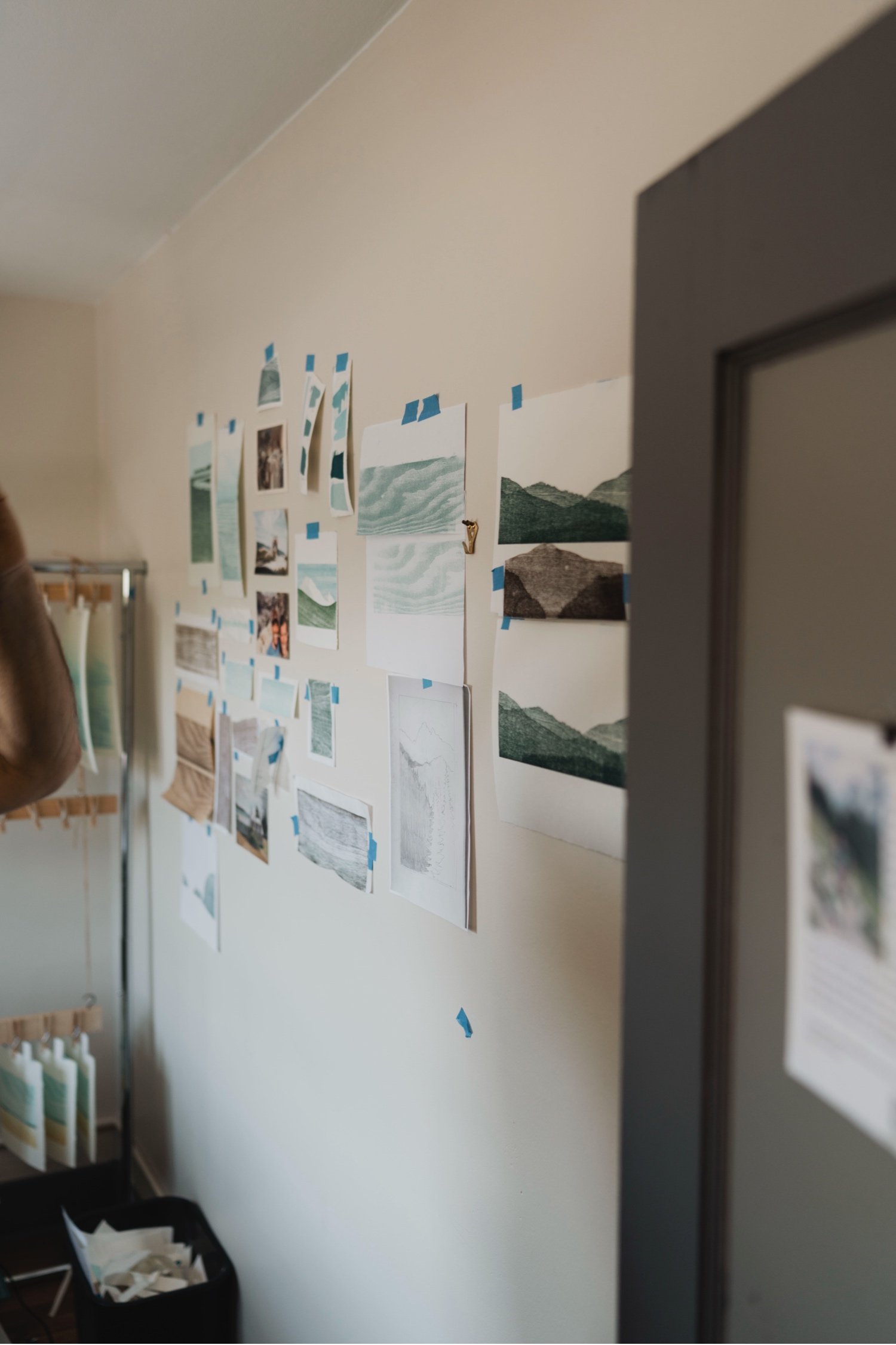
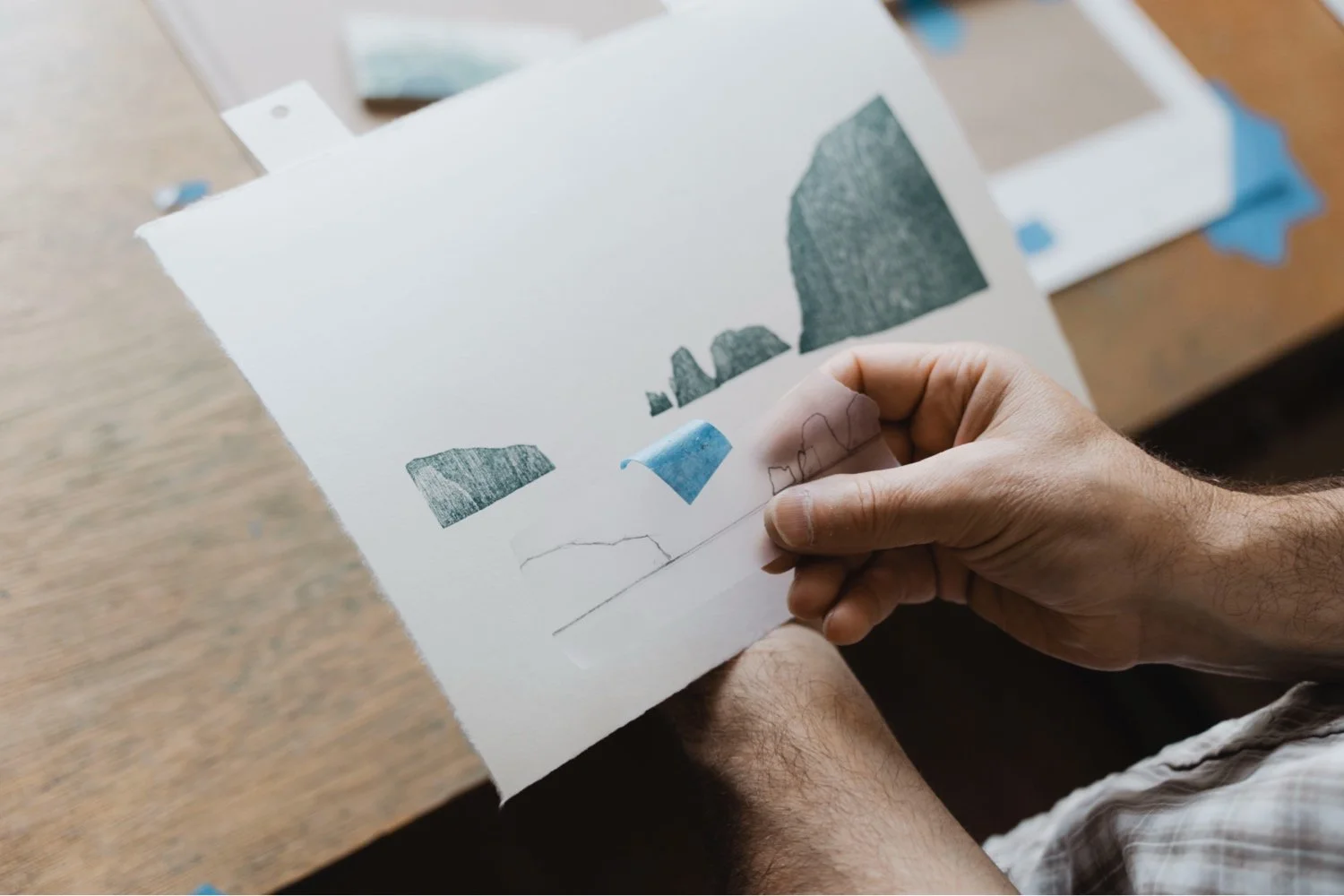
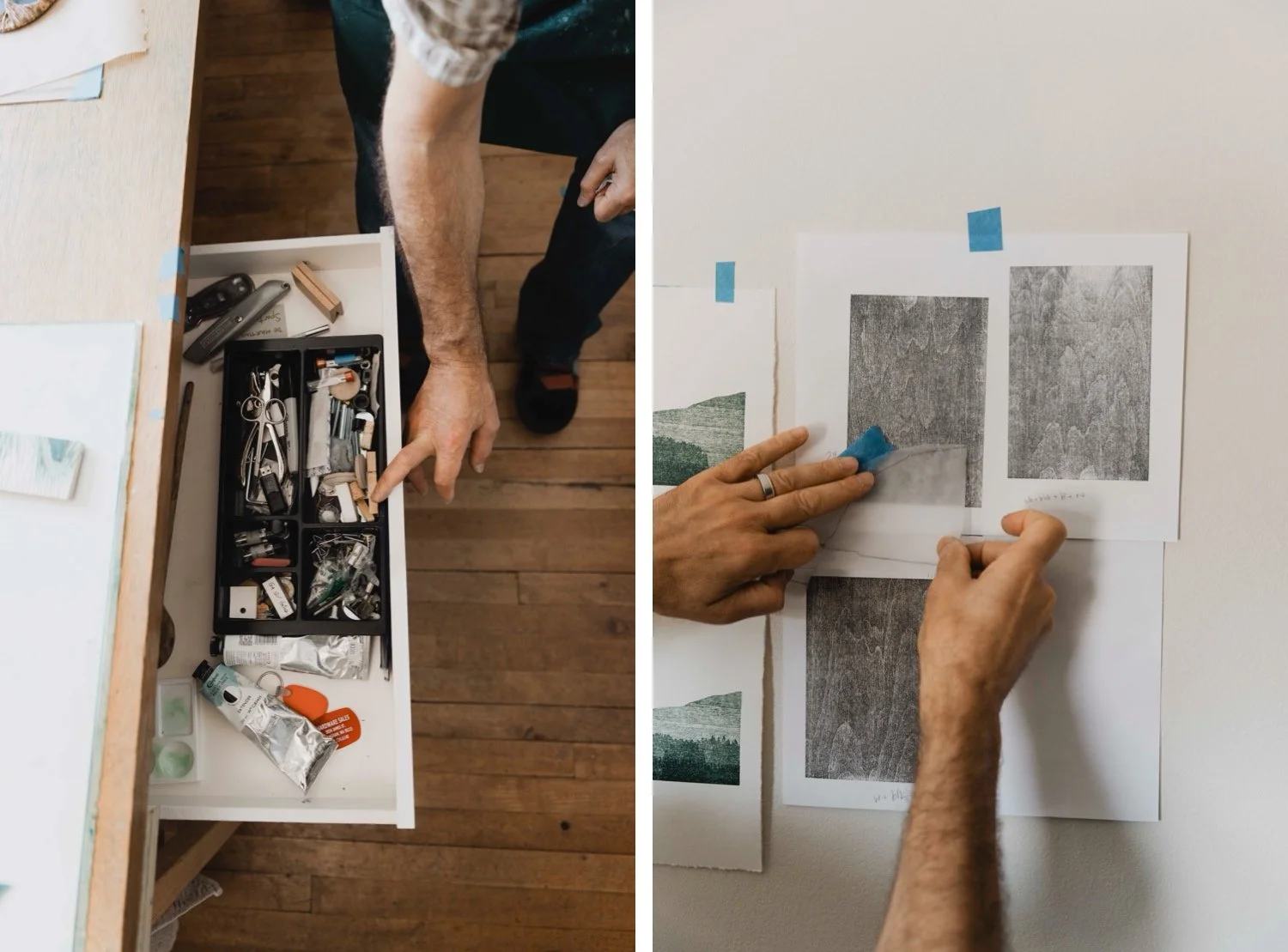
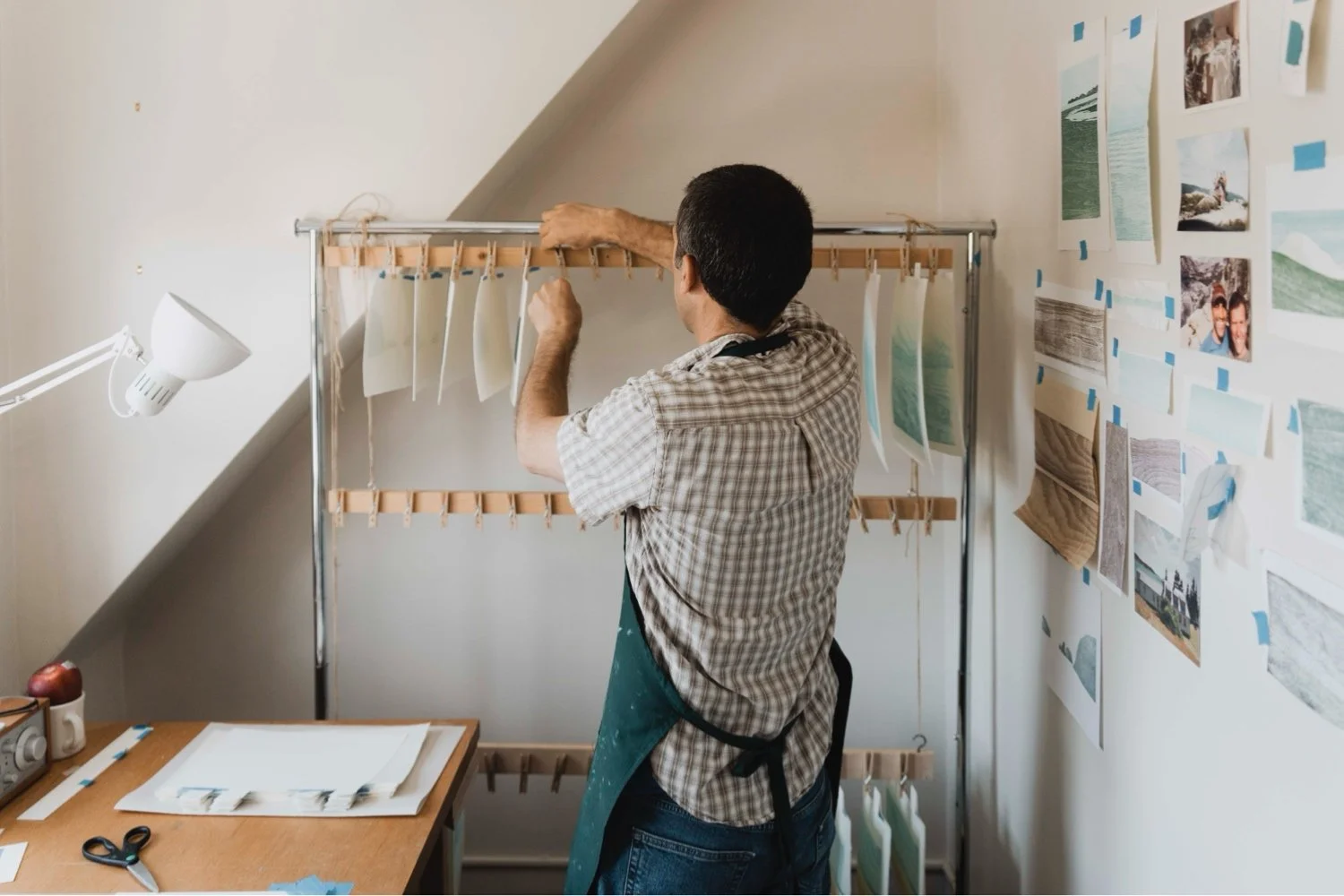
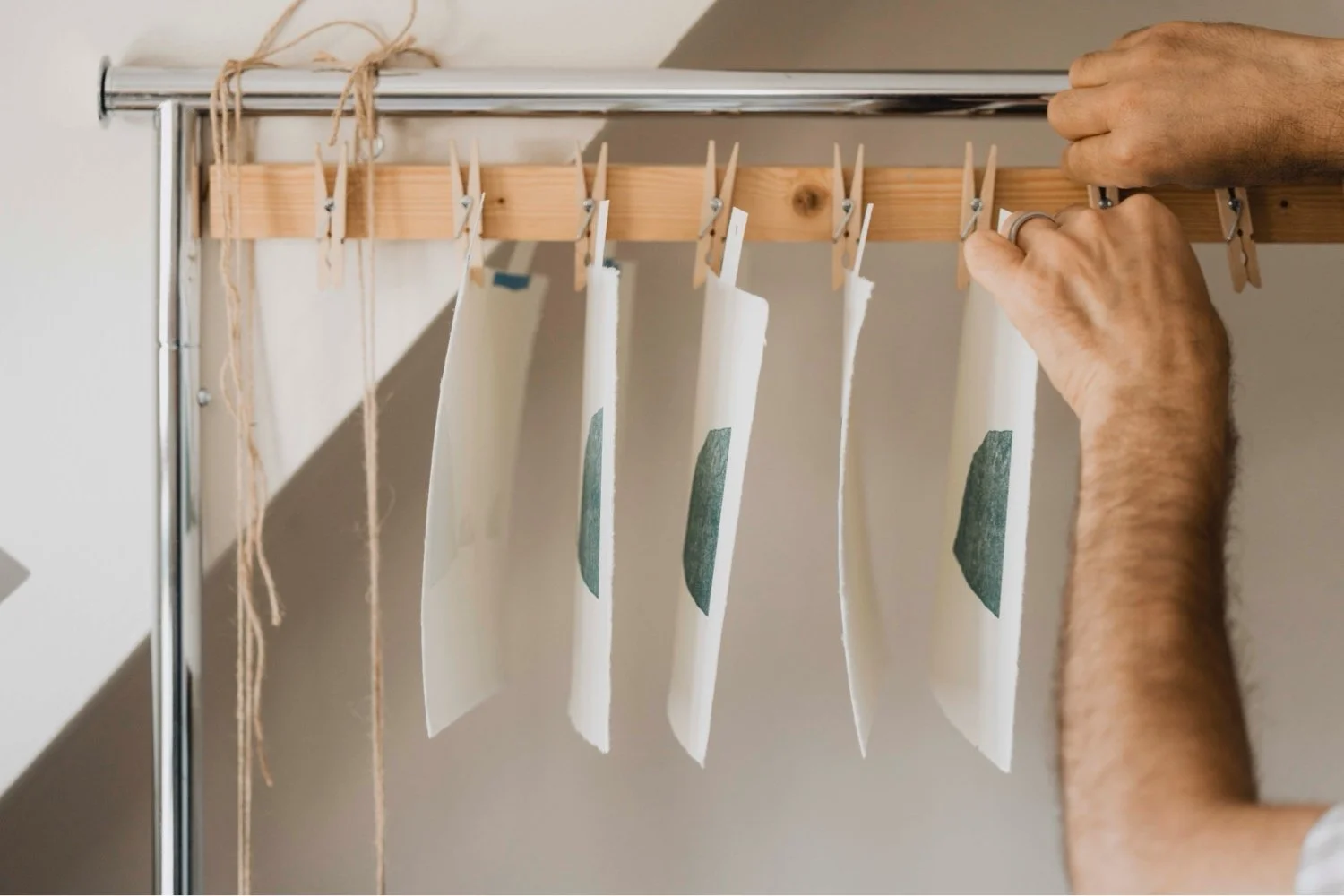
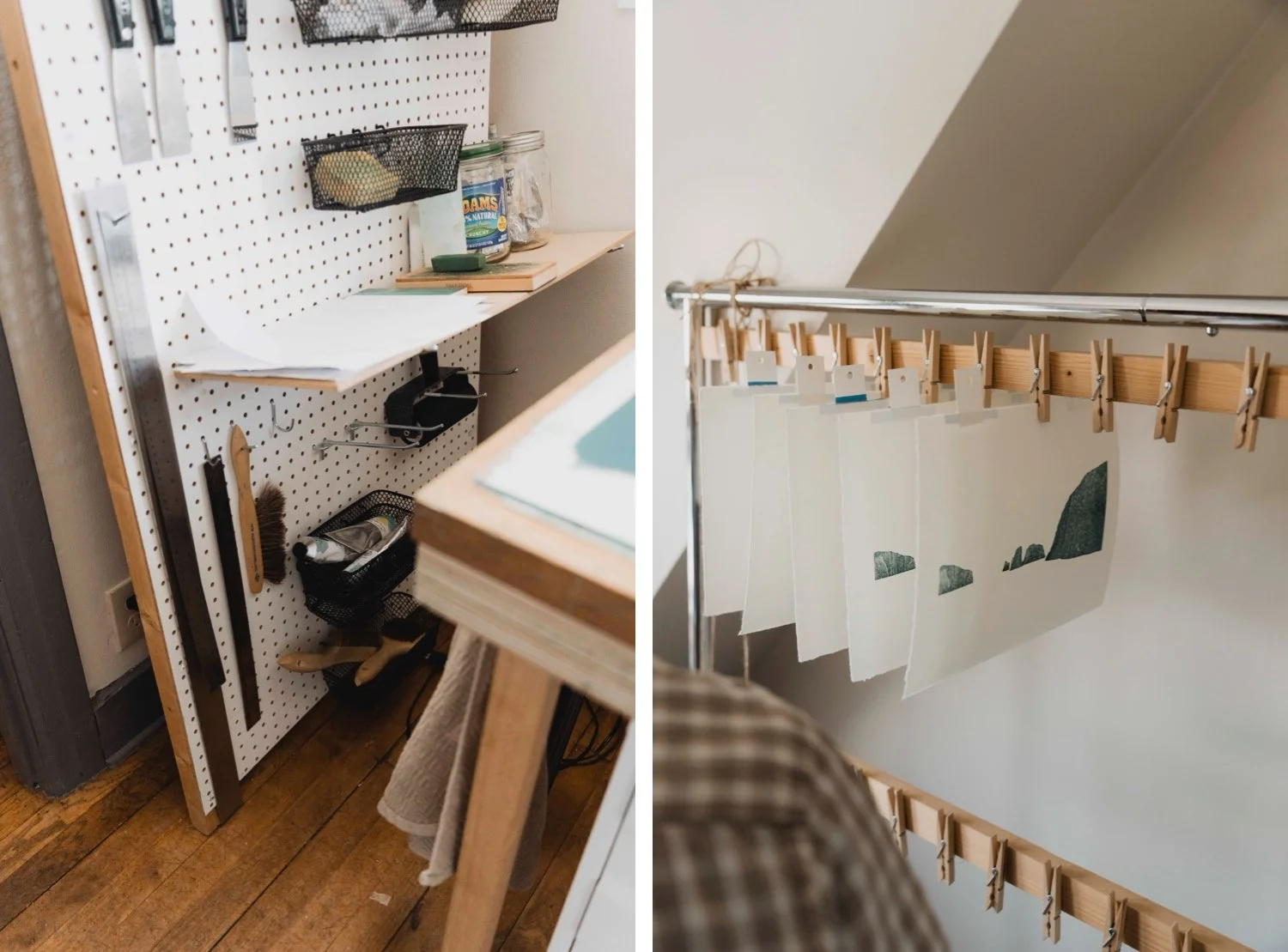
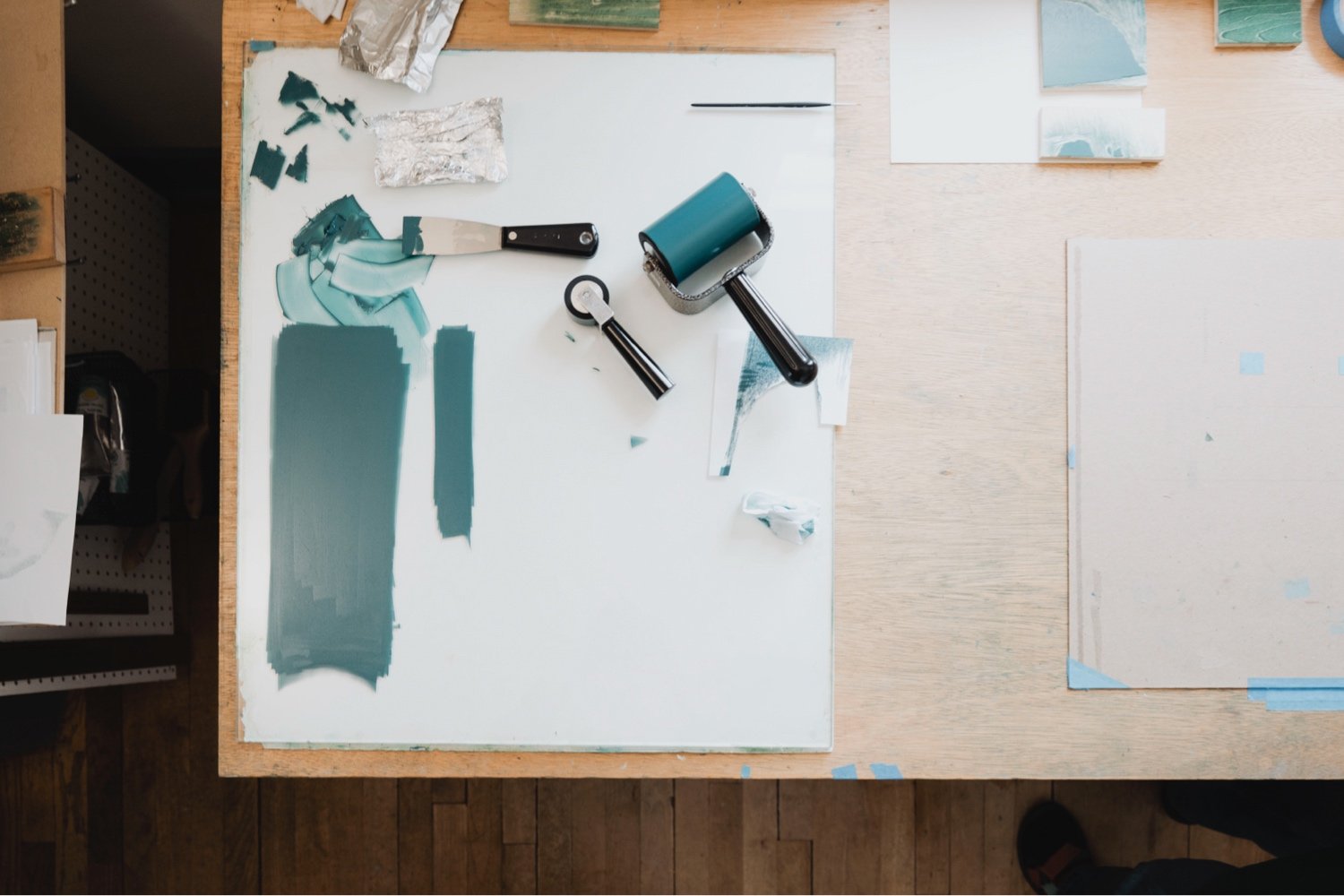
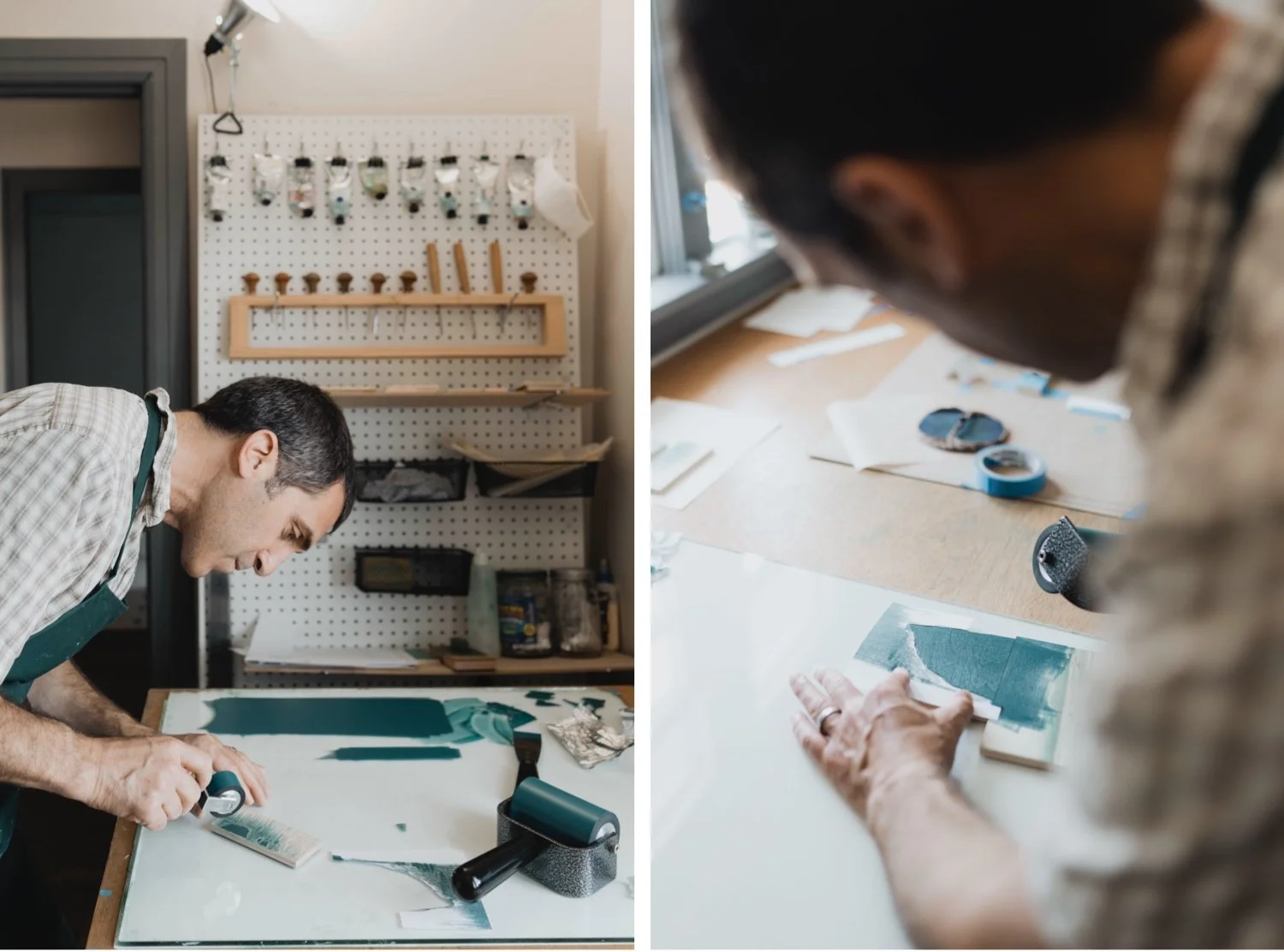
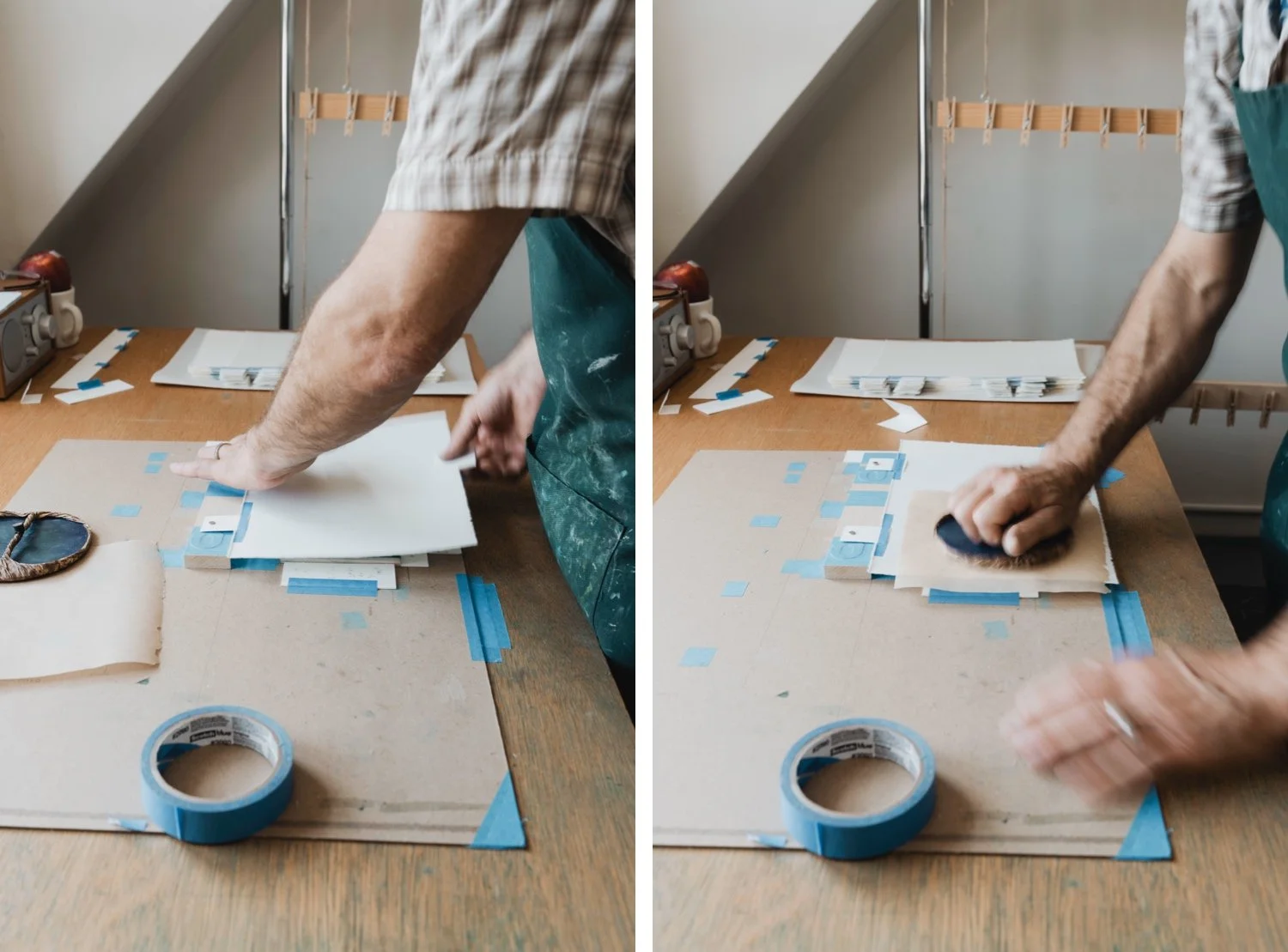
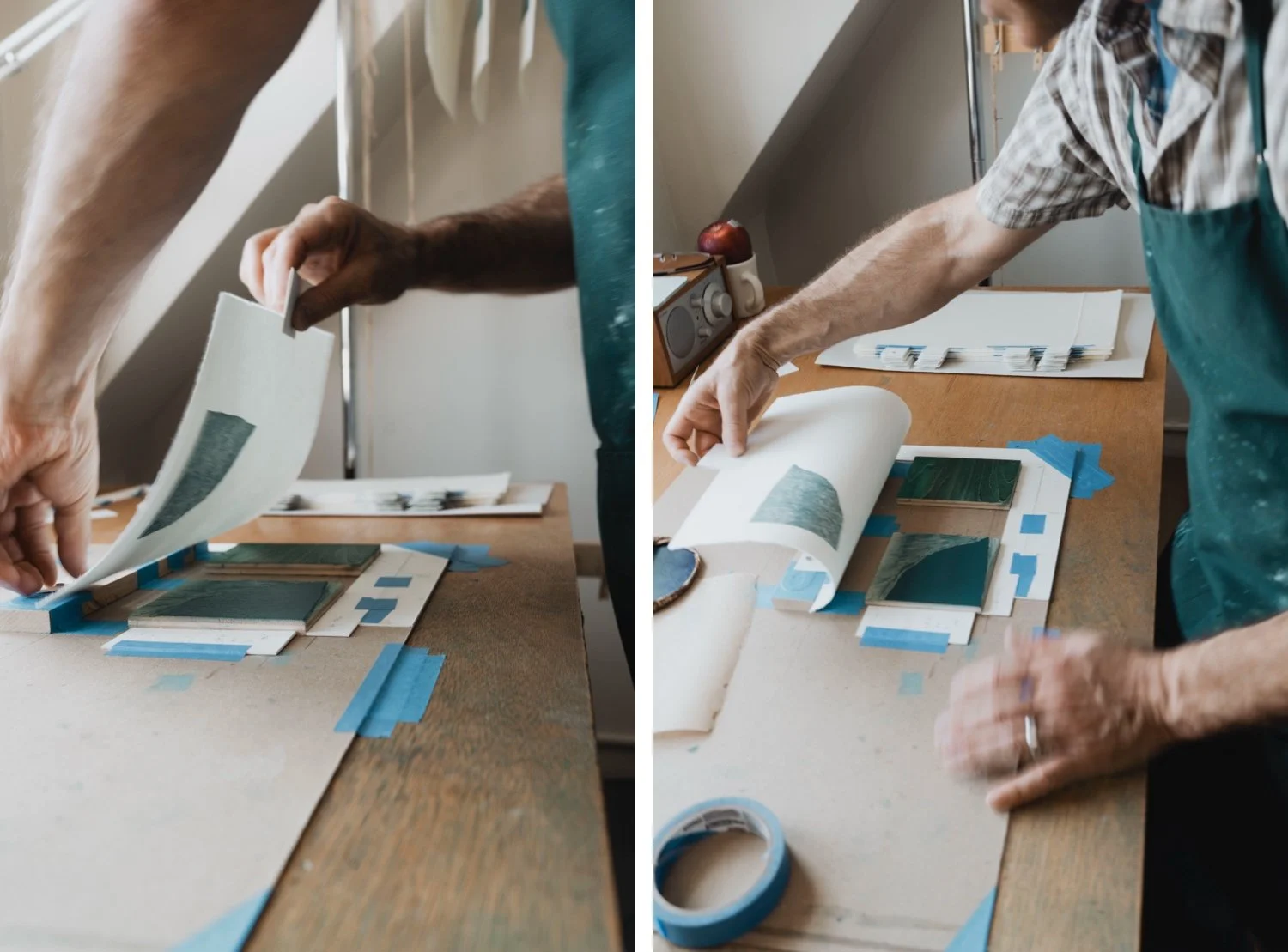
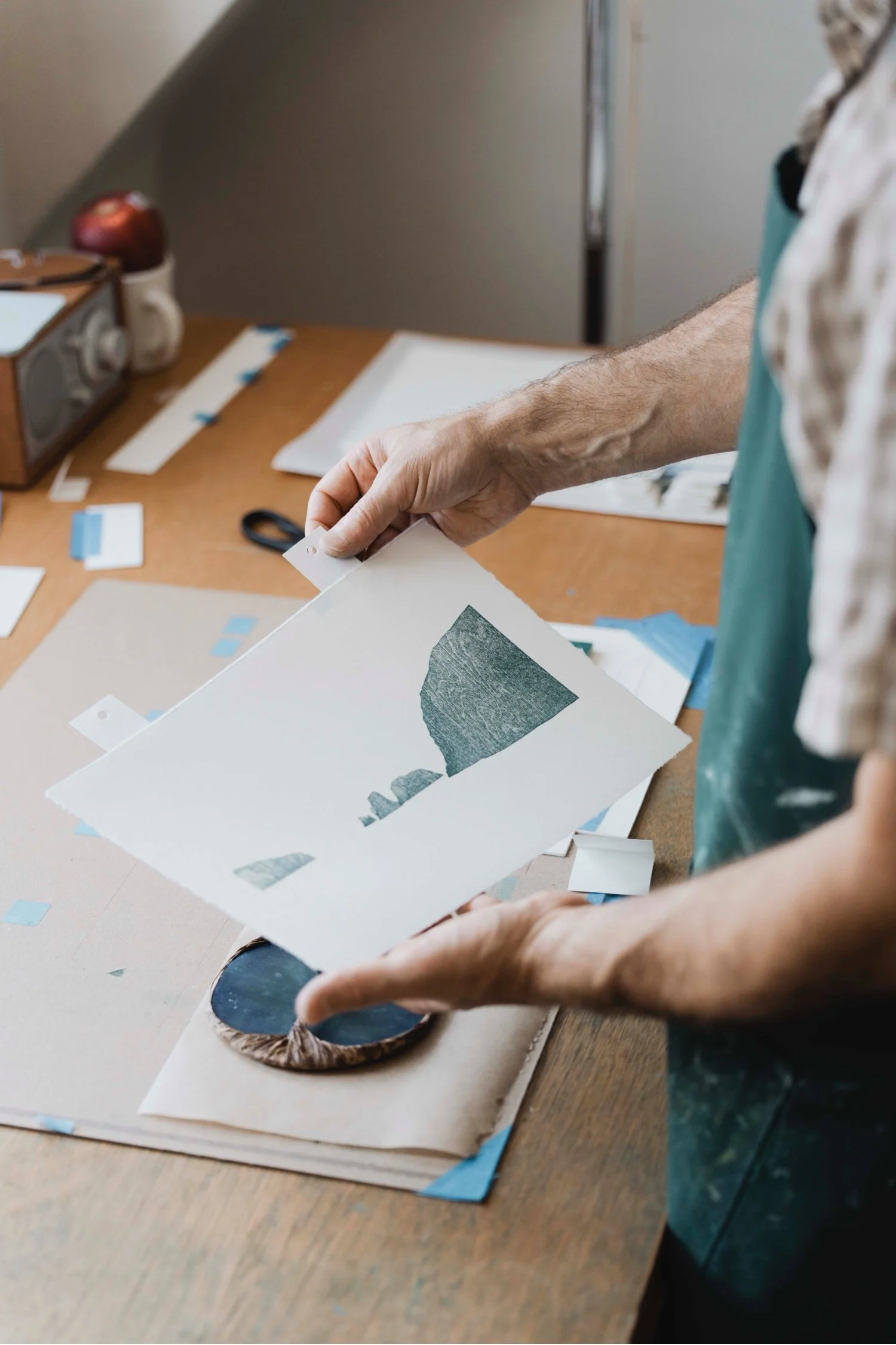
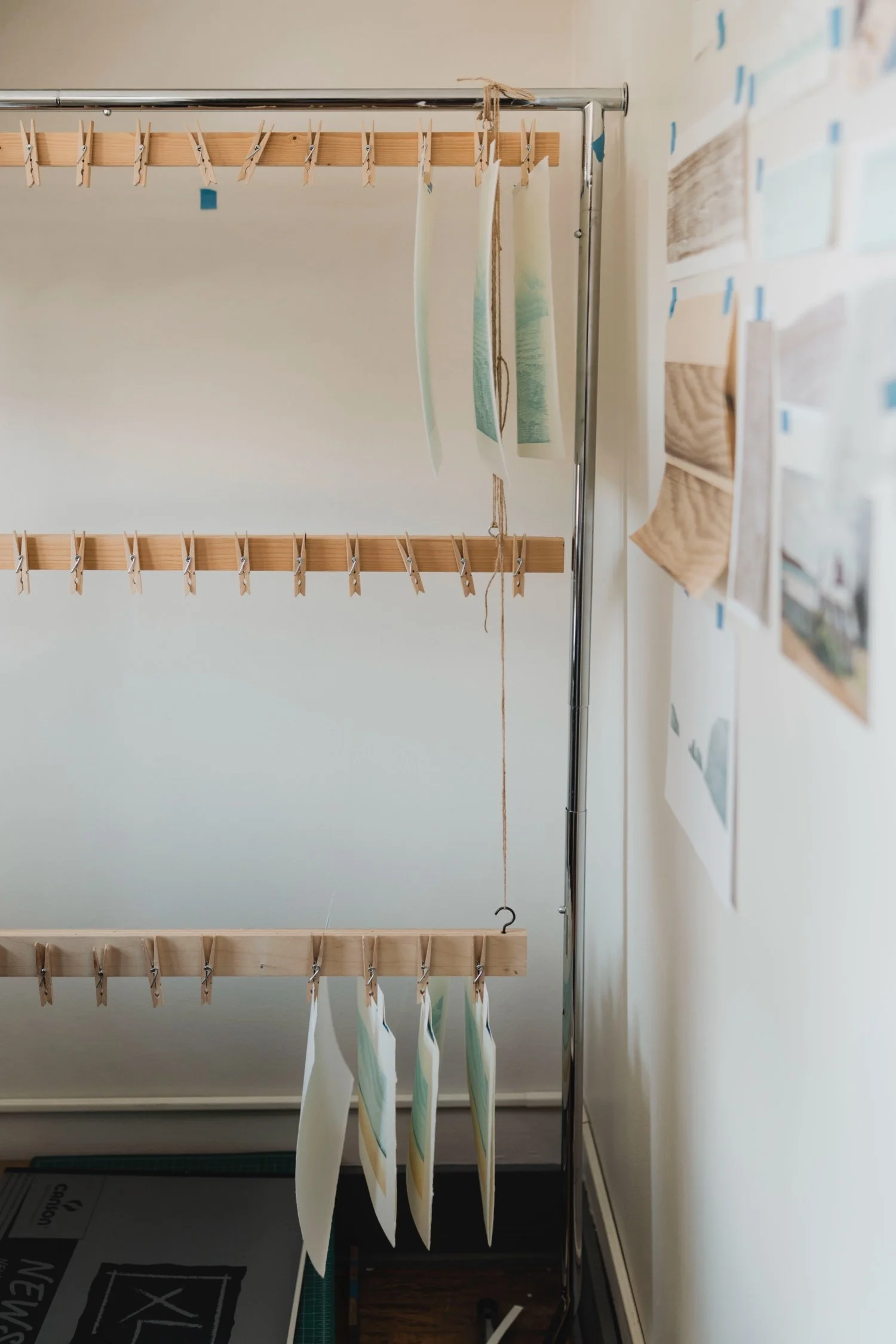
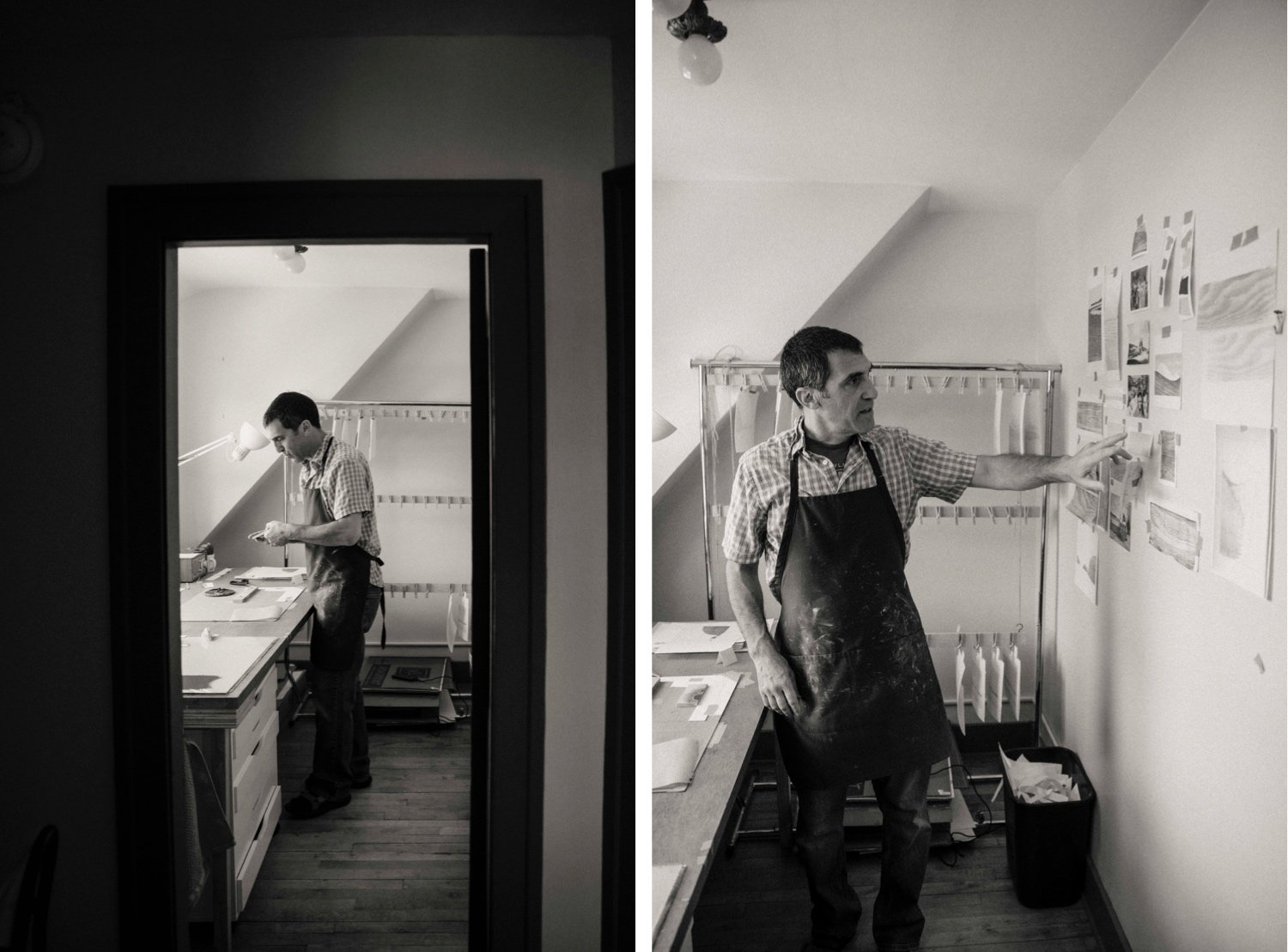
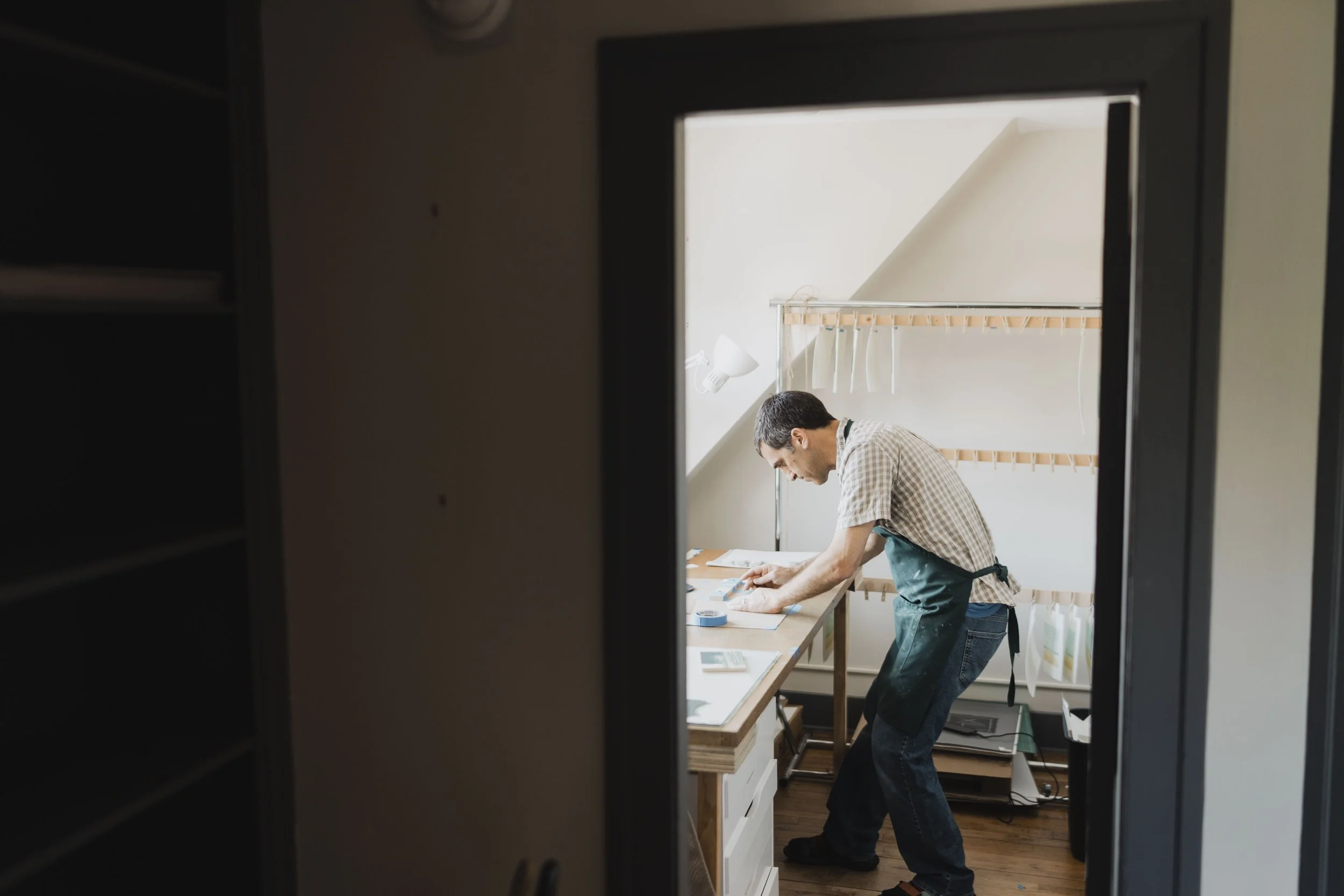
So I'm out in the world, hiking, walking on the beach. I’ll sketch and take photos. Get back to the studio, look at my drawings. look to my pictures, and then sometimes the drawings I've done are the composition, and sometimes the photo might be better in terms of composition, so I might do new drawings. Then I'll go looking for the wood that I want to use, that I think will fit well. And that can be a long process. And then once I find what I think works, I'll do a test print of it. No carving, just print the whole block, or part of it I think will work. And then, “ah! Okay, this is the right piece of wood.” Trace my drawing, and then often I have to find multiple pieces of wood, marrying the right piece, for the mountain, this might be a great sky, but, may not work with the wood grain pattern of the mountains. You're also marrying the different pieces of wood together, too. So there's that process, but then you find your wood, you trace your drawing with tracing paper, which you then flip over, because you carve backwards, and then layer block of wood, piece of carbon paper, and then your tracing paper on top with your drawing in reverse. To transfer the drawing to the different pieces of wood, carve out the parts you don't want to print, and then you start proofing or testing your different blocks, just kind of fiddle. And then you hopefully have a template that works. And I sometimes use different species of wood. They're different thicknesses. So I'll have to add card stock to the back of a block to make it thicker, higher. But then, then you're just proofing. You're proofing to make sure everything lines up, and looks the way you want. And then color, and mixing the right colors can take a while, especially water, but I'm getting faster at that. For me, the harmony of the colors is really important. Then you tear your paper down, and you put your registration tabs in each piece. And so once all that's done, then you can actually start making the prints that you will present to the world.
How do different woods differ?
I use a lot of poplar. I also use both fir ply and solid fur, which are completely different grain patterns. And then I also use something called shina ply, which is a plywood used by a lot of print makers, just because it's super easy to cut, the grain doesn't fight you. I use mostly those three or four. Poplar is great, because of its wide variety of grain patterns. It’s the Goldilocks of not too hard, not too soft for carving. If you have a wood that's too soft, like, cedar, after you pull a few prints, your edges will start to fray, you can lose details. You want a wood that's hard enough to keep its edges over multiple prints. Fir is a pain in the ass. I can't do a lot of detail work with the fir. And then shina just does whatever you want, which is just really lovely. So those are the big ones. I do like cedar, but again, it just doesn't last long enough, though it smells really good when you carve in the studio. But yeah, those are my main ones.
Why landscapes? Why are you drawn to that subject matter?
Well, it's just in my own life. You know, that's what makes my heart sing, is being in the woods, or in a kayak. And so, that is naturally what captivates me. For me, printmaking, is very much about shape and color. Back in college, I used to paint portraiture, it's just endlessly fascinating, but with print making, for me, it's very much about shaping color, and landscape is really the best way to go about exploring that.
Talk about the piece you’re working on right now.
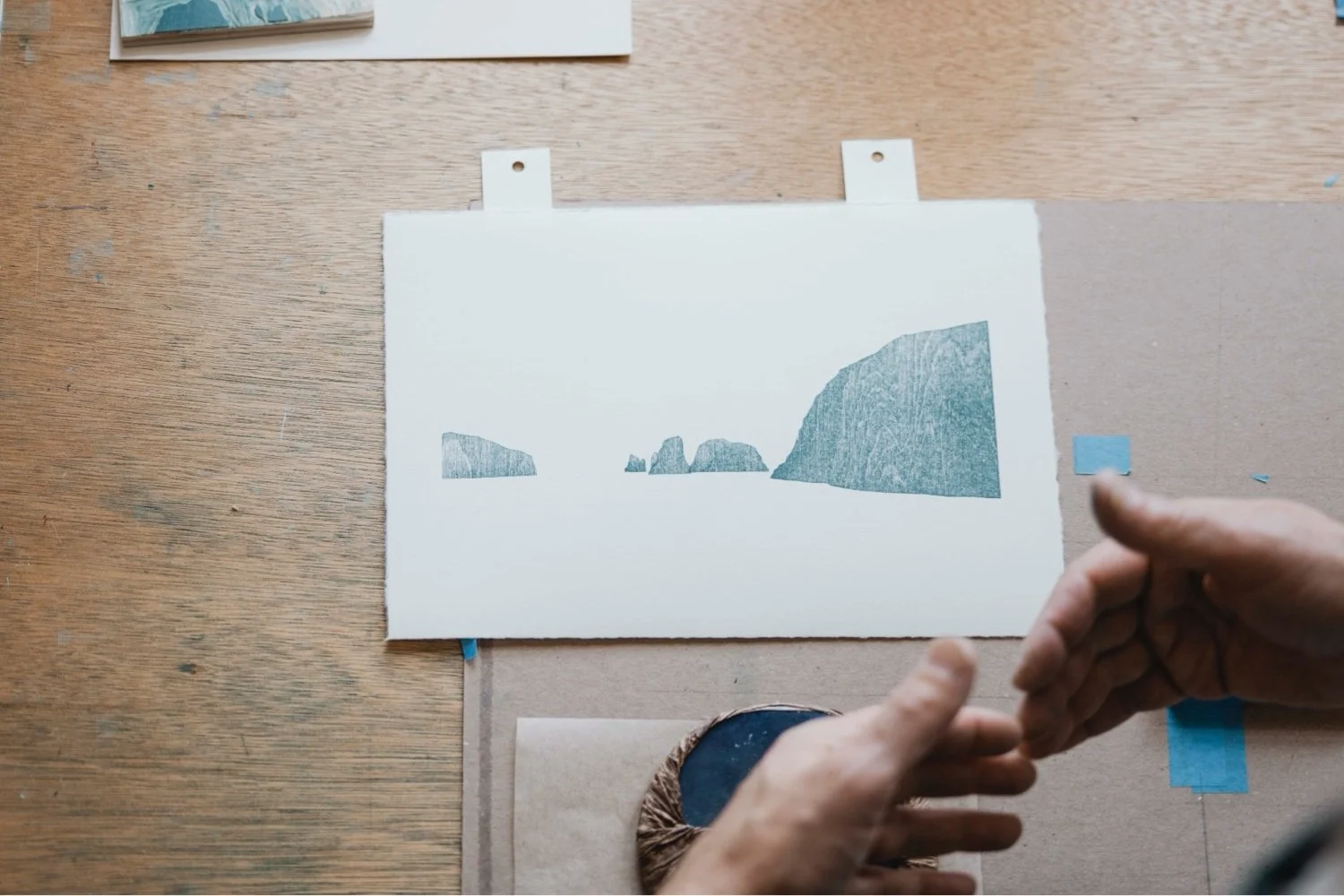
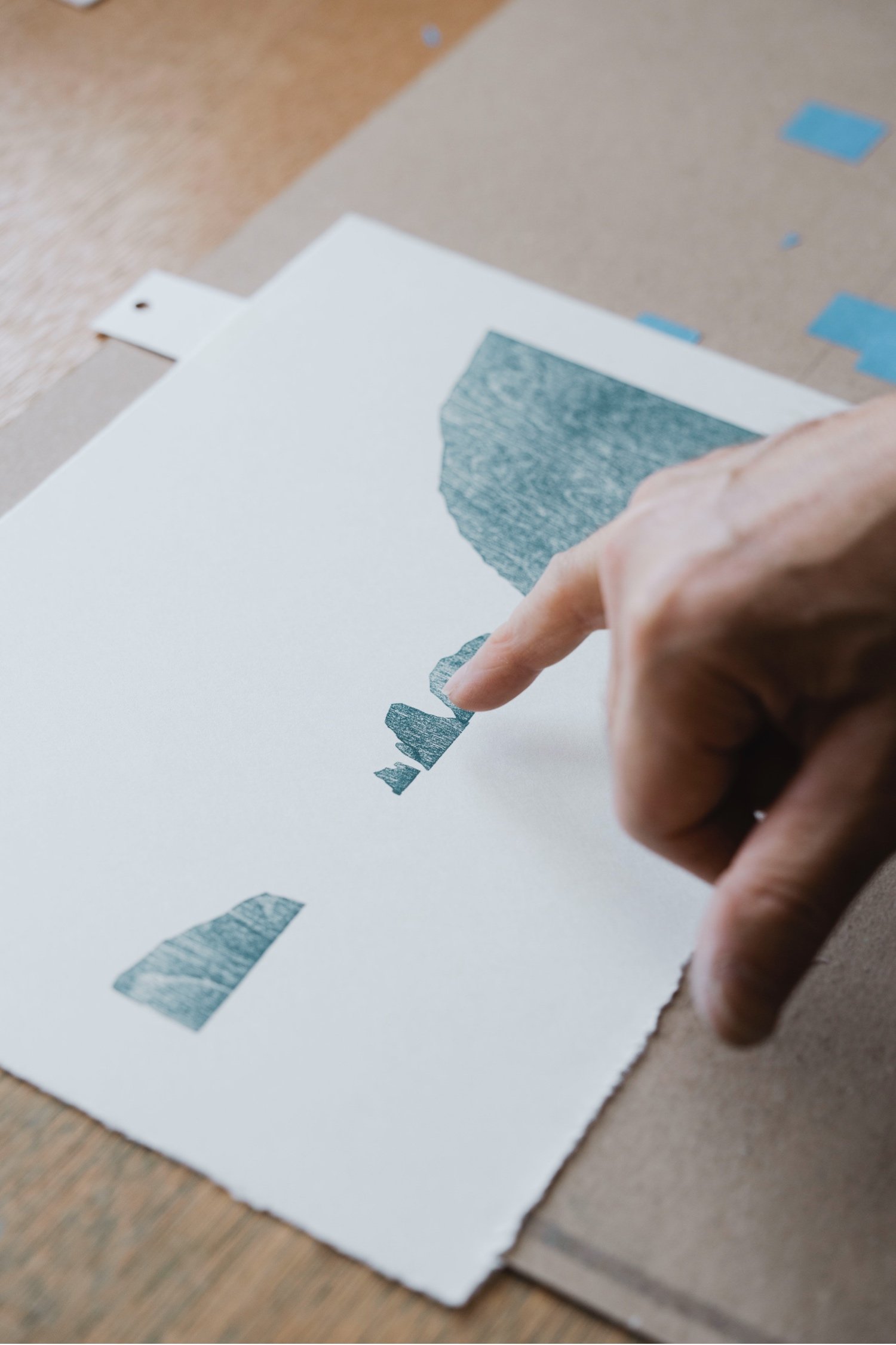
The sea stacks print from First Beach. You can see those stacks from both First Beach and Rialto Beach on the Olympic Peninsula. Being from the East Coast, those stacks are just so crazy cool. And, again, because I'm just so interested in shape and color, they can be so crazy fascinating to me. And with that print, playing with negative space is really fun. That print really is about the shape and the negative space, and then, really, it took me until I found those blocks with that grain pattern. That's when it kind of all clicked. And that color…I toyed around with the idea of doing a sepia type color, but I wanted something that, not just gray, a little bit of blues, kind of evokes the ocean.
I think the element of balance in a print is always kind of fascinating to play with, like, where do you put the horizon line, or how much land versus sky, or sky versus ocean. And that, for me, it's all a gut feeling. In this print, the balance of negative and positive space was just really fun to play with.
What's your experience of being a professional artist, creative in Bellingham, Washington?
I think my experience in Bellingham is largely through the Sunnyland Stomp. I live in Sunnyland, so it’s a great way to be with my neighbors and put your art into the world and get feedback and sell some work. So it's definitely been a way to connect with people. My studio space, too, because it's open to the public, and then the shop below, it's just an easy, casual way to connect with people. And because often they are recognizable landscapes, people will often connect with them, start telling stories, so that's always fun. But,I feel like as an artist, I'm most often leaving Bellingham to sell my work, so one of my goals is to start to feel like I'm more established here, more known. Which sounds like a pretentious thing to say, but, you know, my work is very North Cascades Salish Sea based, and so it would be great to have this be more of a market for me. But, it's a very art supportive town. You know, the brew pubs are all great at supporting artists, the restaurants, coffee shops and such, so it's a very supportive community that way. And seems to be a town where people do like their local artists, too, once they get known, which is really fun. But I do have to travel far to go to these larger art festivals, just because of where we are geographically in the world.
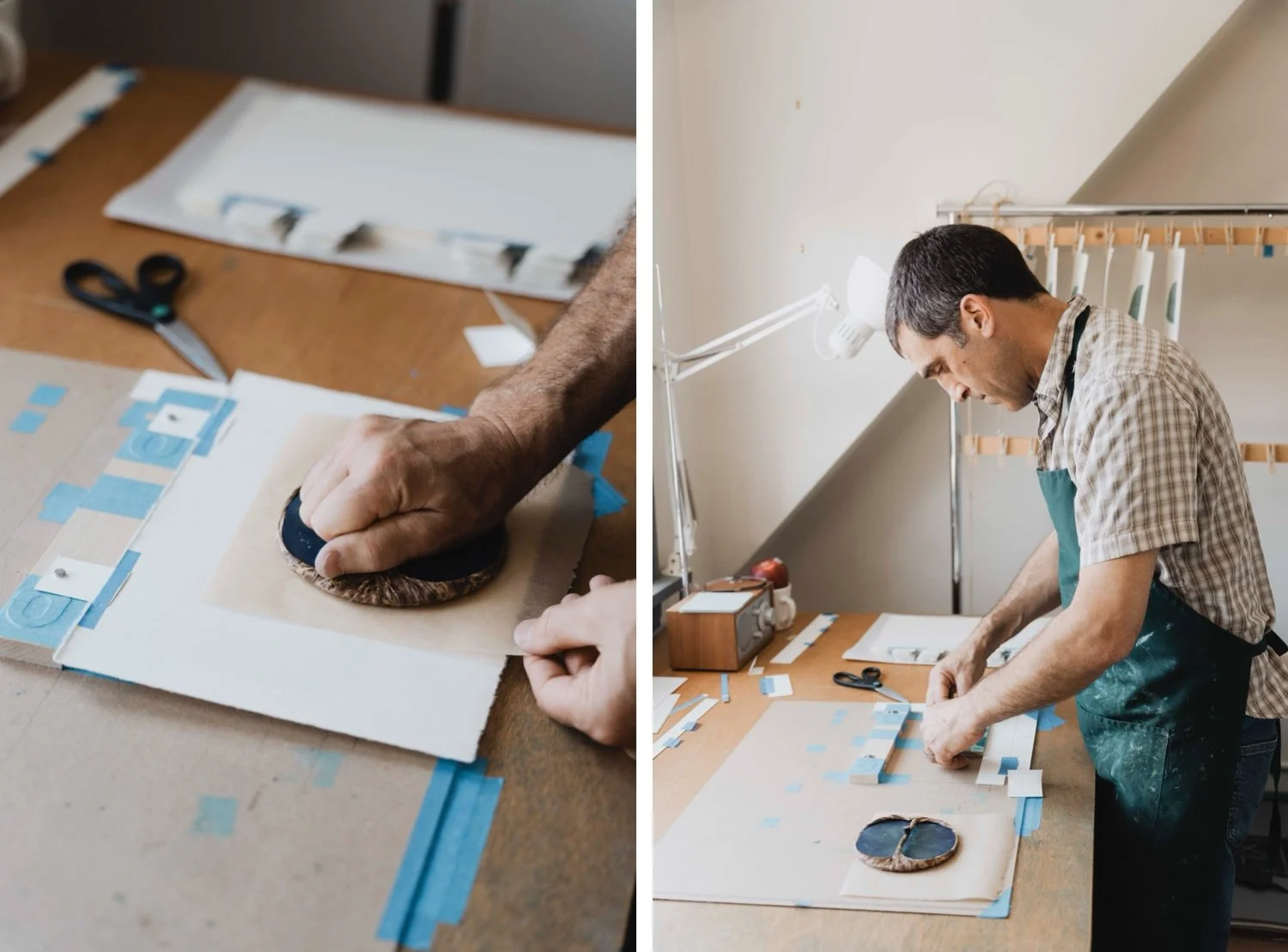
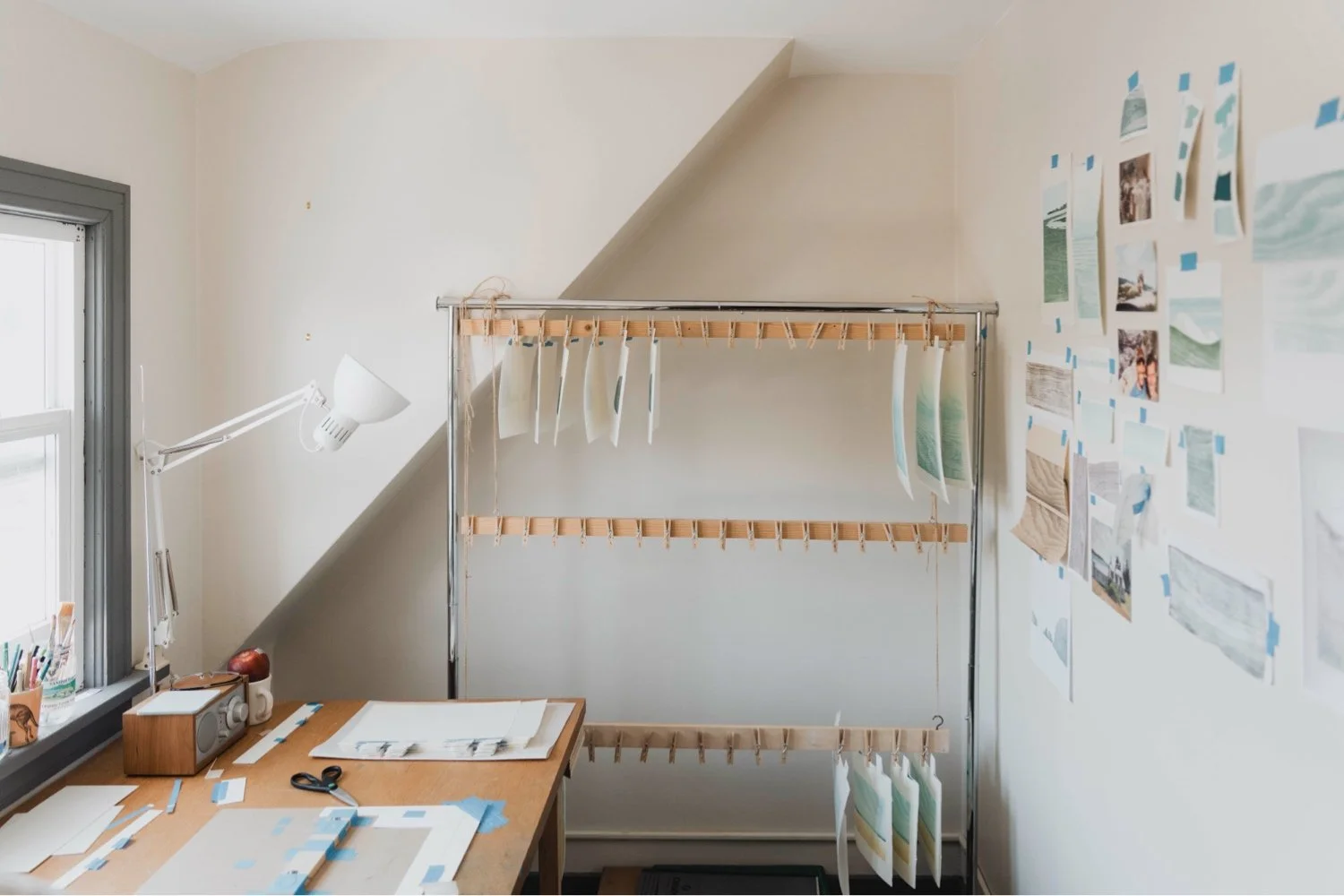
Talk to me about the space that you're in and what that's like.
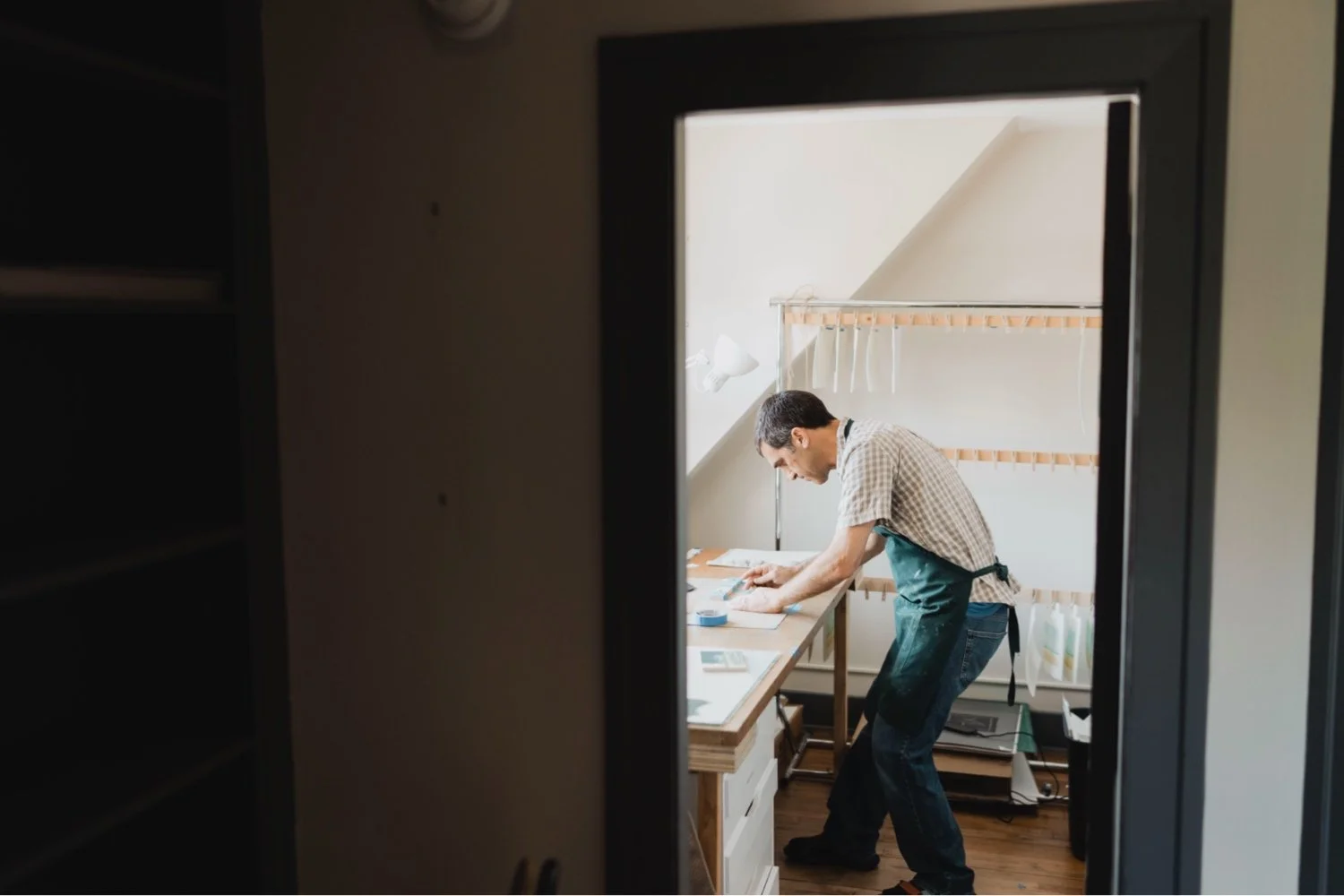
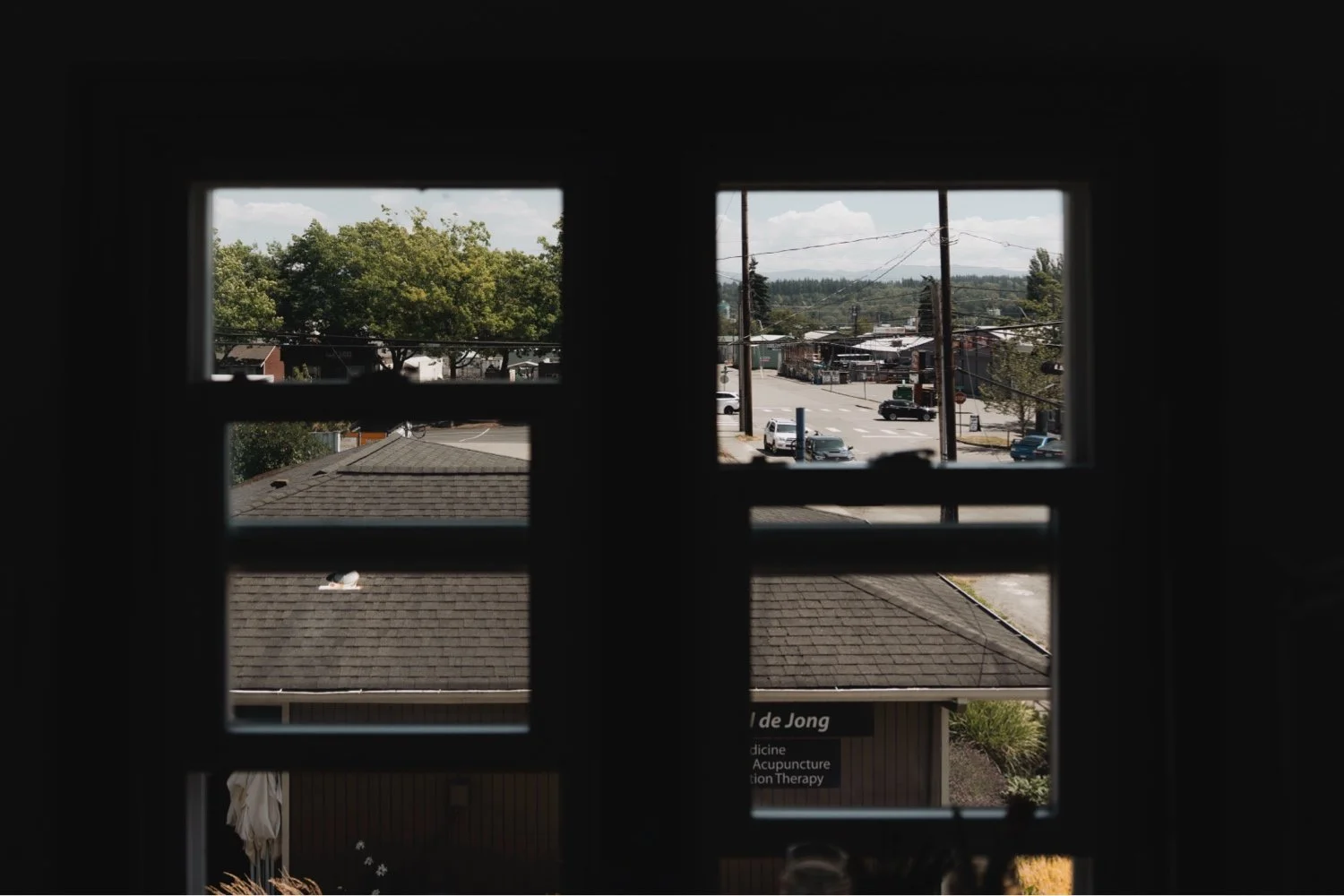
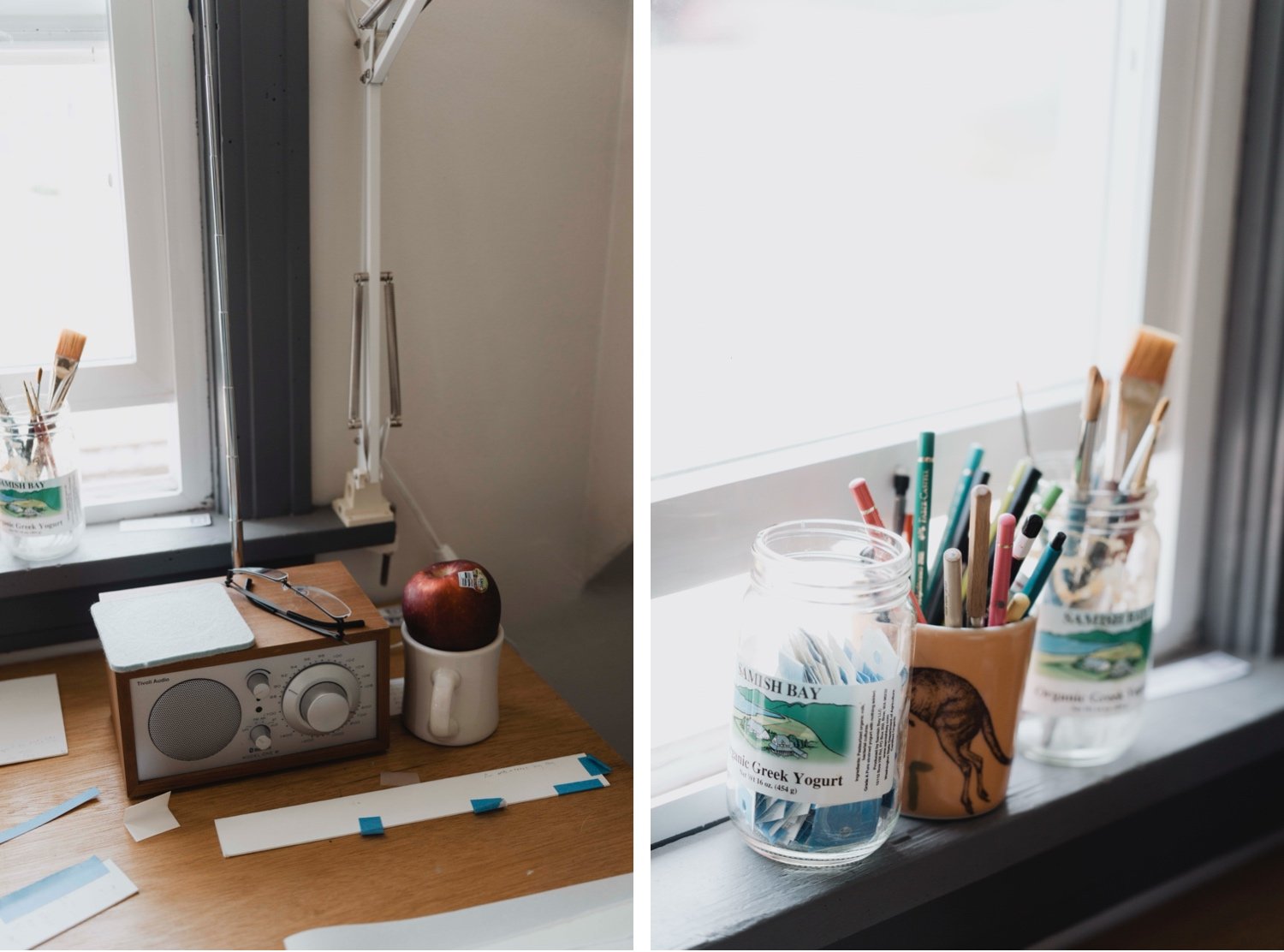
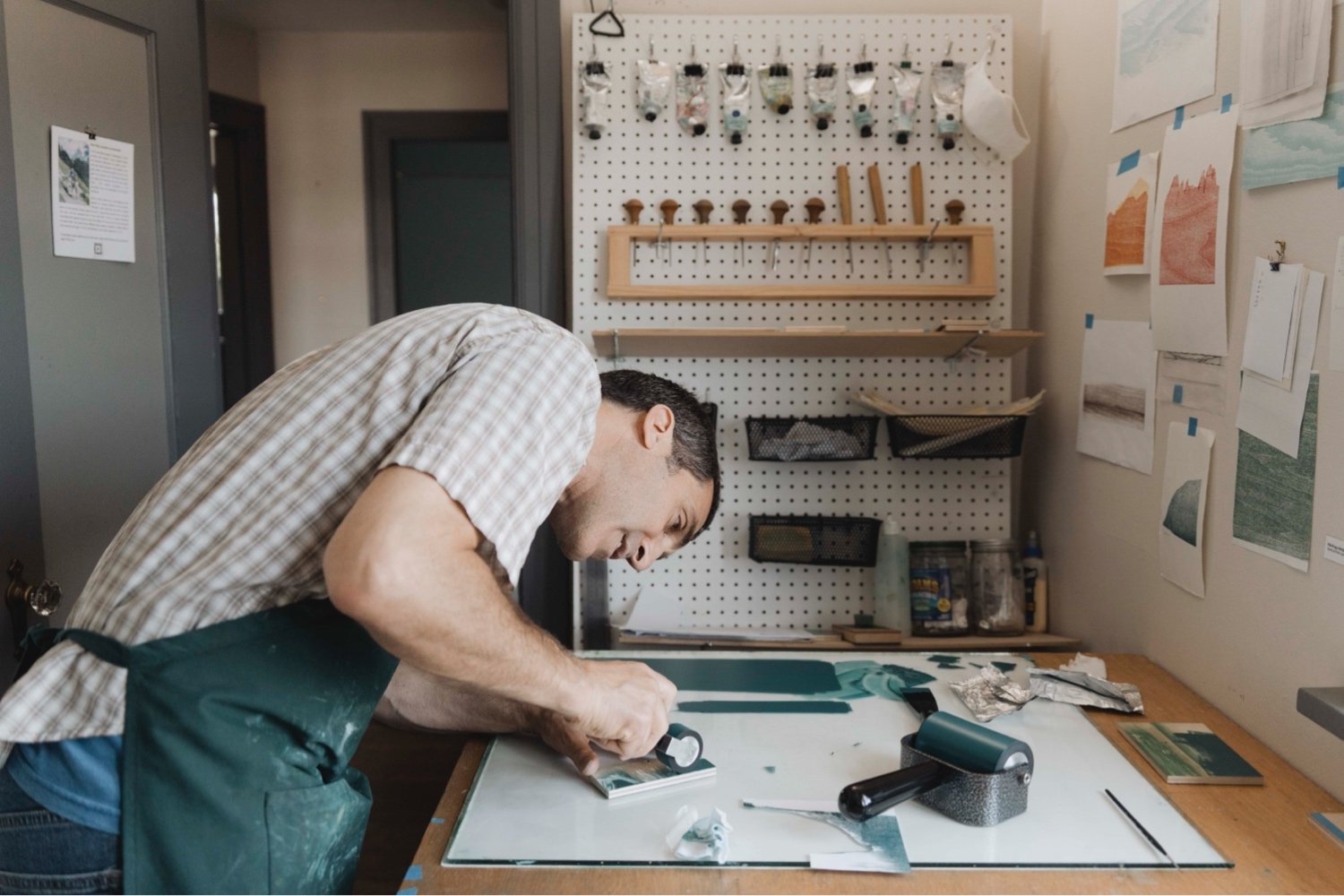
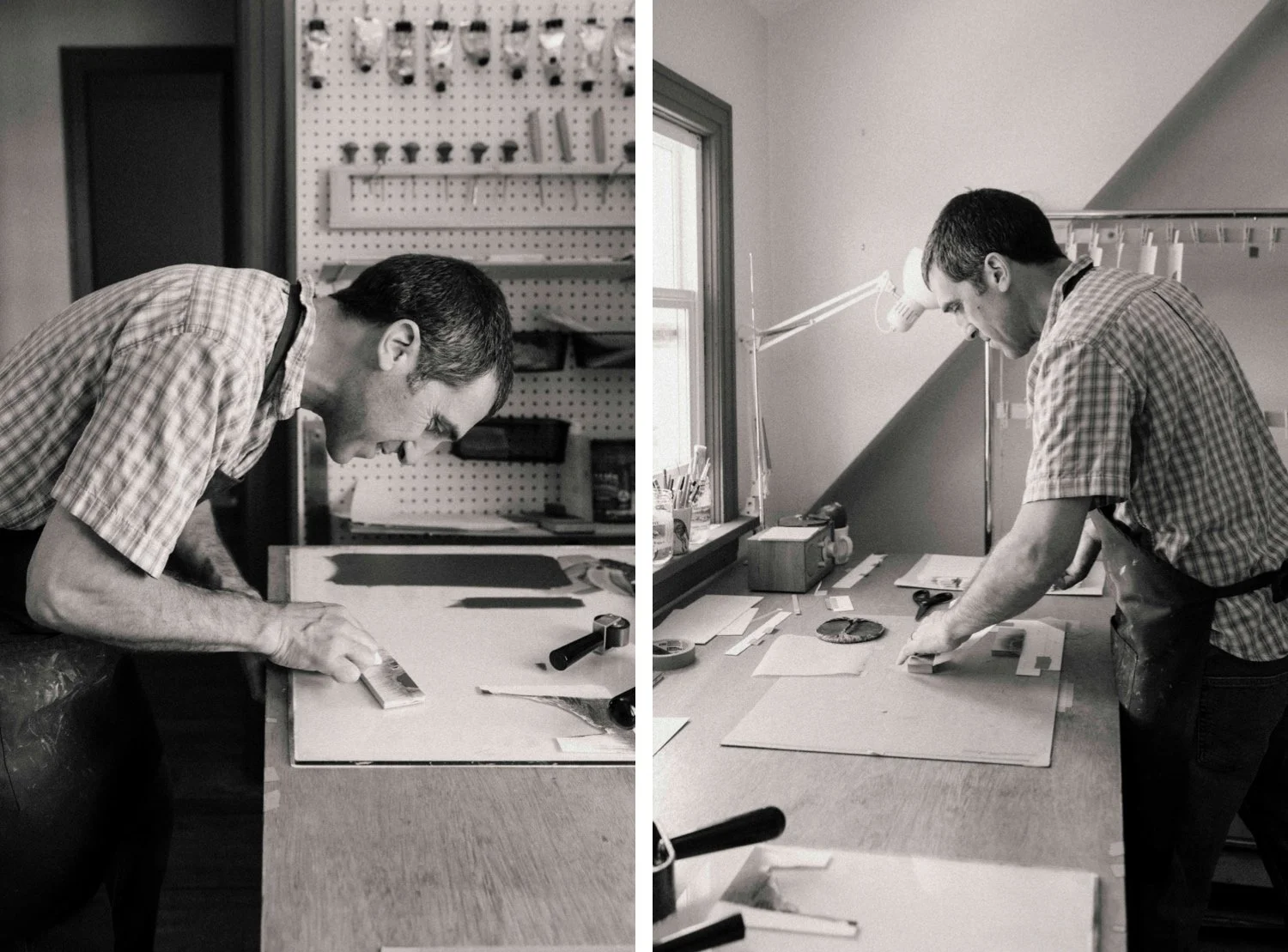
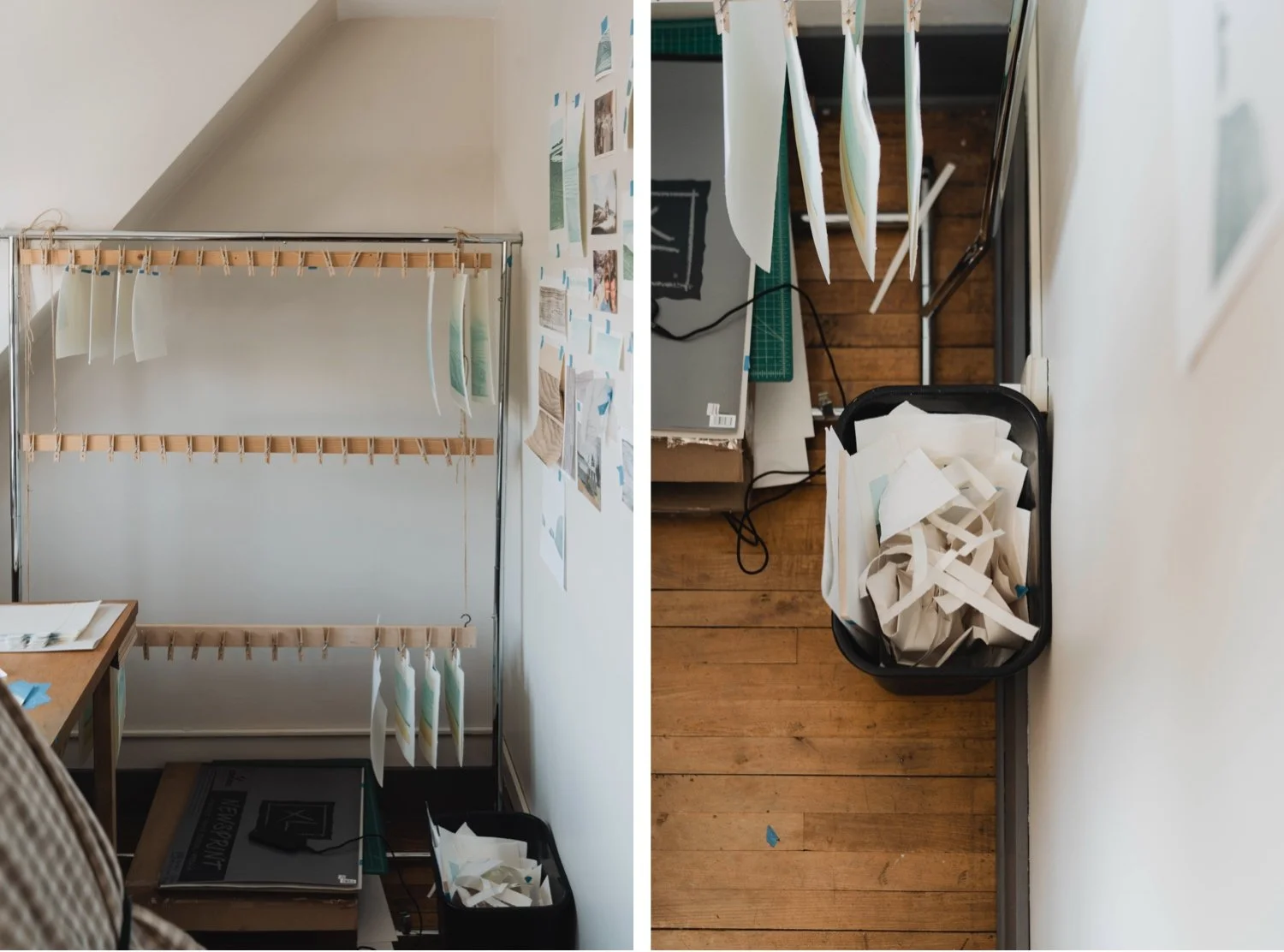
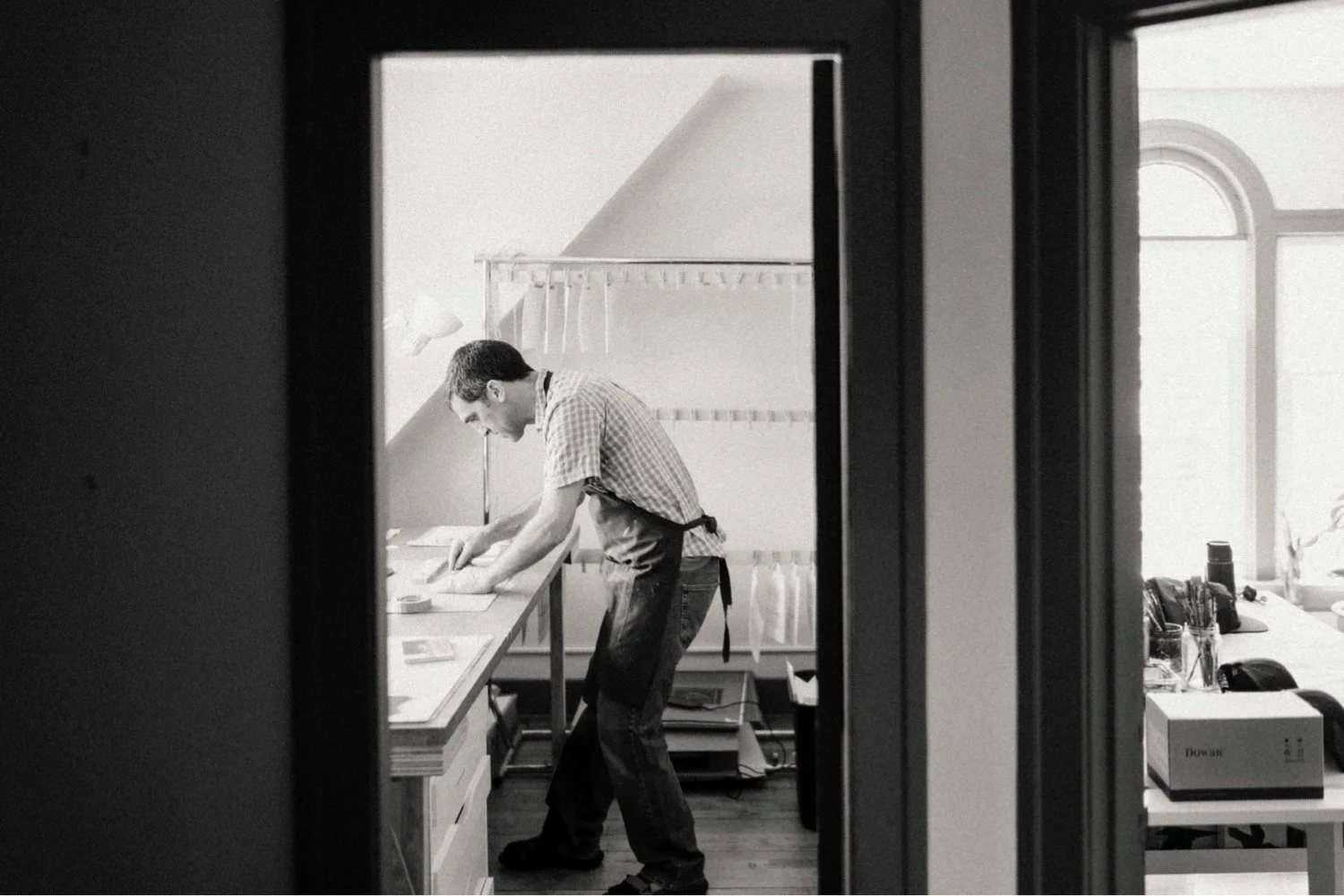
So I have a 6 by 10 studio above Martini Mercantile. I've been here pretty much since they opened, which I think is a year and a half now. And I live just a few blocks north of here, so it's just easy. And I knew Marijo from some markets we did together. For me, I needed to get out of my house. For a while I was just in our guest bedroom, and after 25 years of teaching, which is such a social job, being at home by myself all day was not great. I just needed to get out of the house and be around some other people. We have three studios, plus Marijo here. My space looks out over Mt Baker and Twin Sisters, so it's lovely. Facing east, I have great light all day. And for me, the smaller space and the public facing aspect of it is great, because I'm a bit of a slob, so it forces me to keep the space very neat and organized, which, when I was at home in our guest bedroom, it was not. And we have a few events here throughout the year plus the Sunnyland art walk, it's just helped me get connected to people here in Bellingham, the other artists here, which has been really great.
Do you listen to anything while you're working?
Yeah, I have a pretty heavy rotation. Between music and I'll have a lot of NPR. Those are the big ones. And then sometimes I just need nothing. I just need silence. I've done one book on tape, but, I just can't follow it enough, usually, just because of what I'm doing. But yeah, a heck of a lot of music. Clean up usually gets a little more of tempo. Blondie is a super good to clean up too. But yeah, you know, you listen to the news until you get depressed and then move to music. That just kind of how it goes.
When someone buys one of your pieces, what do you hope the experience they have with it is?
I do not have any sort of intellectual approach to my artwork. My goal is just to make something that I feel is beautiful, and hope other people do, too. I think when you look at a beautiful thing, it brings you some joy. And so as much as I have a goal for other people, that's all it is. That it’s in their house, they find it beautiful. Over time, they don't get bored of it. I want work, when you look at it, you want to spend a little bit of time, not just pass it by. I think the wood grain helps with that, too. And the simplicity of it. It is for me just about beauty, there is no conceptual anything behind it.
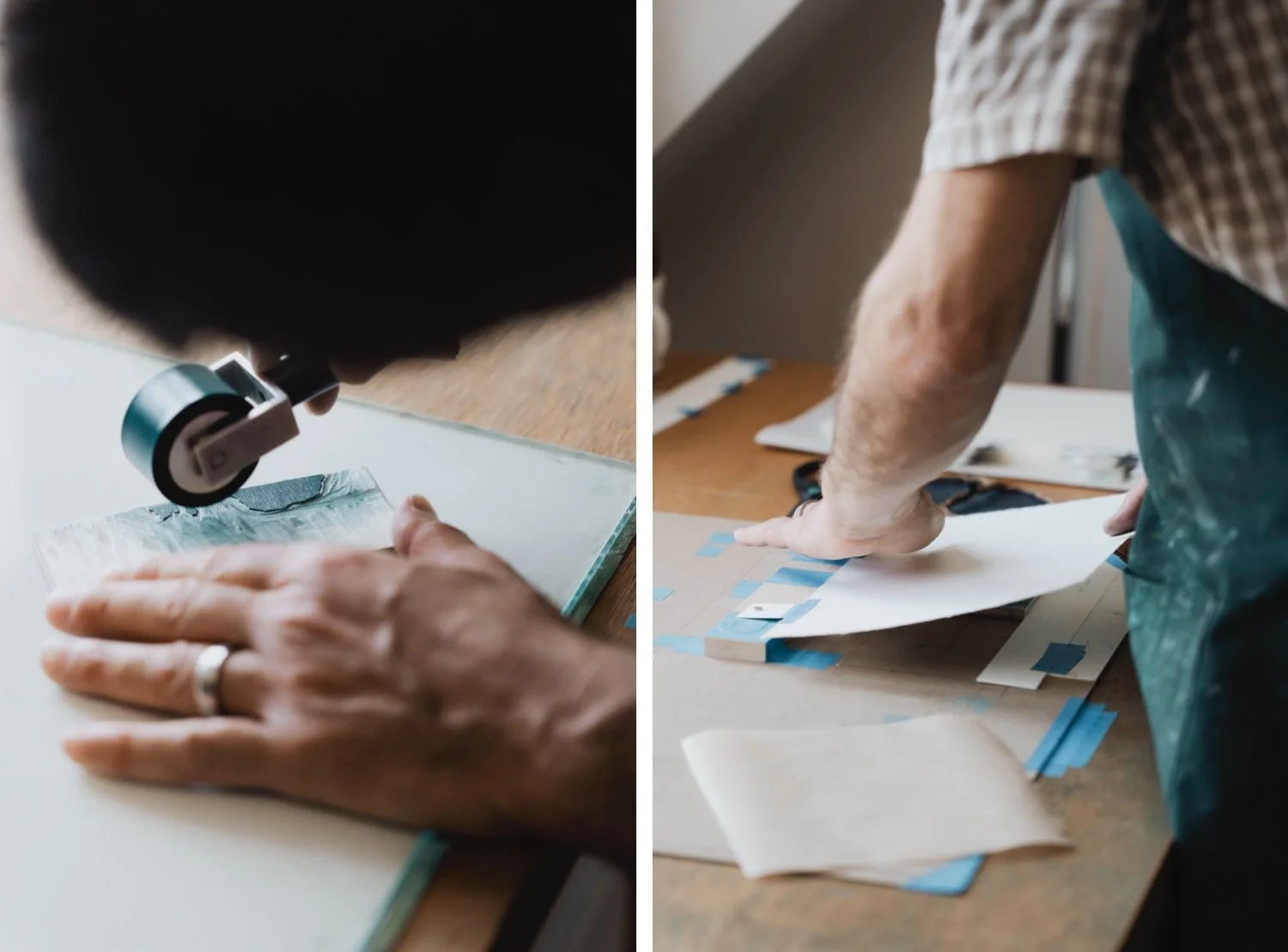
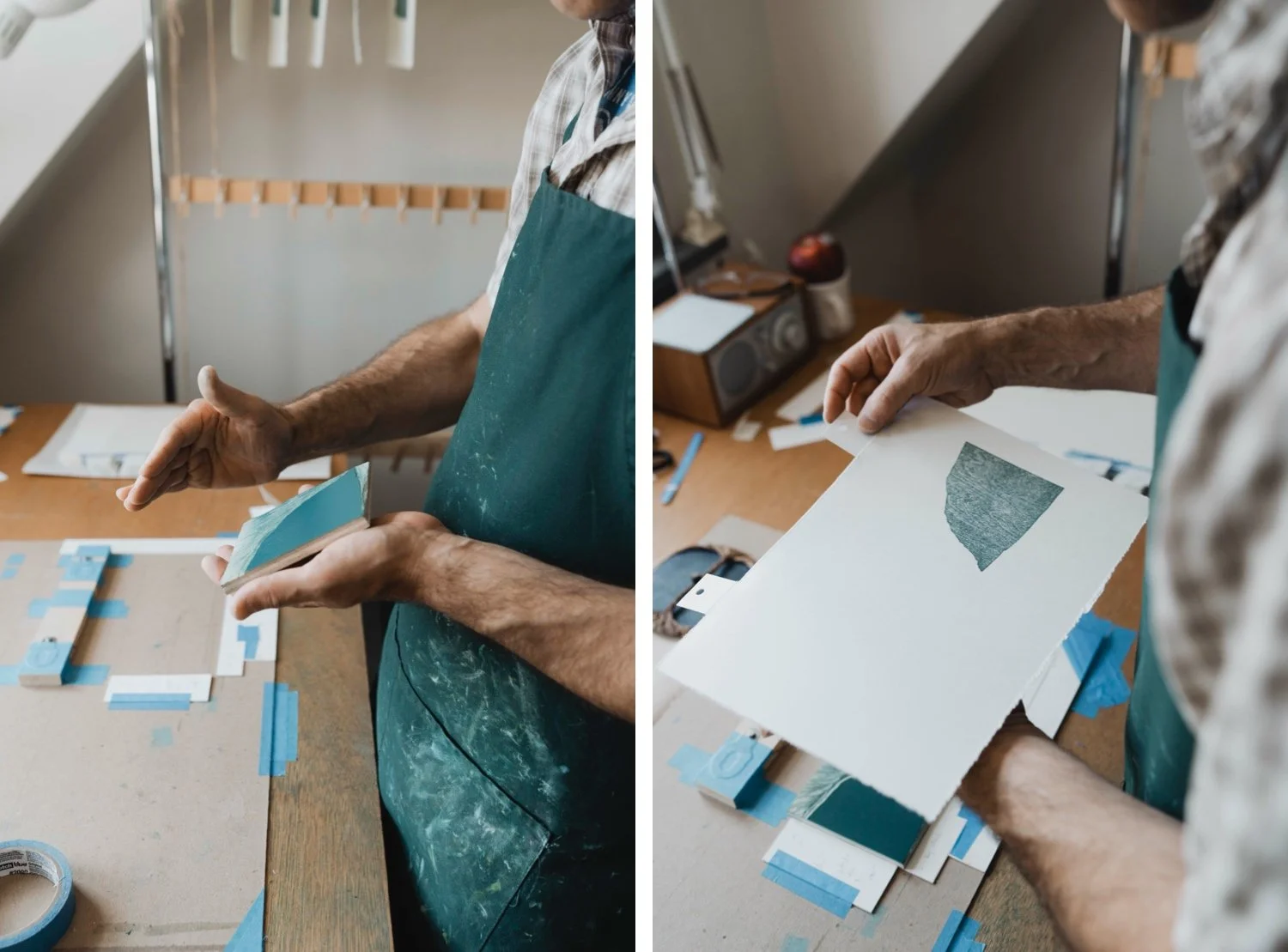
What's the best part of being a professional creative?
I'm kind of in pursuit of my best self in a way. I feel I've made some prints I've made that I really like, that I'm proud of, and I think are beautiful. But I don't feel I'm at my potential yet as an artist, as a print maker. So there's like the business side to what I do, and yes, I would like to get to a point where there's more money coming in, and that feeds into our family income, helps pay the bills more. It's the art part that kind of pushes me to keep growing. I want to keep growing as an artist, and, you know, I don't know if you ever feel as an artist, “ah, all right, I'm done. I reached my potential!” But I think that's it, it's kind of a two sided coin, right? That's the hardest part of being an artist full time, but also the most rewarding part. You get to, hopefully, just keep growing. For me, it's a lot of fear you keep pushing out of the way.
What's the worst part?
When you're just making work that's not working. This winter, spring, I made a lot of work that didn't work. Ideas I was excited about, and then they just didn't pan out in any way that worked for me, visually. So that's the that's the hard part. When I feel like I'm not producing work I like, or moving forward. When I'm sort of getting stuck in my own head and it can be very self defeating. That's kind of the biggest challenge, is mentally getting out of my own way.
How do you know when something is working, when a piece is done?
Yeah, there is a definite... like, when you pull a print and it works, it's just kind of like an opening, I kind of feel my chest…your soul kind of opens. Which sounds a little woo woo, but it is just…it's that beauty part. It's not, like, “ooh, my idea worked.” It's just, “this is beautiful.” It's that kind of immediate feeling.
What's the balance of that it being your original vision verse pleasant surprise?
It's always better when it's a pleasant surprise. Which is weird, because, like, this print, the sea stacks very closely matches what was in my head. And it's also so much more than what was in my head, I guess that's what it is. Print making works when it's more than what you imagined it could be.
Is there anything you wish that you knew years ago, that you feel like you understand better now?
I mean, you always want your skills to be further along where they are, you know, just in terms of carving or mixing colors consistently, all that kind of stuff, but, I think you gotta figure that shit out for yourself, really.
What does the future hold? Goals, projects that you want to tackle…
So, like, right now, I have a list of prints that I want to make, where the drawings are mostly done for. So just seeing those through successfully, because some of them will challenge me technically in new ways. Like, “how am I gonna make that work?” So pulling those off will be great. Business wise, it’s definitely one year at a time. Am I gonna keep going? I'm just trying not to think too long, too far ahead, it doesn't help right now. After that holiday season you can take a breather and kind of reflect on the year, “…just what I feel like…all right, I've made some beautiful prints this year, and this is where I've grown.” It's kind of how I measure success.
What if any advice would you give to someone interested in pursuing a creative profession?
Oh, okay, I guess this is what I would say, because I think this is, something that I have had to learn, You have to decide if you're gonna make work that you like or you're gonna make work that you think is gonna sell. Making a decision, because both are fine, in terms of how you're gonna go about it, how you're gonna make money and be successful from a business point of view. I have no advice on it, but I think that's a challenge you may encounter. But I have no sage, I have no idea. I don't know what advice I would give, because I feel I'm so fumbling through all this. I just know like that's something I've had to think a lot about, make a decision about and then trust that decision too.
more fun!
“I'm hopeful for more peaceful worlds, starting with more peaceful neighborhoods and communities”