
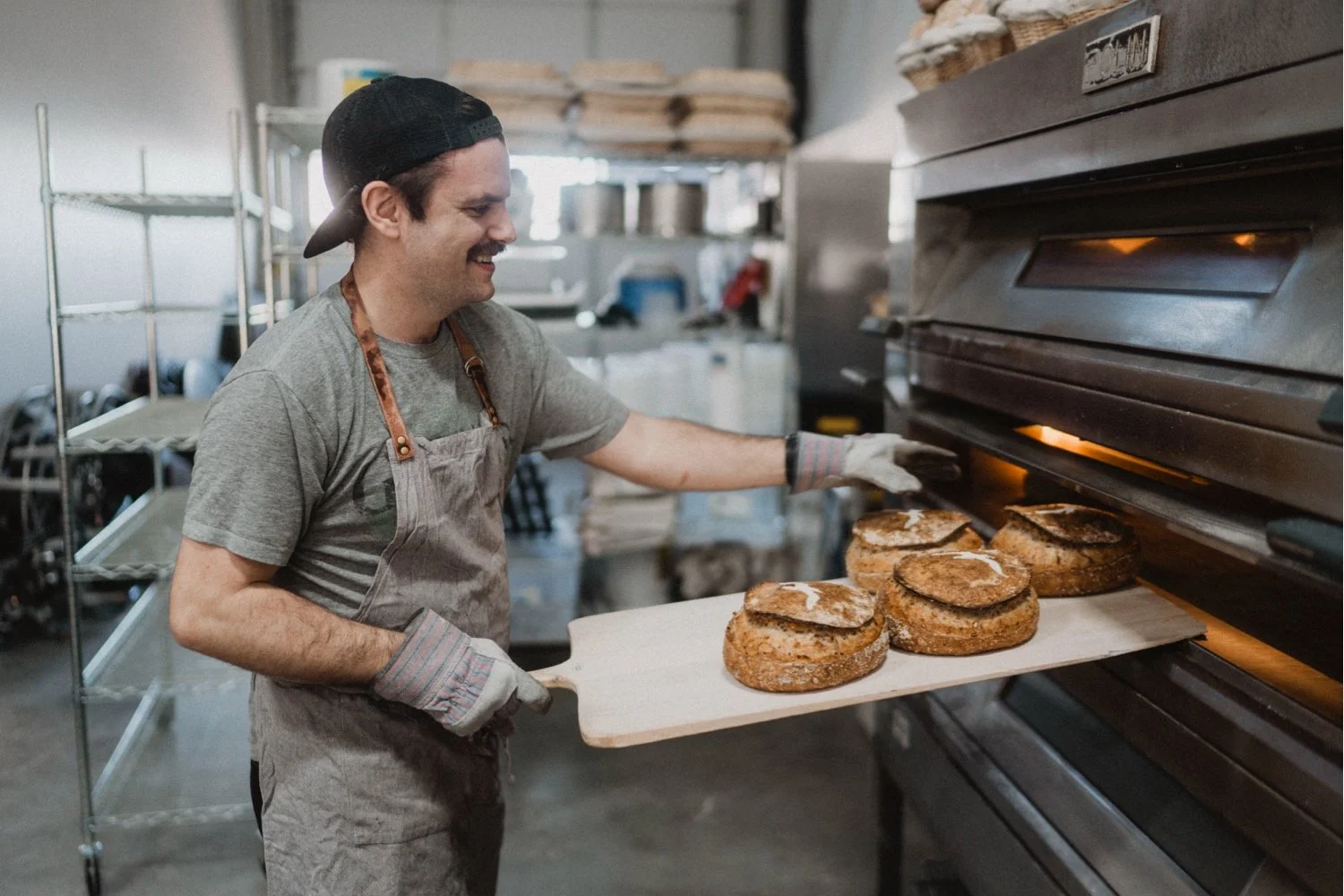
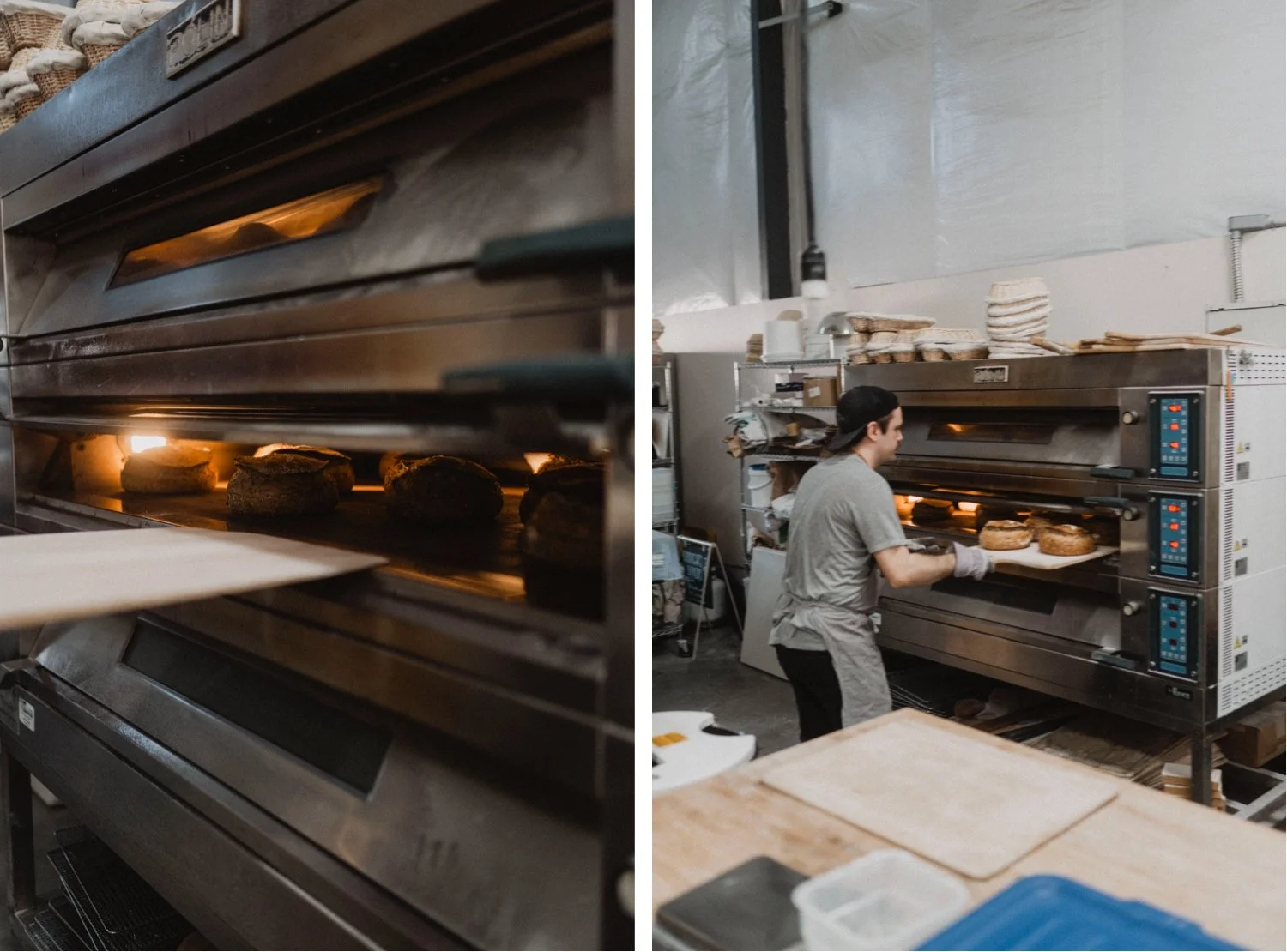
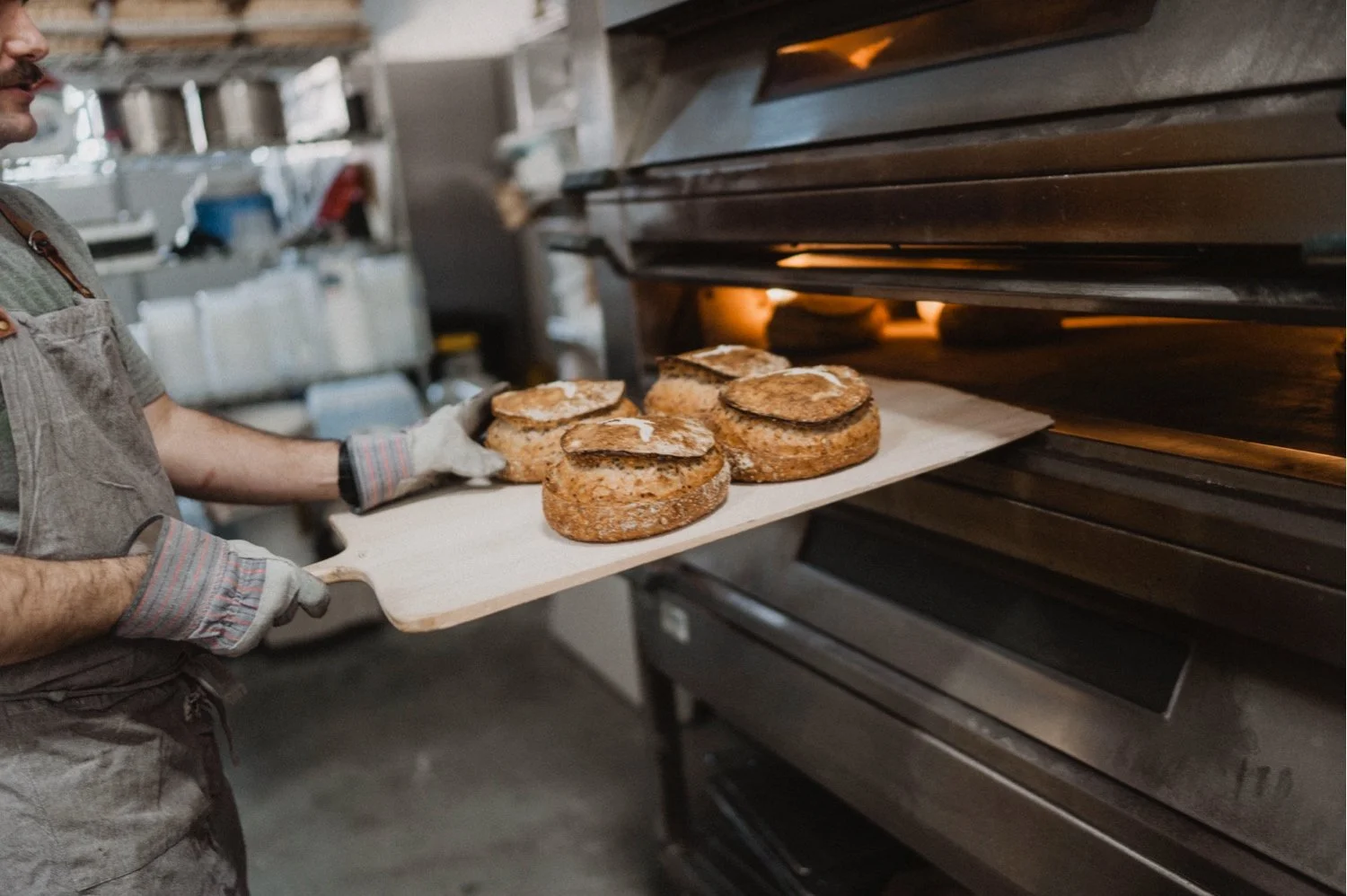
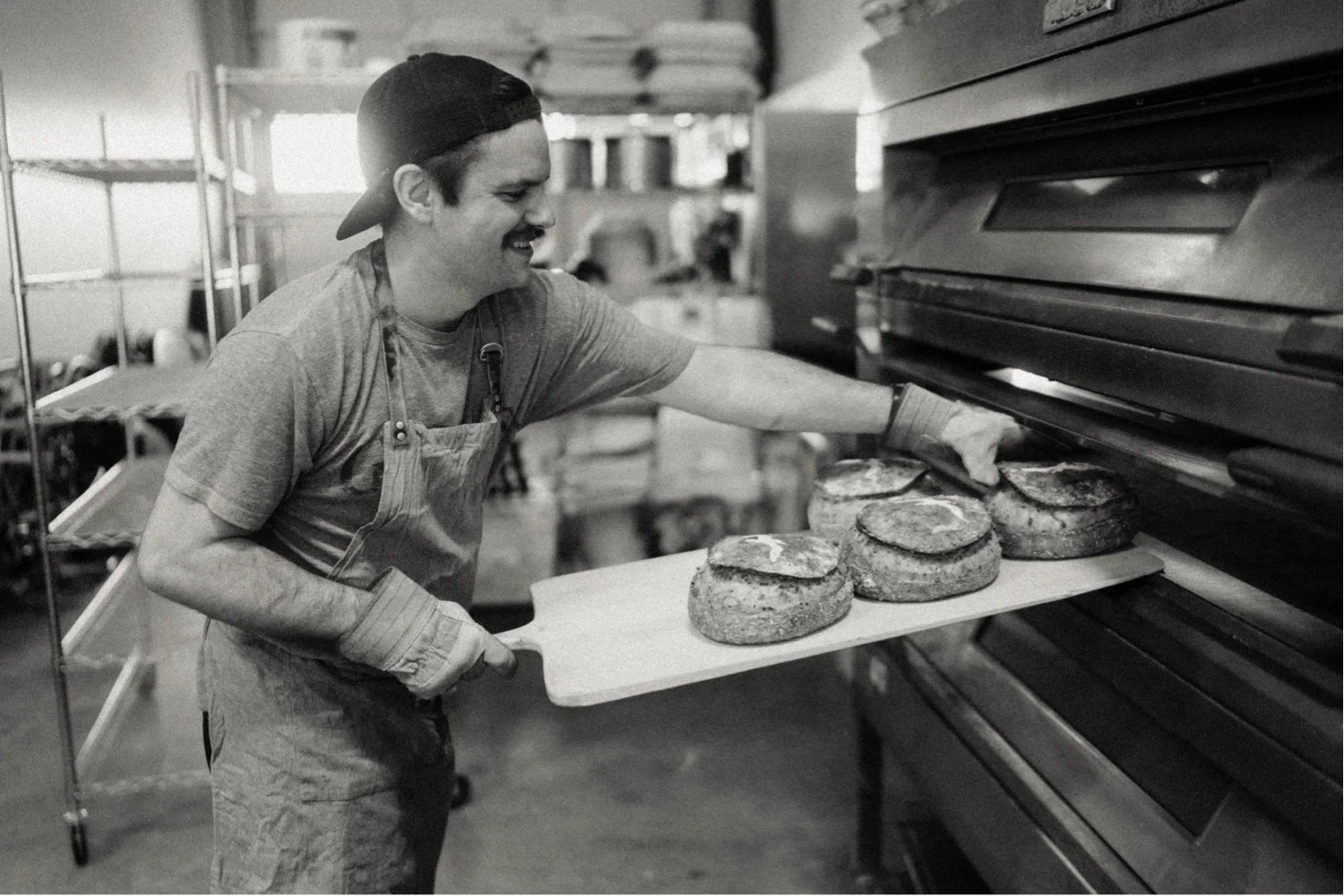
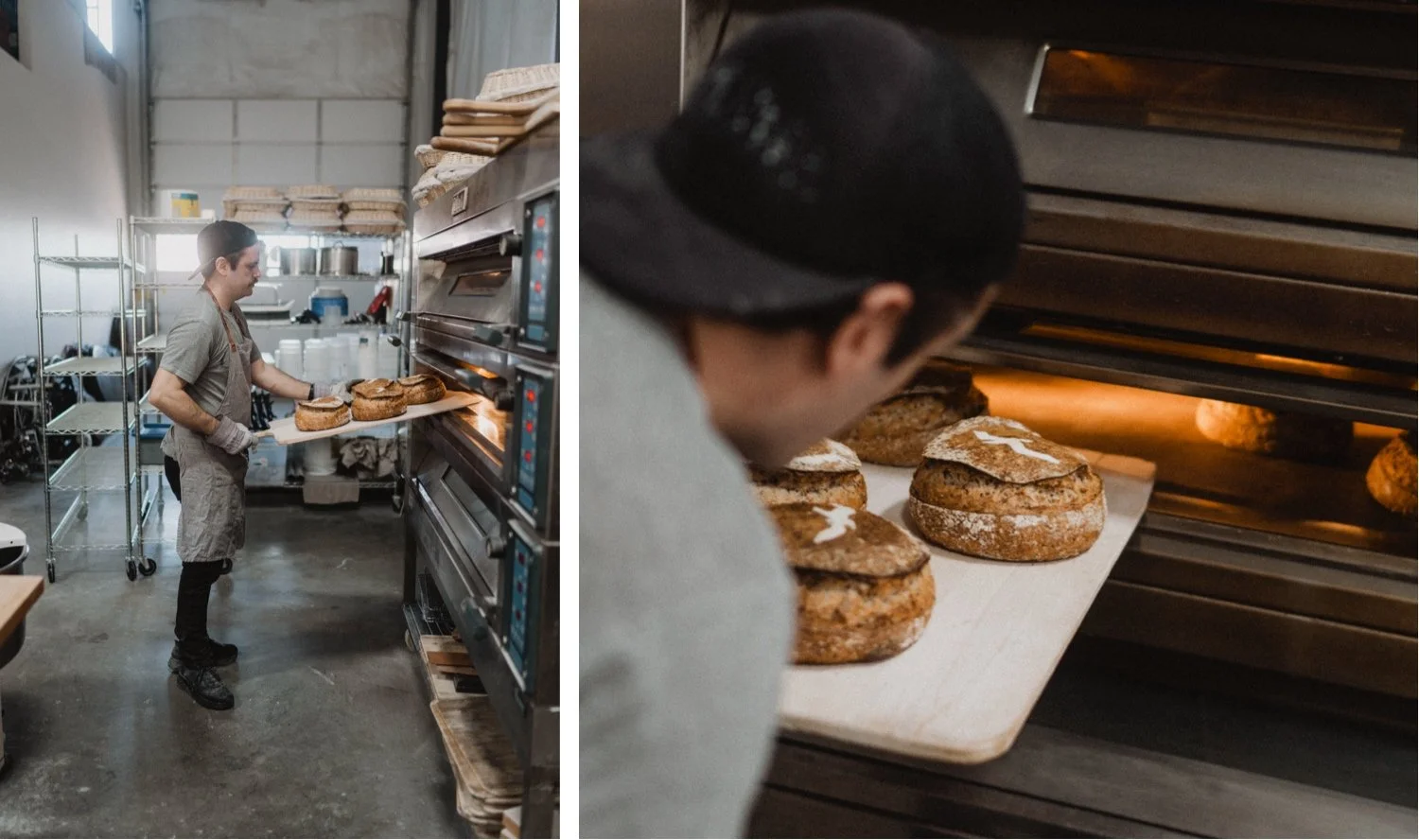
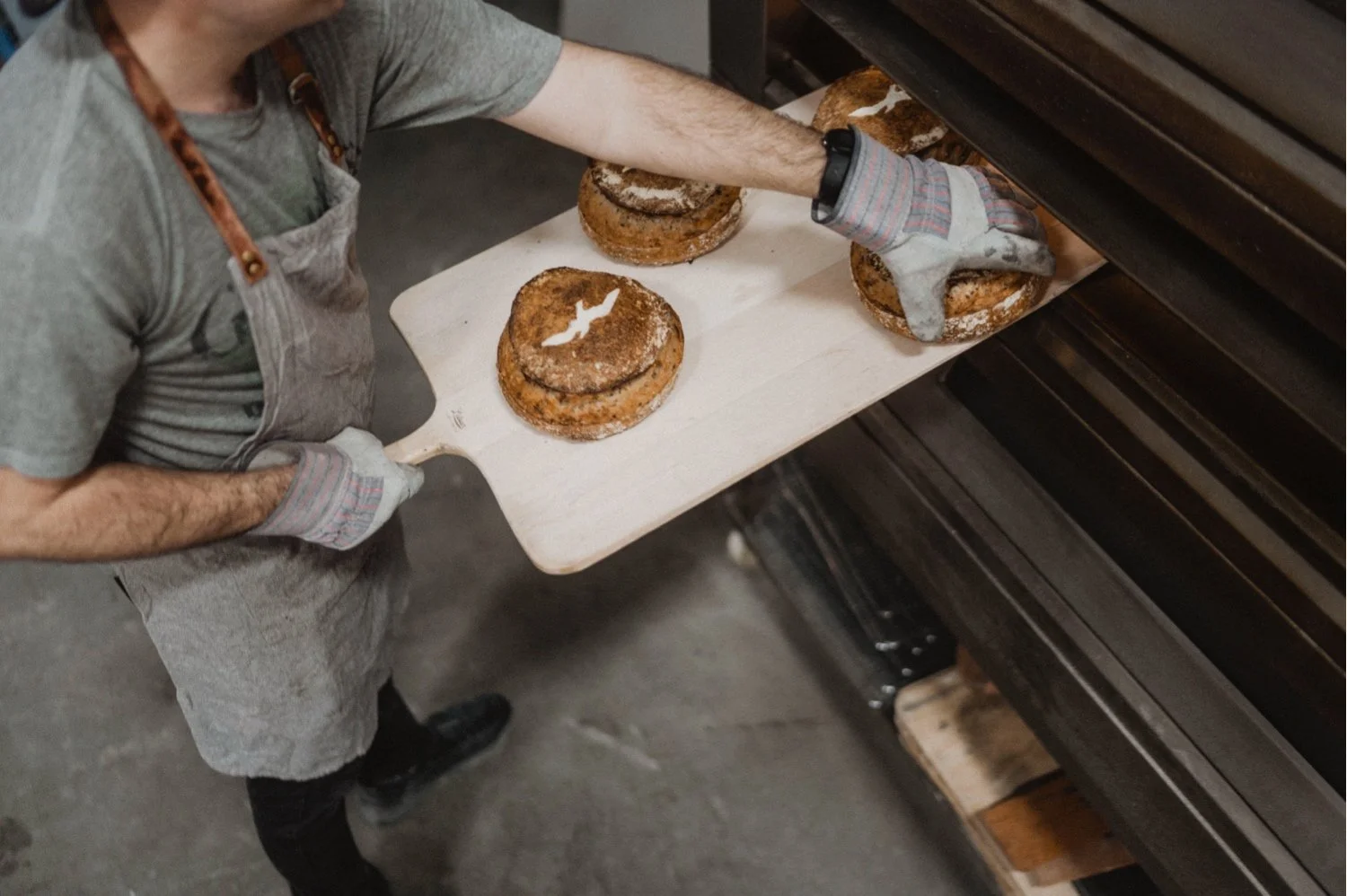
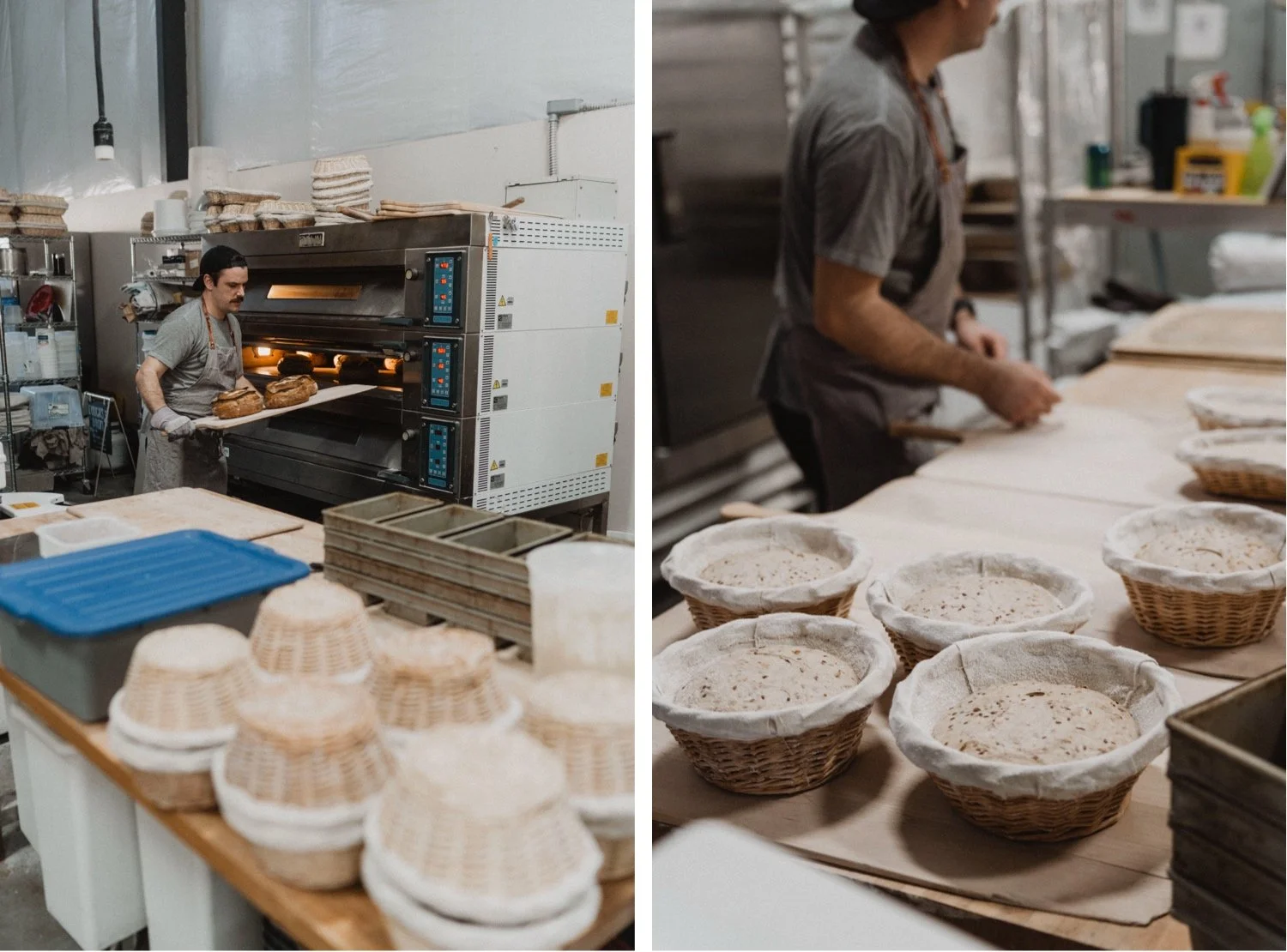
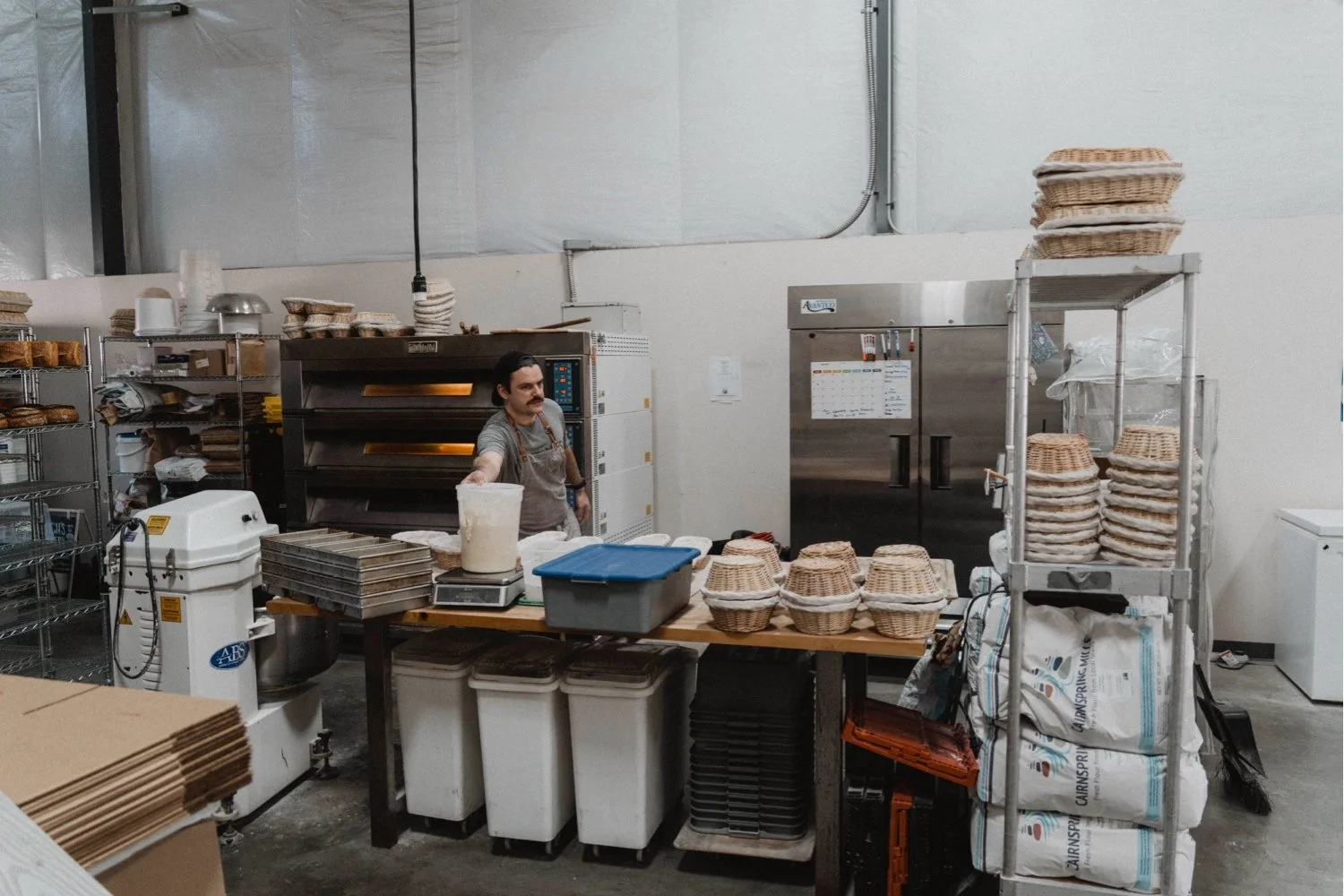
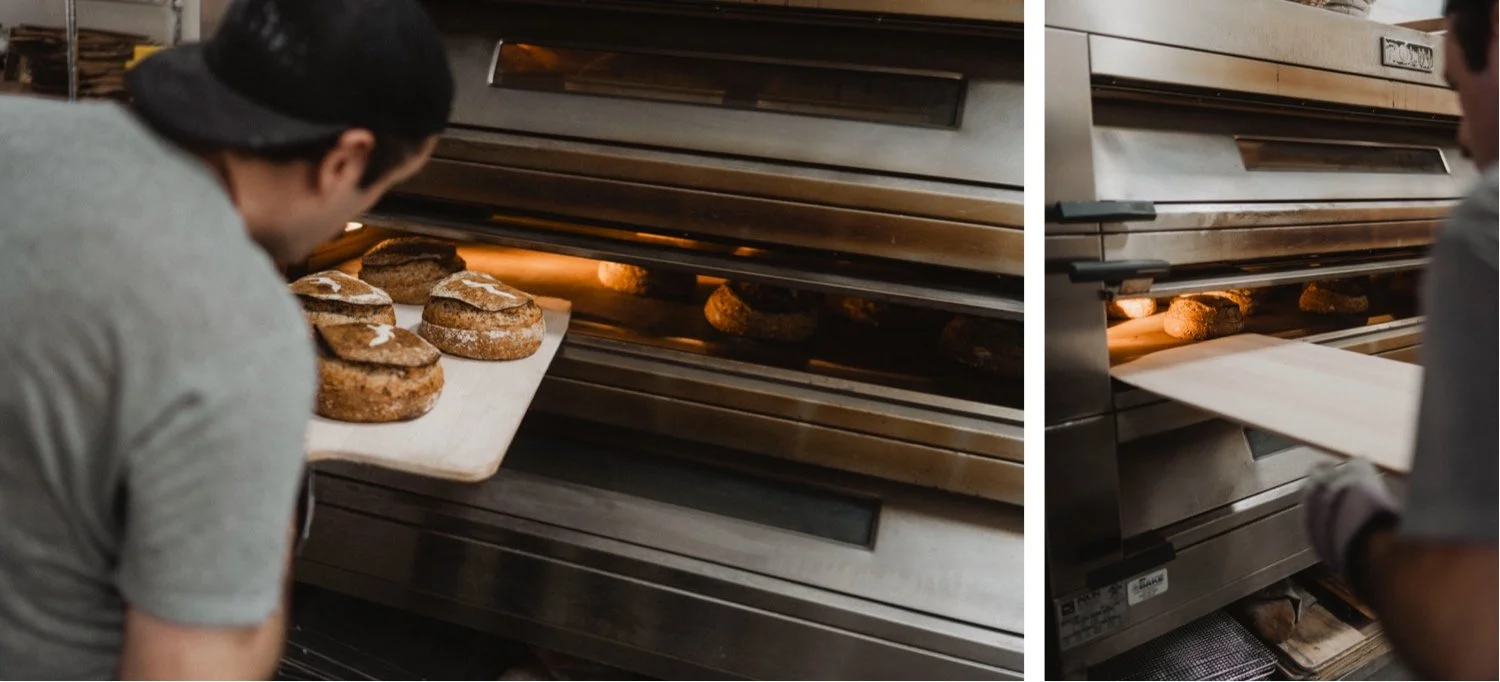
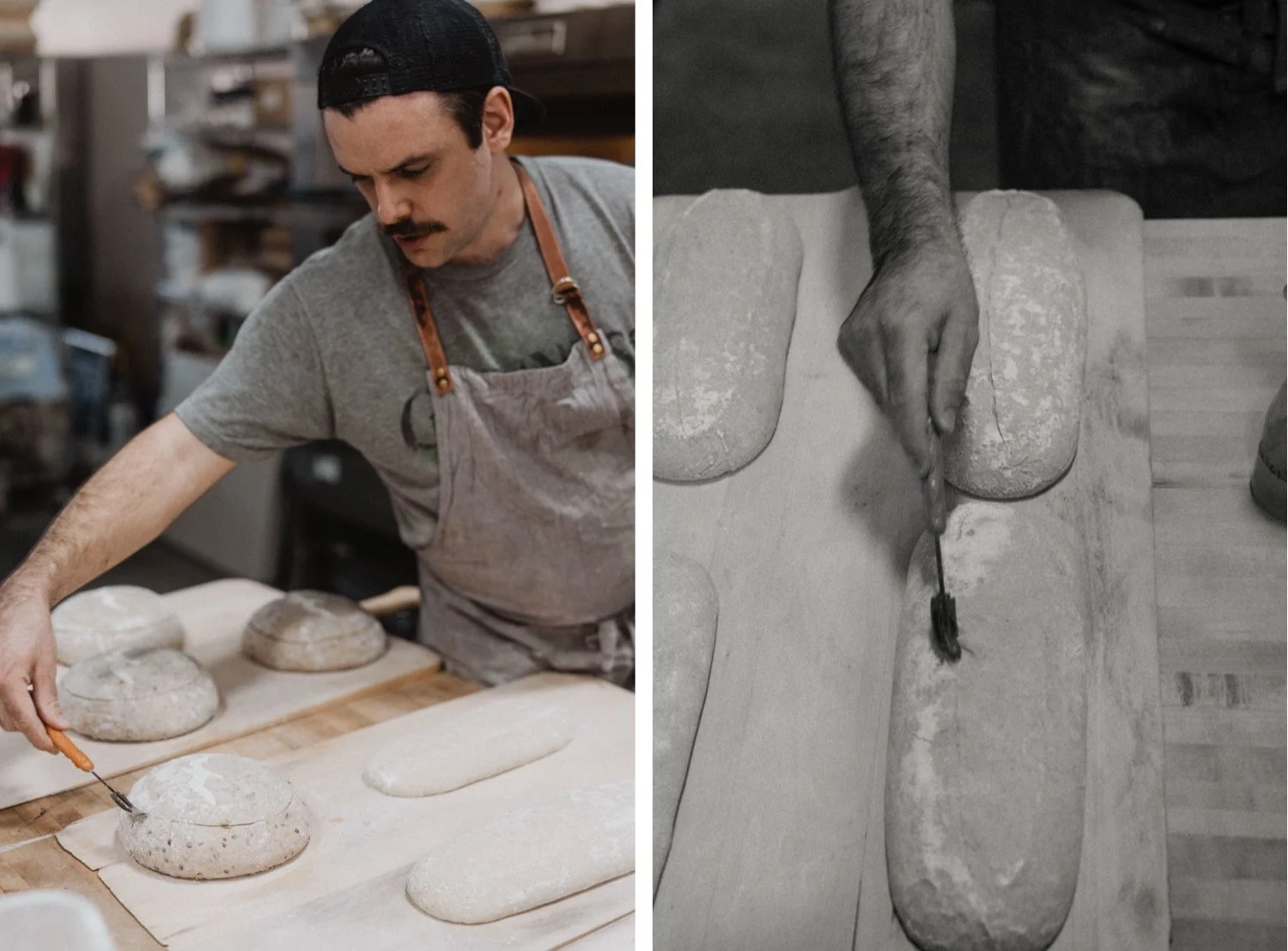
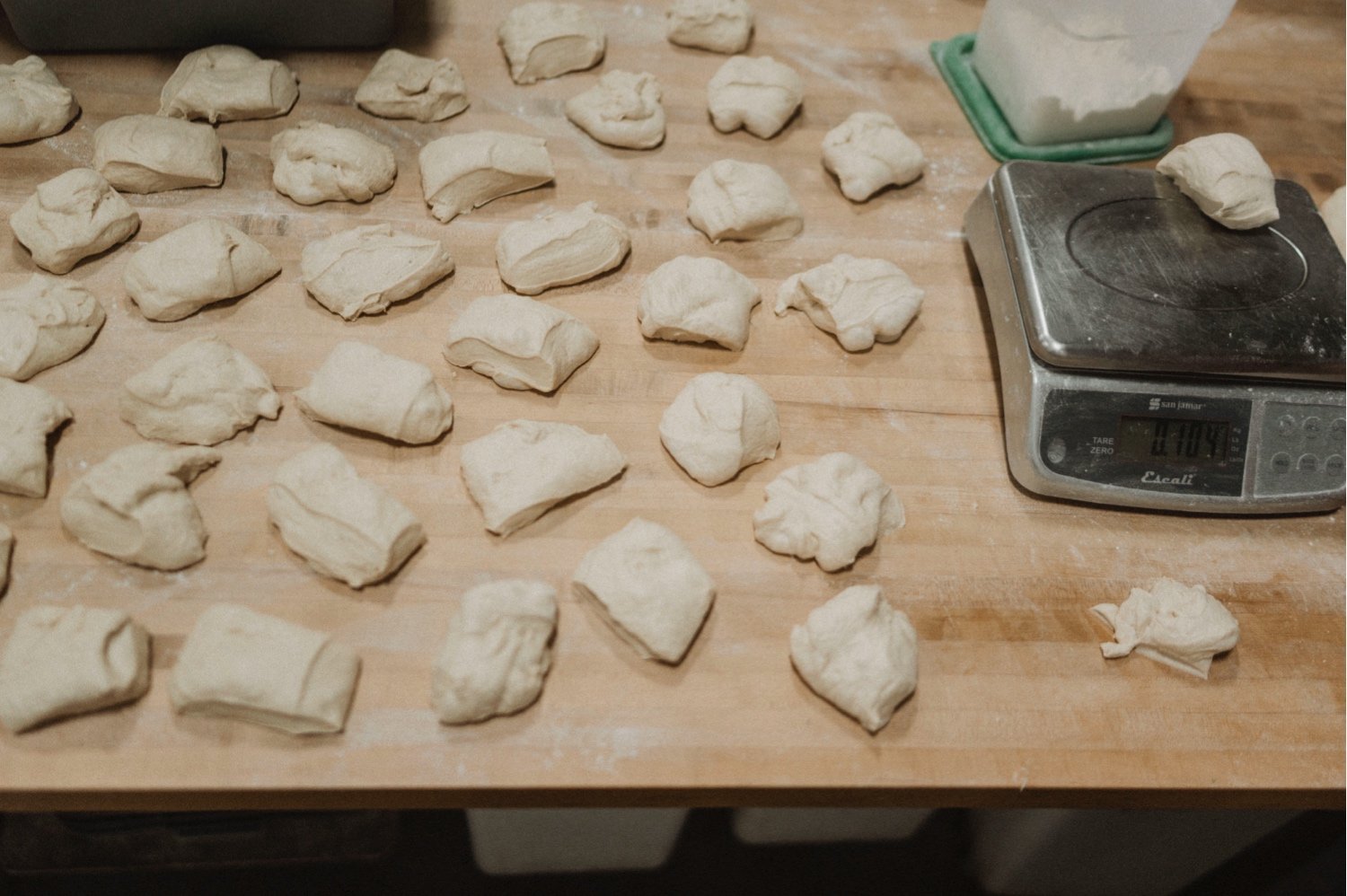
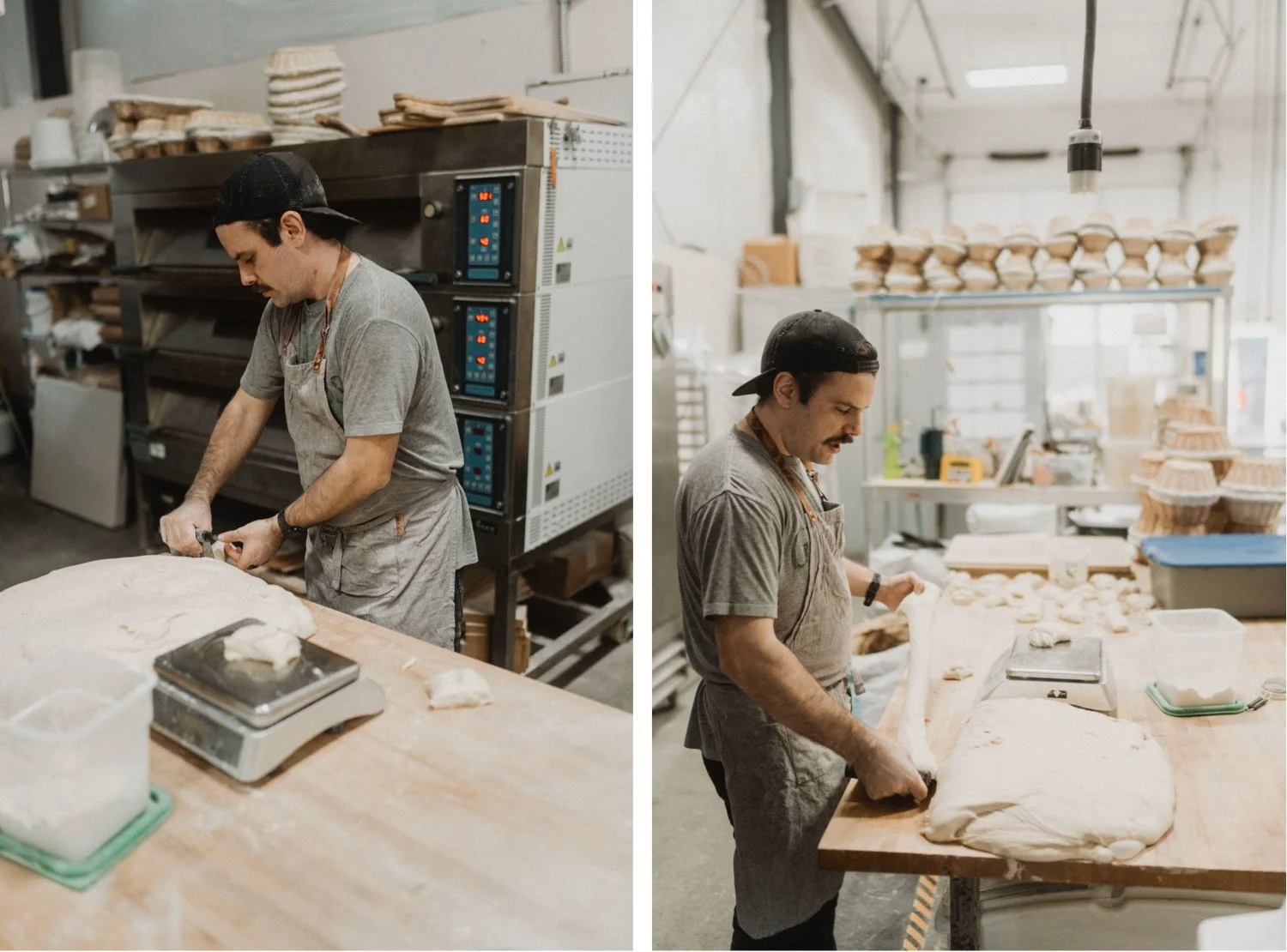
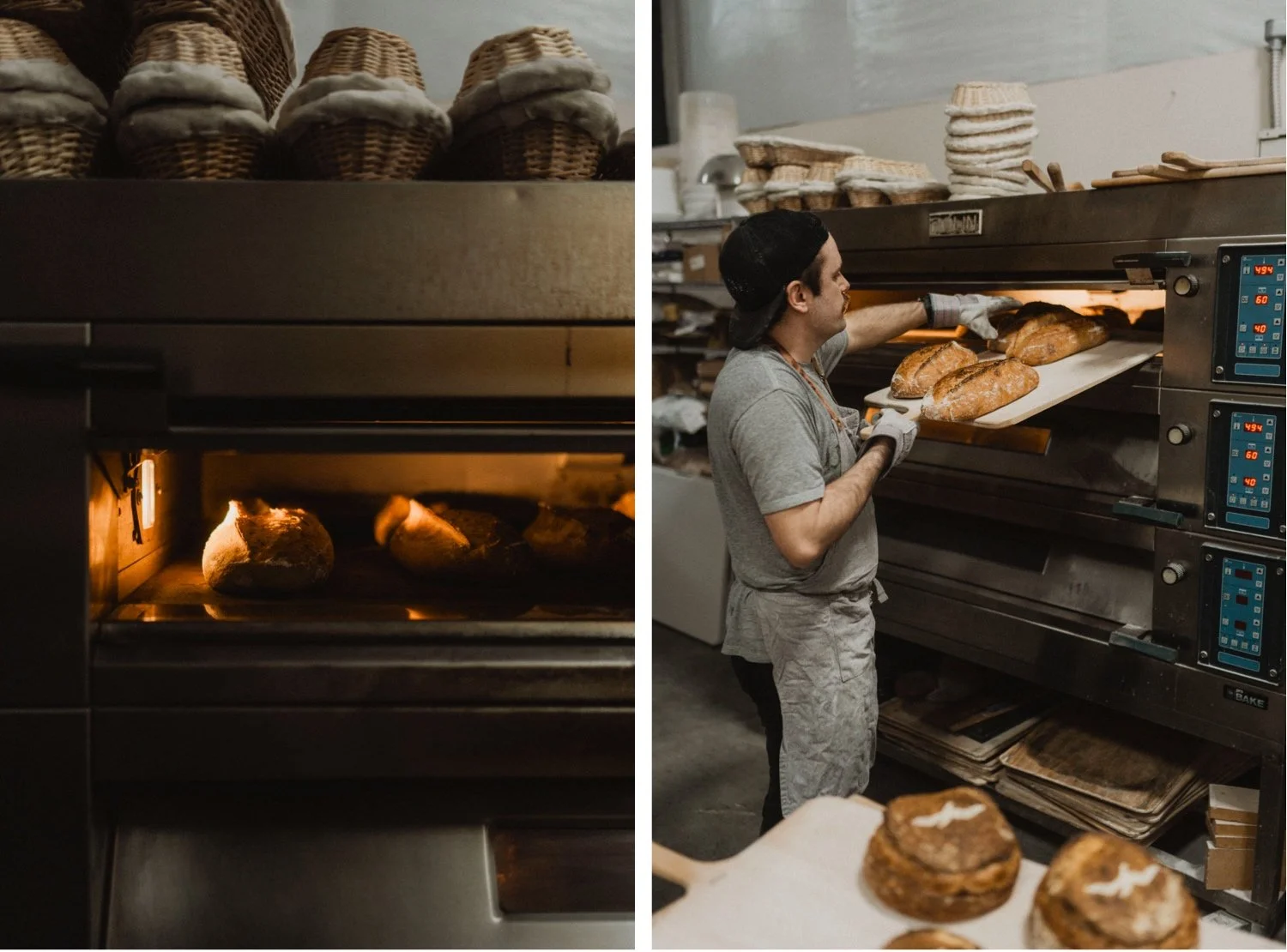
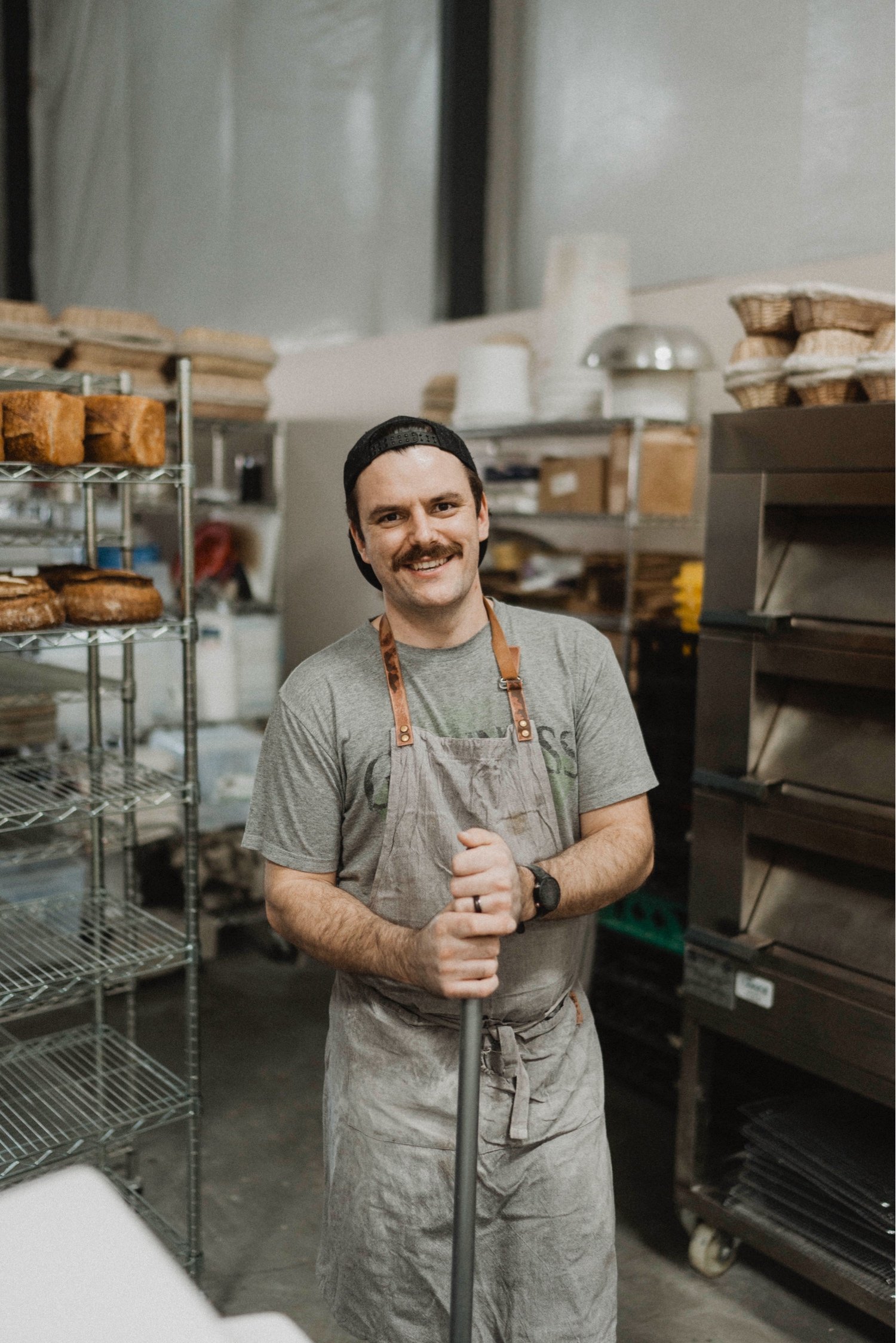
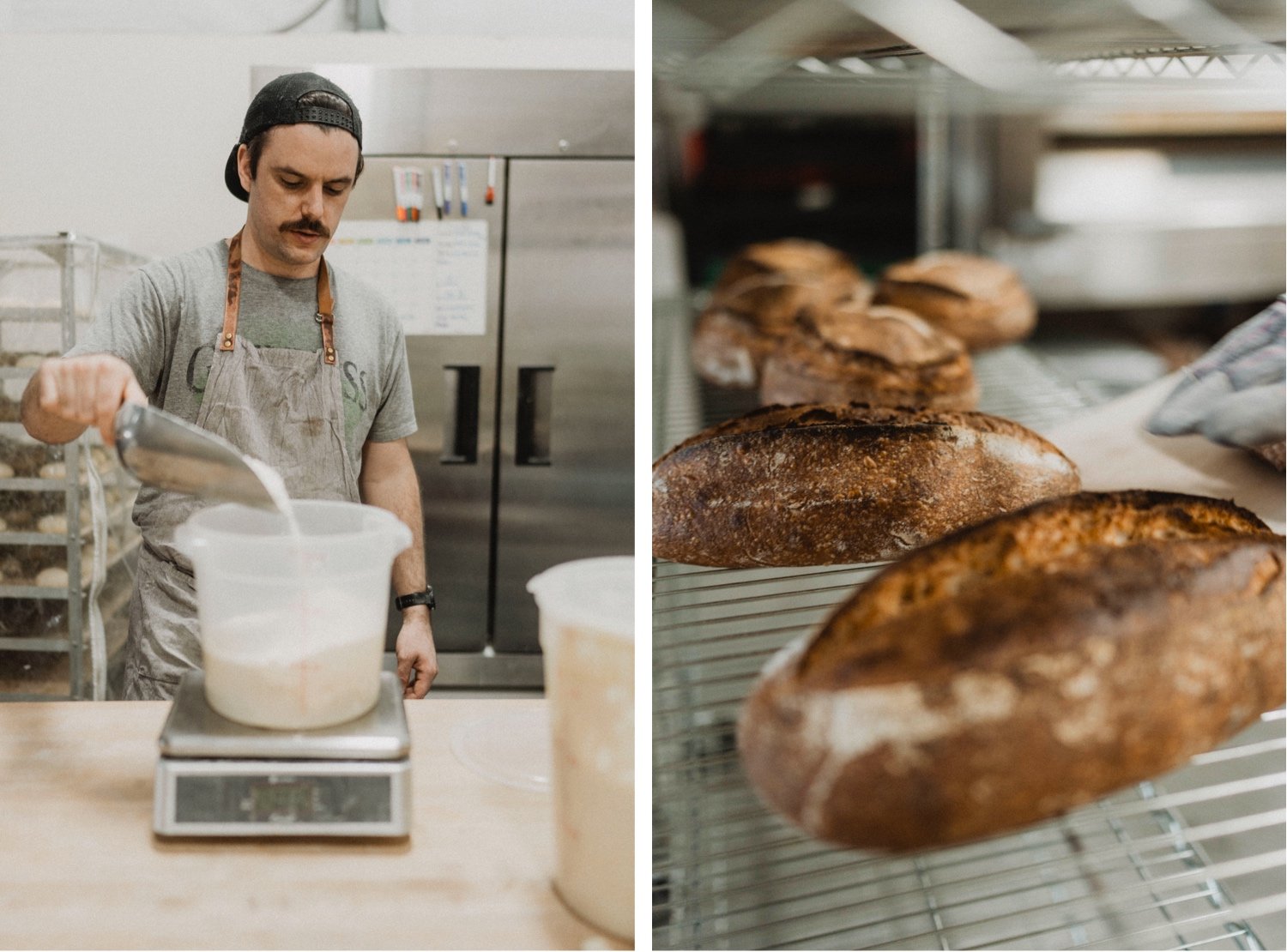
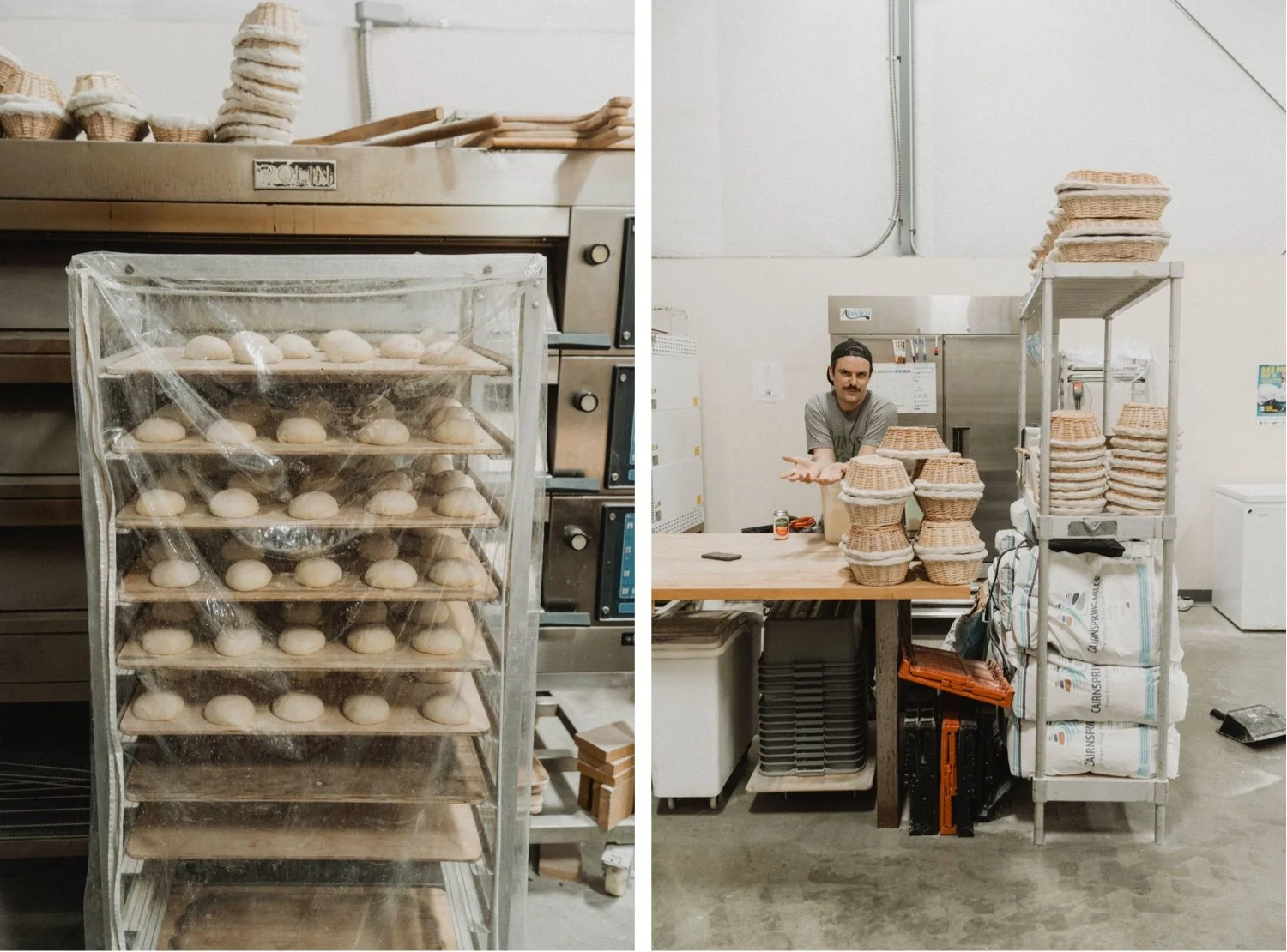
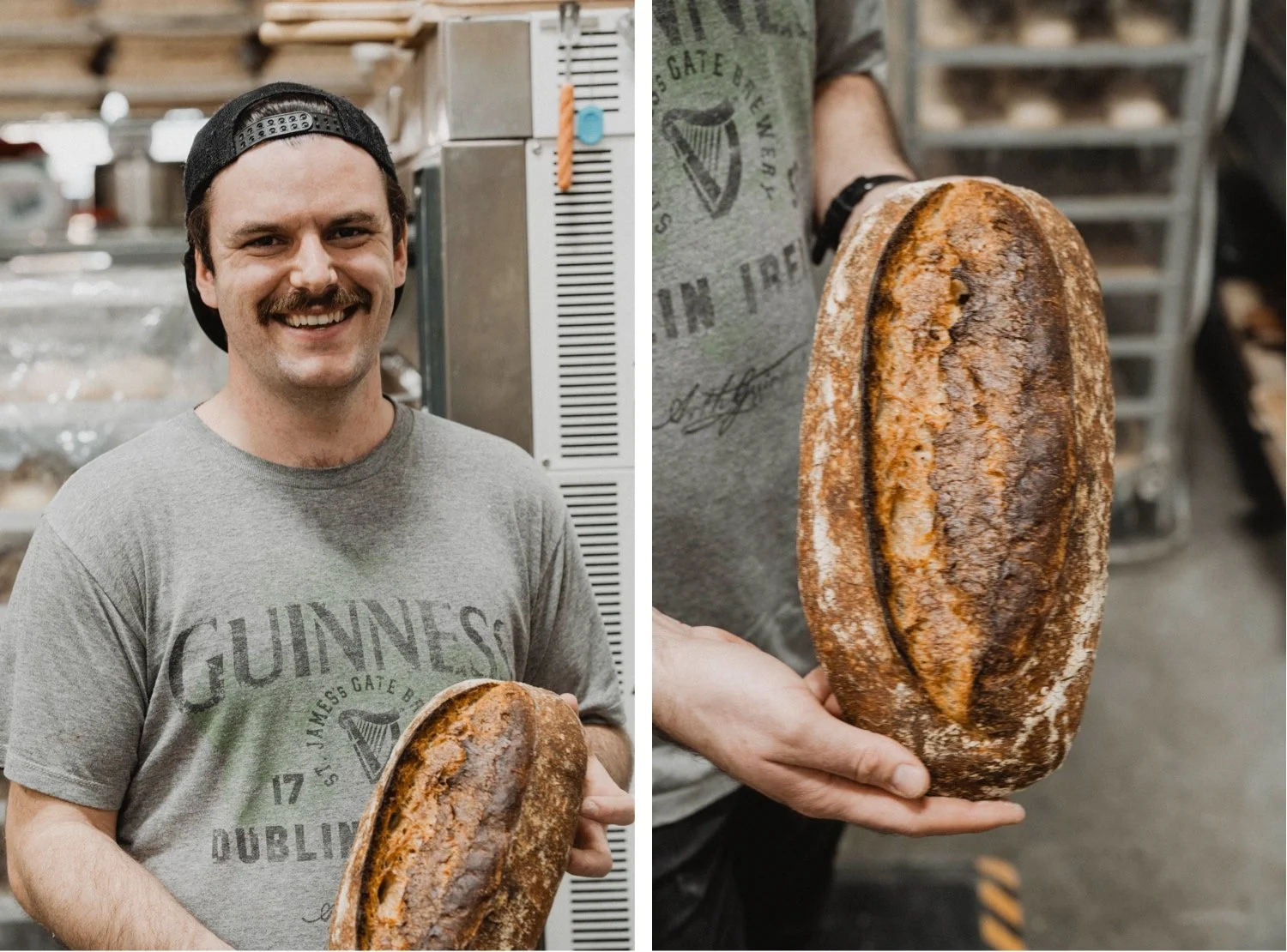
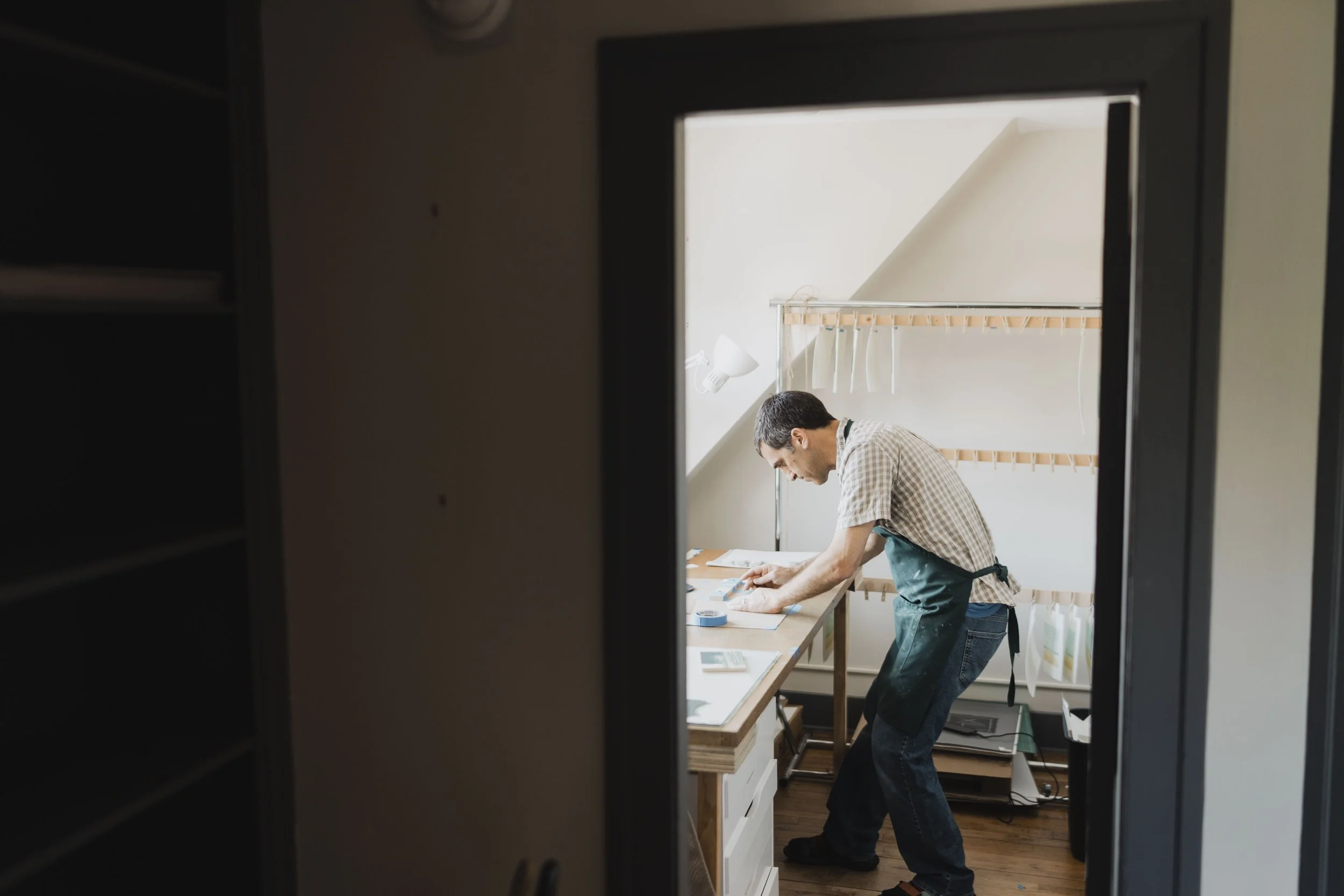
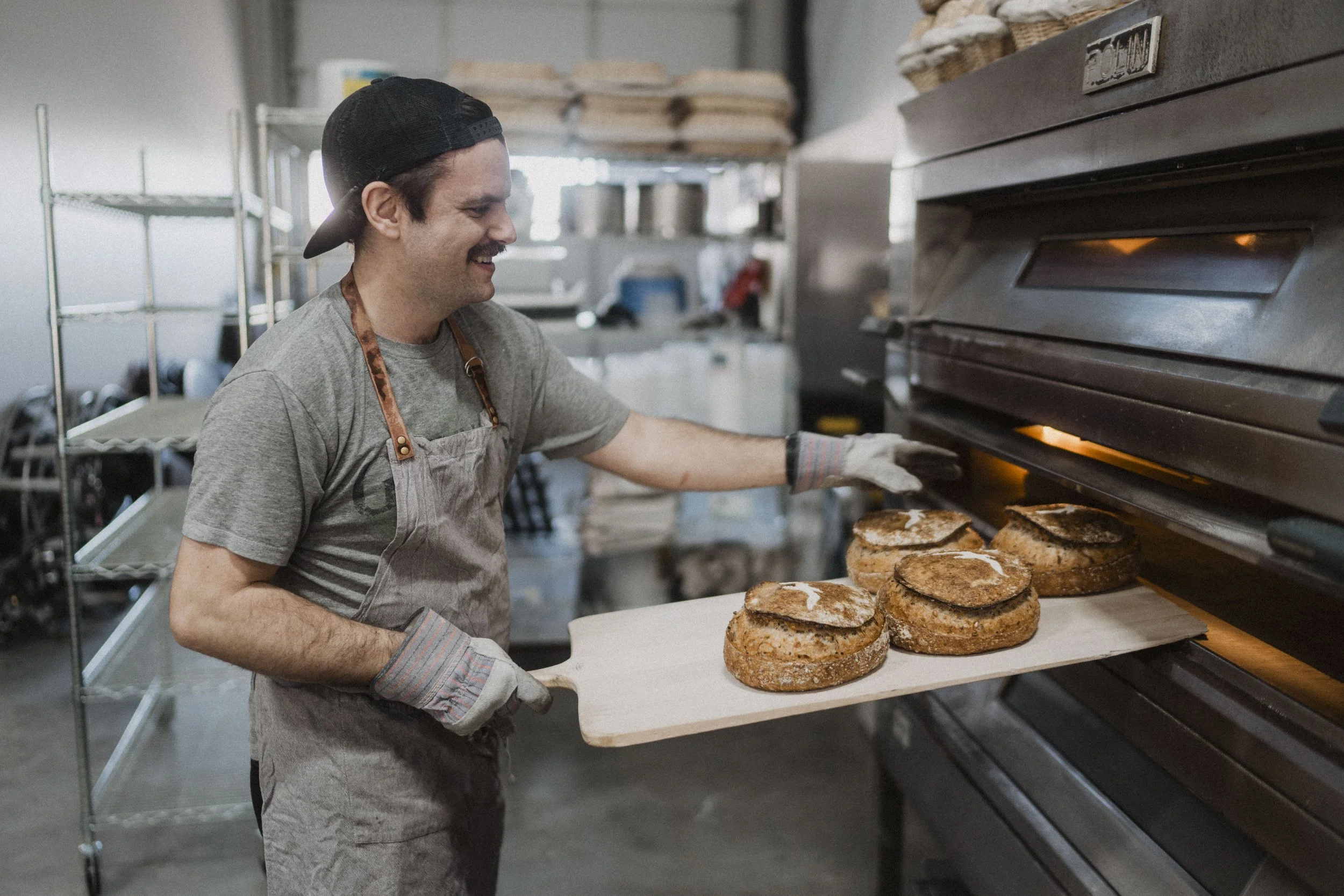
Joey Slaugh is the man behind Dough’s Bakery. I caught up with him to watch some loaves go from dough to beautiful golden bread and chat about his journey from taking baking as a hobby to a career.
Tell me who you are and what you do.
I'm Joey Slaugh. I bake bread. I’ve baked bread since I was 19, I started in a Fred Meyer bakery, because I was just paying for college, and that was all frozen breads, but the idea of it was fascinating to me. So I kind of got more into it. I started buying books on it. I started developing my own starter home. I started making my own breads, and then my brother, who was a head chef at the time in Yakima, he wanted me to come out and work with him and actually develop and learn more working in a baking environment in the kitchens. So that's kind of what set me on the path.
What were the first things that you baked and played around with?
I made a f@#% load of bagels! I made a lot of bagels when I was first getting in. I feel like bagels were such a sharable thing because you can make a dozen of them and then just be like, “you have a bagel, you want one, you want two, and cream cheese,” So I made those a lot for my roommates and friends. They were absolute trash, but it made me interested, you know, and I was like, this is cool. And then it became the ideal artisanal, I guess you could say. sourdough loaf, where that became an obsession afterwards. I got really fascinated with how changing percentages in bread, specifically with starters and hydration, totally just drastically changed the loaf and the end product that came out. It was just so fascinating.
That's funny. I feel like I've seen it in photography a lot, and I think in most art forms, you have to make a lot of bad art before you start making good art. And a lot of photographers don't have patience and lose their excitement for stuff before they get to the point where they're understanding it and they're actually making good photos.
Yeah, absolutely. I feel like that's probably, like you were saying, in most art forms. I had some photos on my personal Instagram that I ended up deleting since because I look at them now and I'm like, I don't want people to associate me with those because those were back when I was like 20.
What other iterations has your baking journey been on prior to this current business?
It's more the volume and the kinds of breads that were being made because I started in a large commercial grocery store bakery, where you just pretty much get sent the frozen dough and then you proof it and you just have to judge the proof and then bake it. And going from that to a kitchen, kitchen baking is so different as well compared to bakeries. And then going from the kitchen bakeries, I did that for over 2 years, to an actual bakery in Portland, Oregon, and then doing that for years…what you make and how you make it and the time frames and what you have to do to achieve your goal are all so vastly different in each of those areas. So that was kind of fascinating to me. Because after working at my brother's restaurant for over 2 years, I was like, “I’ve got this shit down.” And then I went to a bakery and it was so different and kind of jarring that I was very quickly humbled, and it was great. It was awesome because I got to meet a lot of very talented bakers. And a lot of it was even down to the science of how my hands worked.
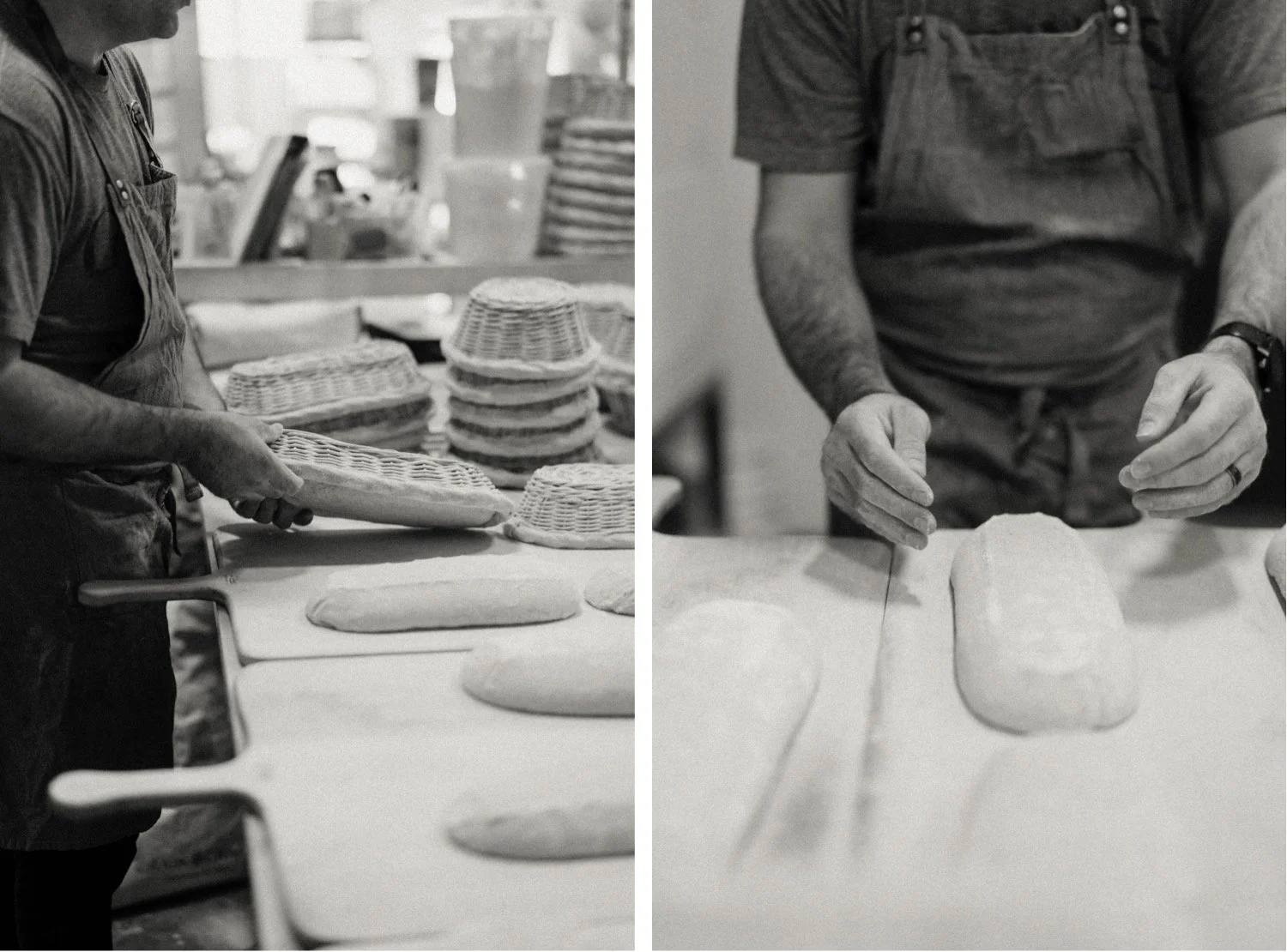
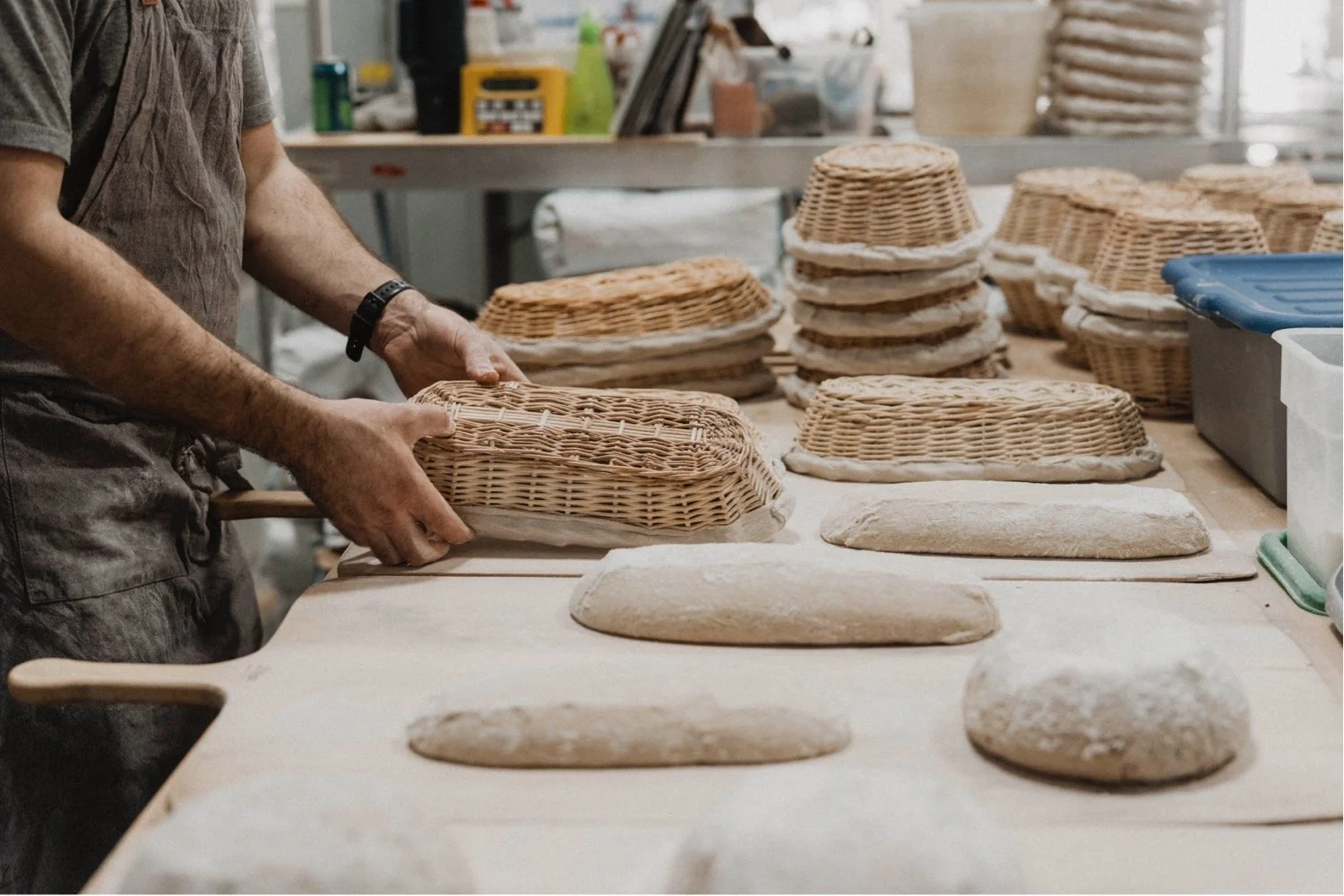
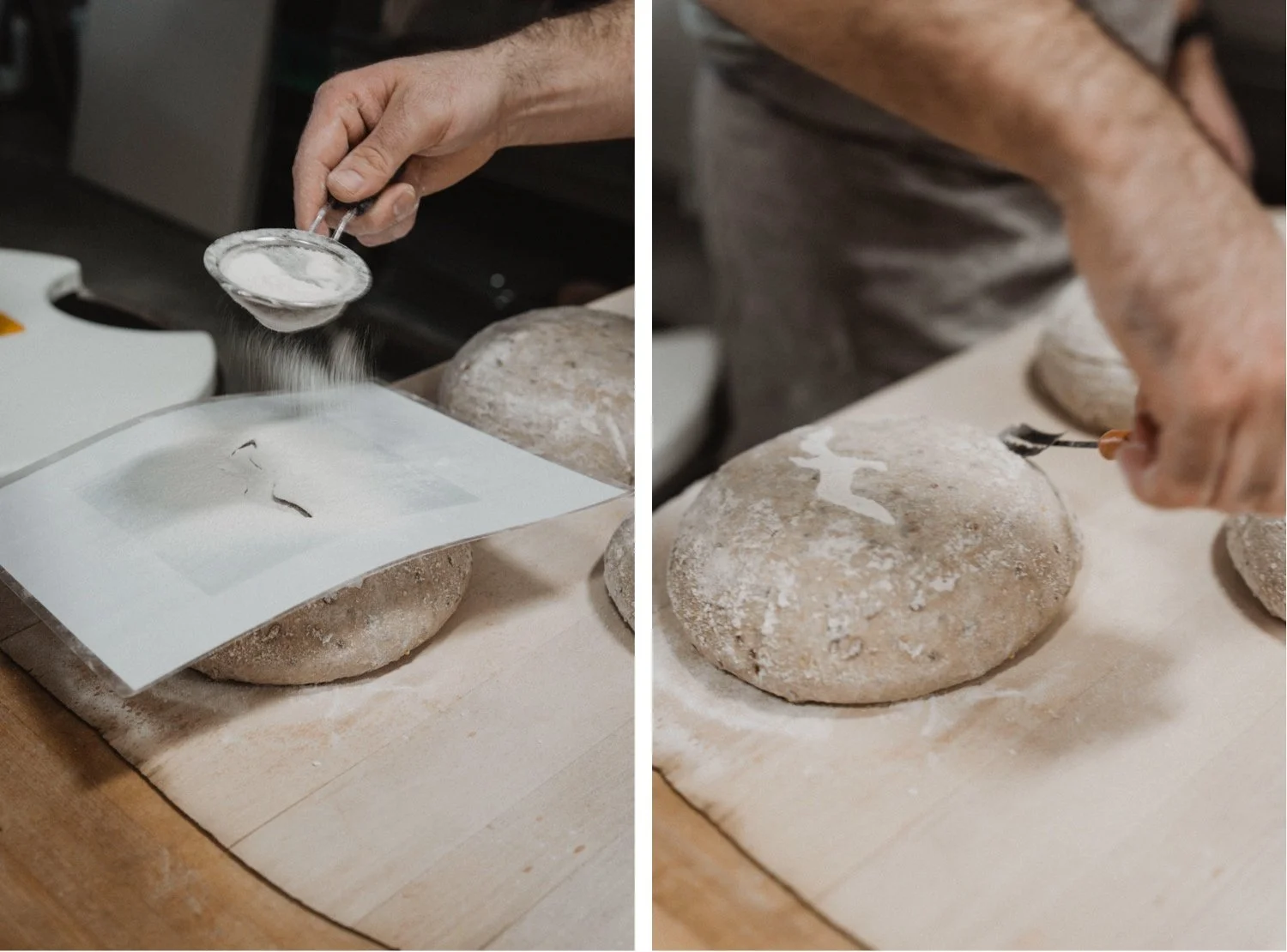
What does business right now? What's your production look like?
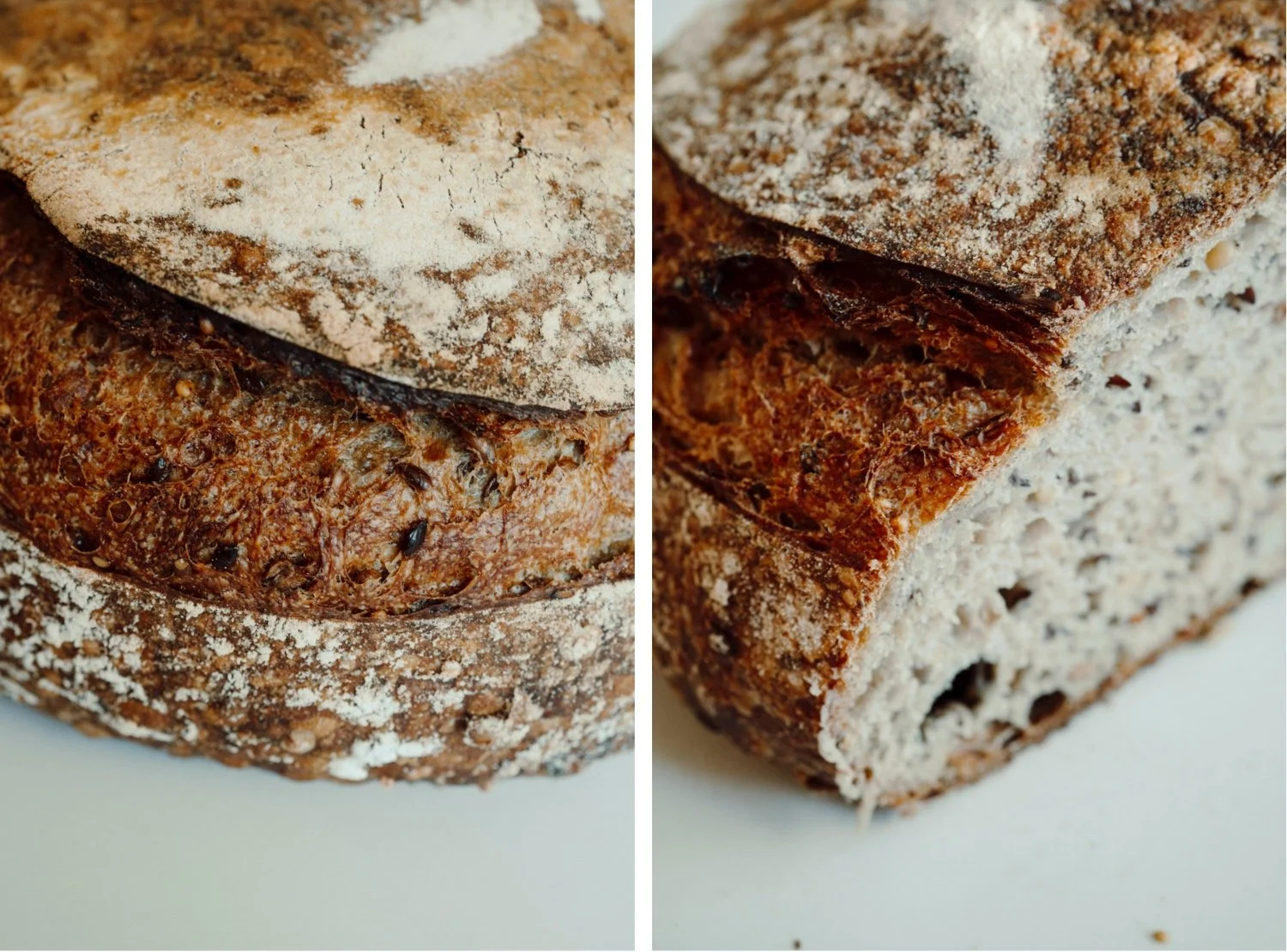
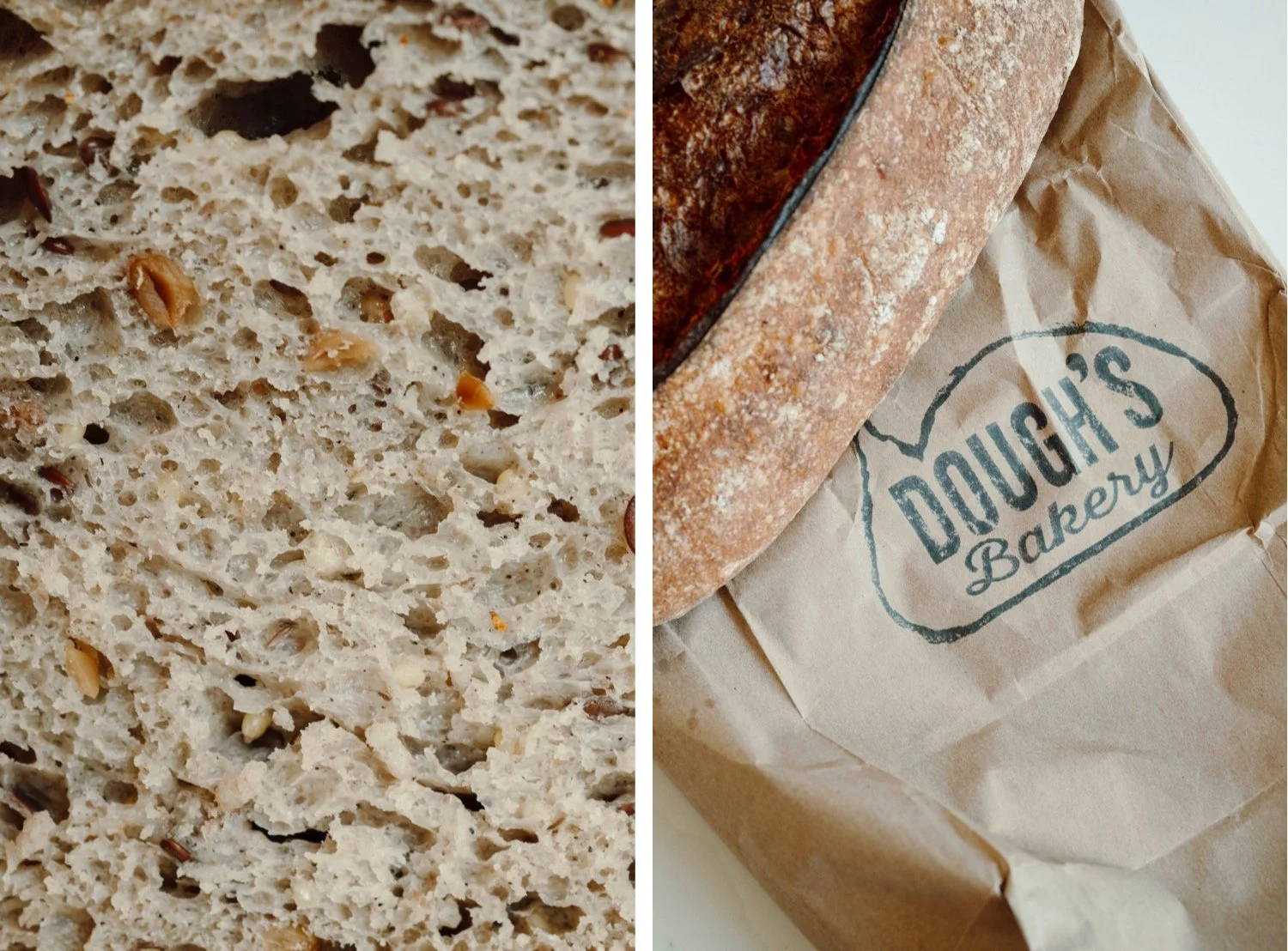
It's a lot of trying to make good, consistent sourdough loaves. We're not gluten-free, and we get that question a lot, like, all bakeries do. “Are you gluten free? Do you make a sourdough loaf?” Sourdough is not a style of loaf. It is a leavening process. It's a way to make bread. And that's something that not a lot of people understand. So our thing, though, is while we're not gluten-free, we try to be as gluten sensitive as possible, and that entails us using pre-fermented flours. A lot of high percentage pre-fermented flowers, and long fermentation process. And using local grains. And that's pretty much our style, and that's like what we like to make. That's what I really enjoy. Just trying to make bread that I want to eat. And to be fair, I don't eat a ton of bread because I’m around it so much. But when I do, you know, I would like to be able to enjoy it. So when I eat, I'm like, “do I enjoy this?” Yes.
How do you eat your bread?
I always like to roast it first. So if I can, I like to put it over a grill. If I have a slice of the country, I'll grill it and then roasted garlic and slices of tomato when tomato season's in. If it's in the winter, just a slice of toast with butter. I'm not a big jam and toast guy. Peanut butter is good. It's fine. Or banana and honey.
When you walk into a bakery and you look at the loaves on their shelves, what are the things that you notice about their bread?
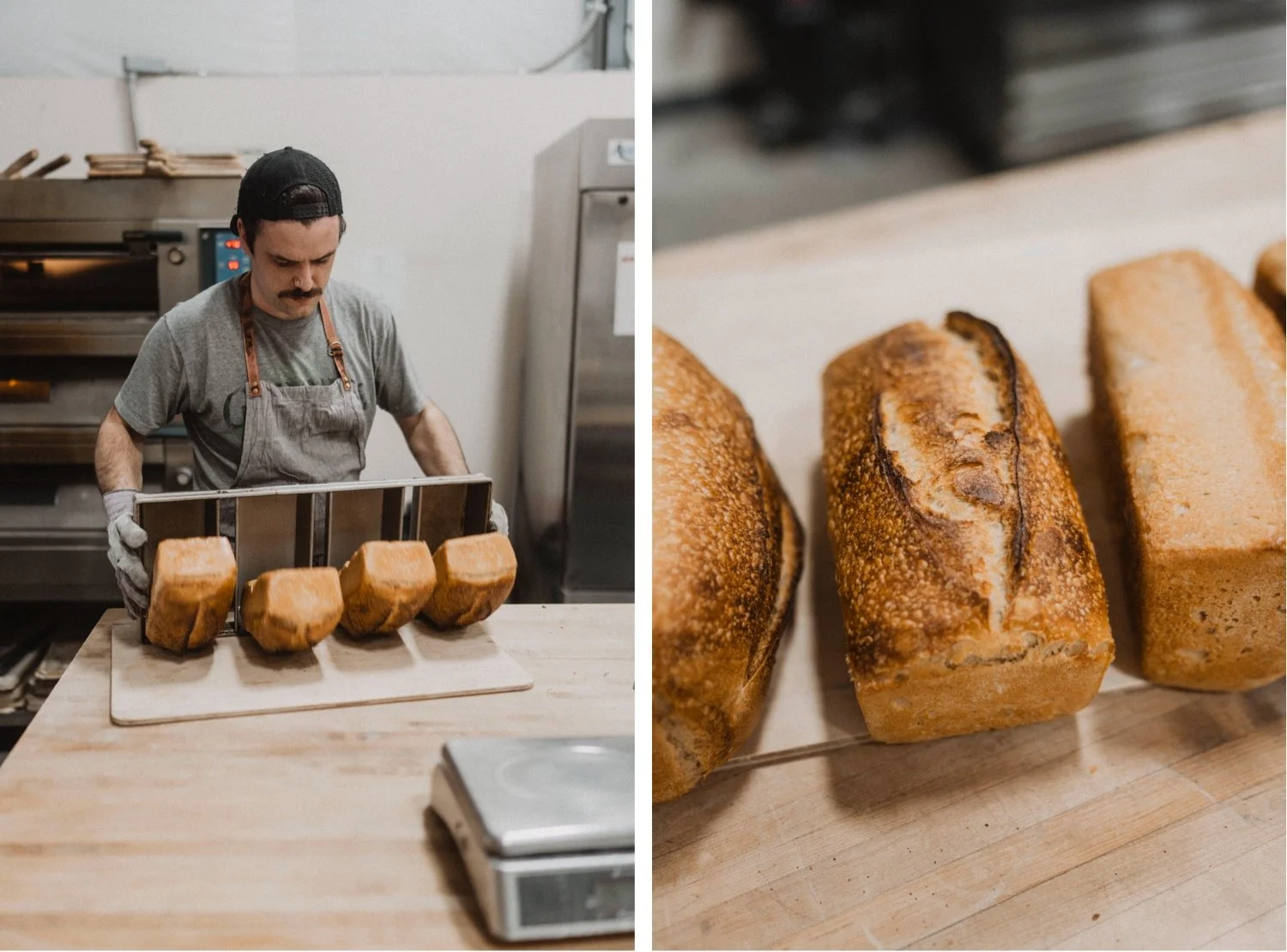
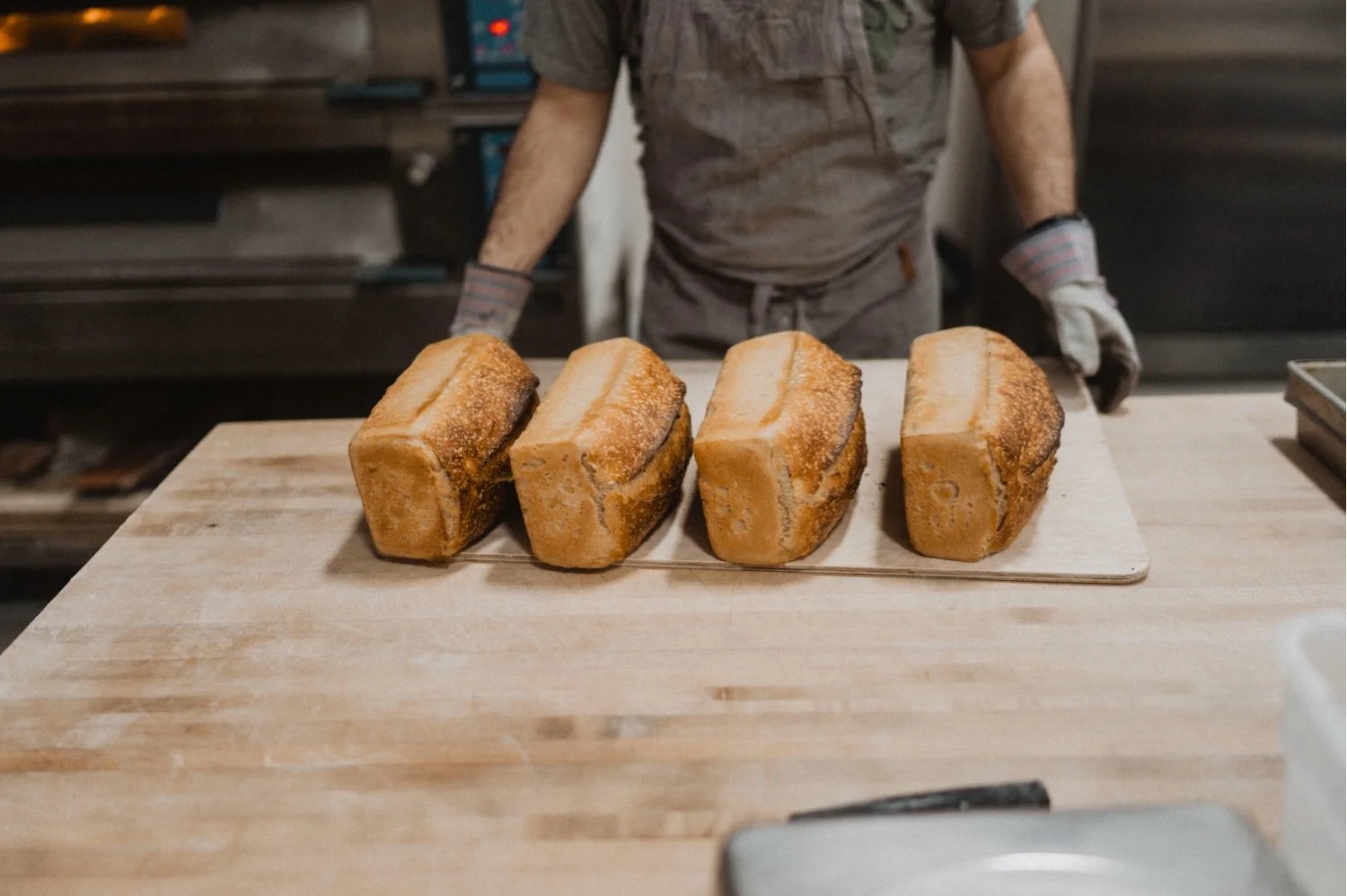
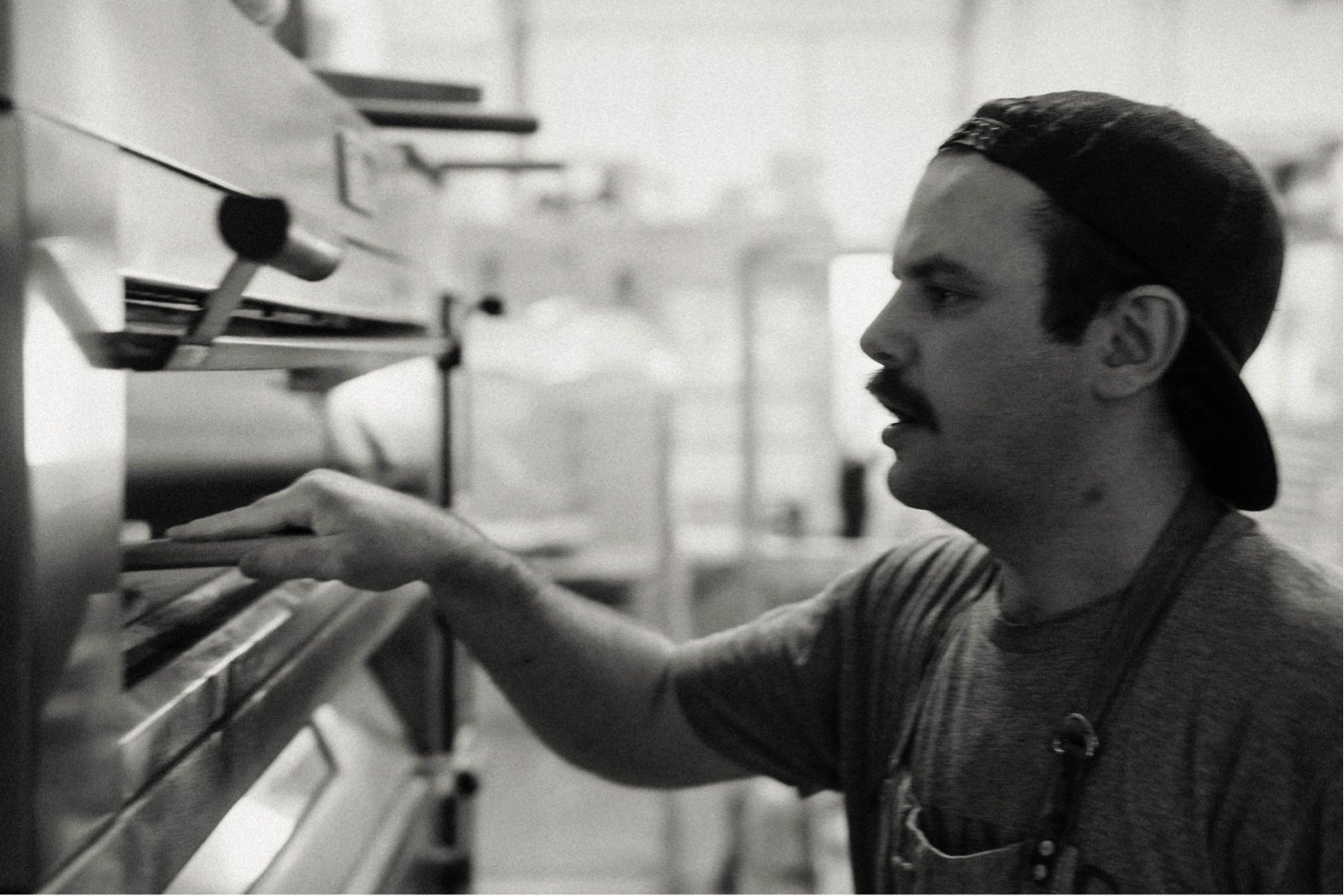
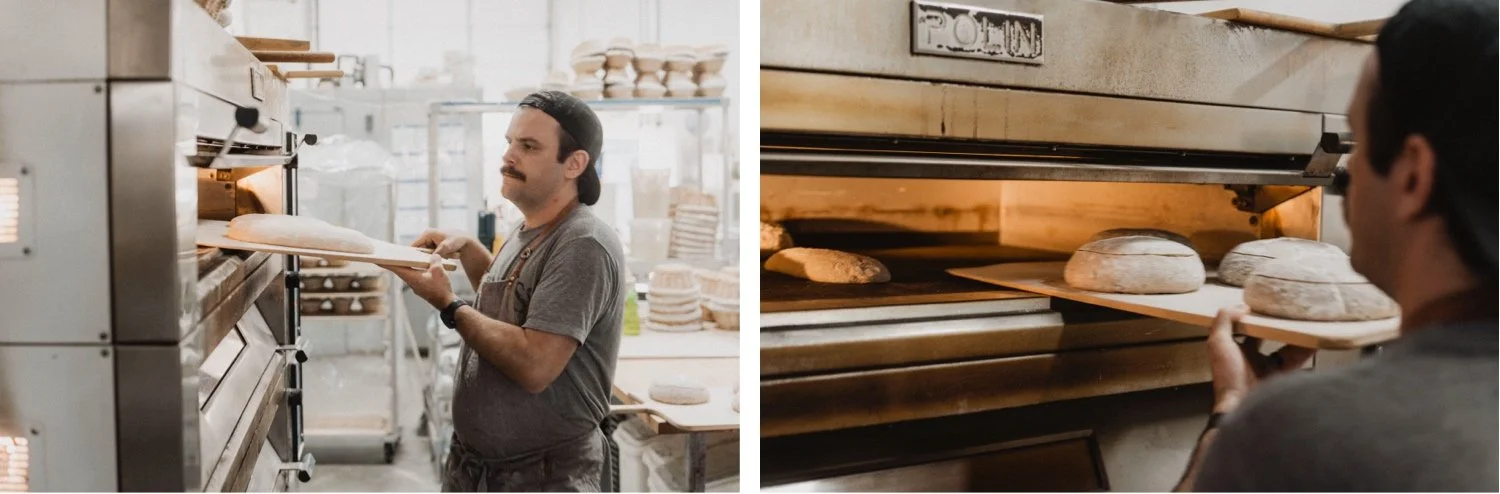
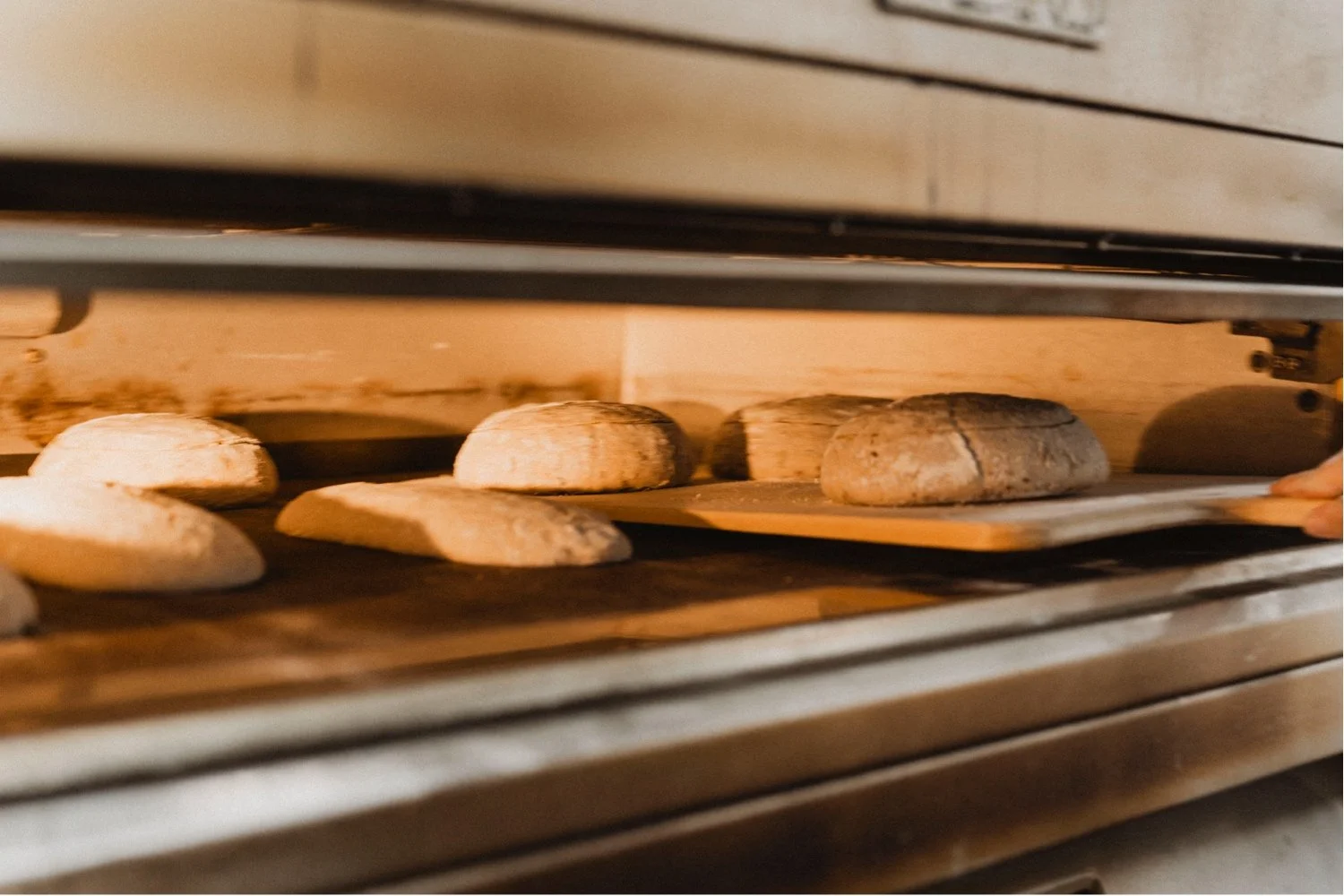
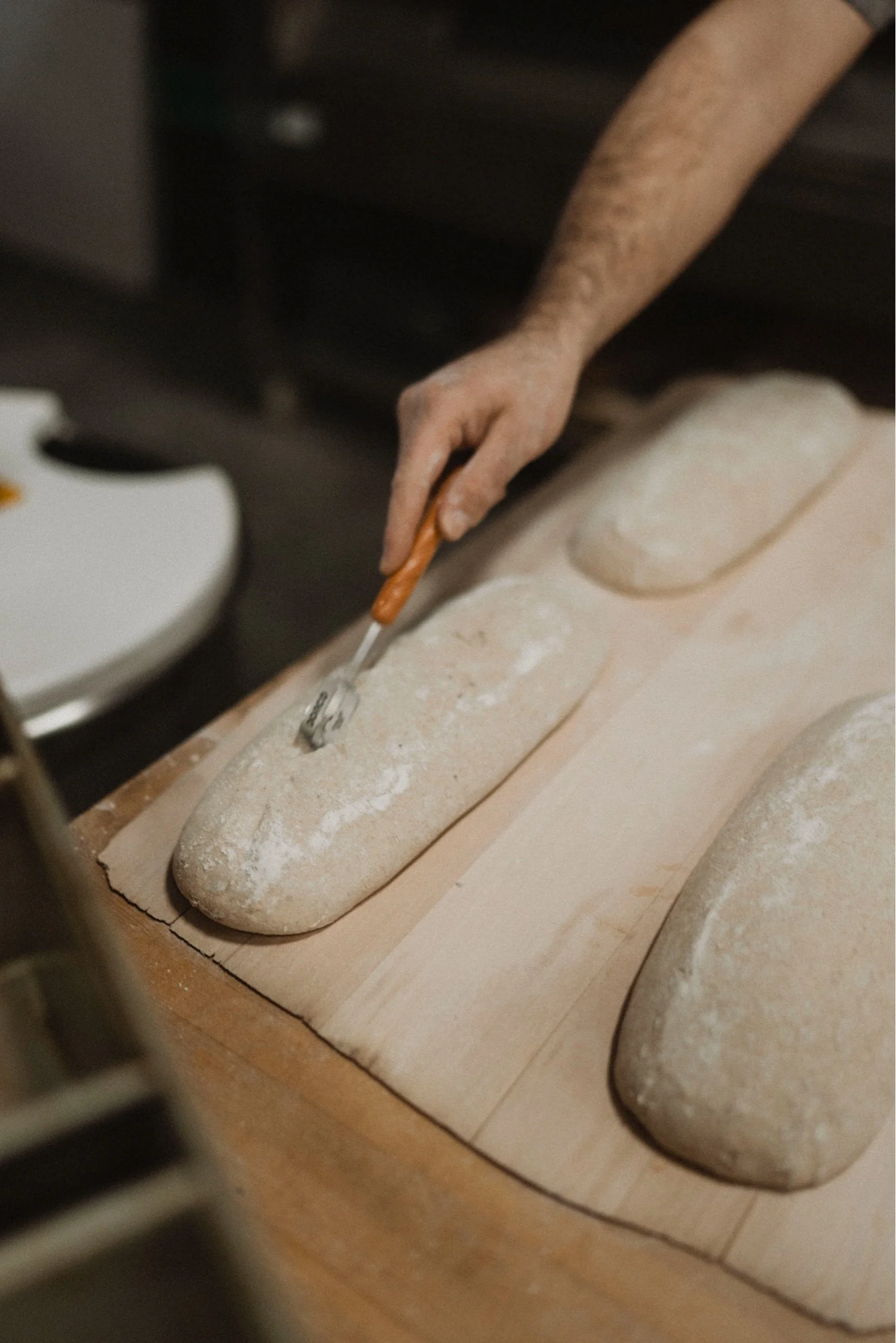
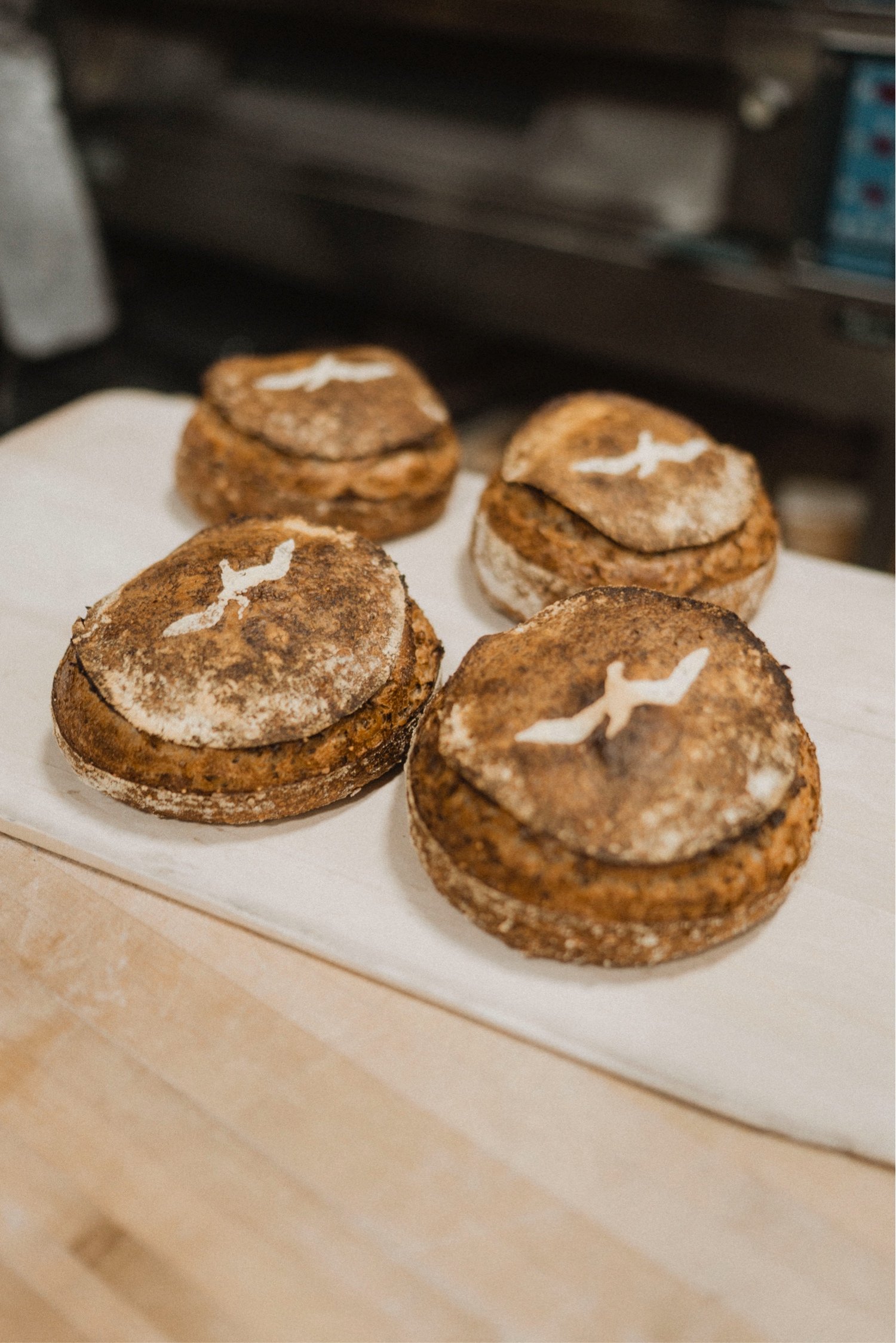
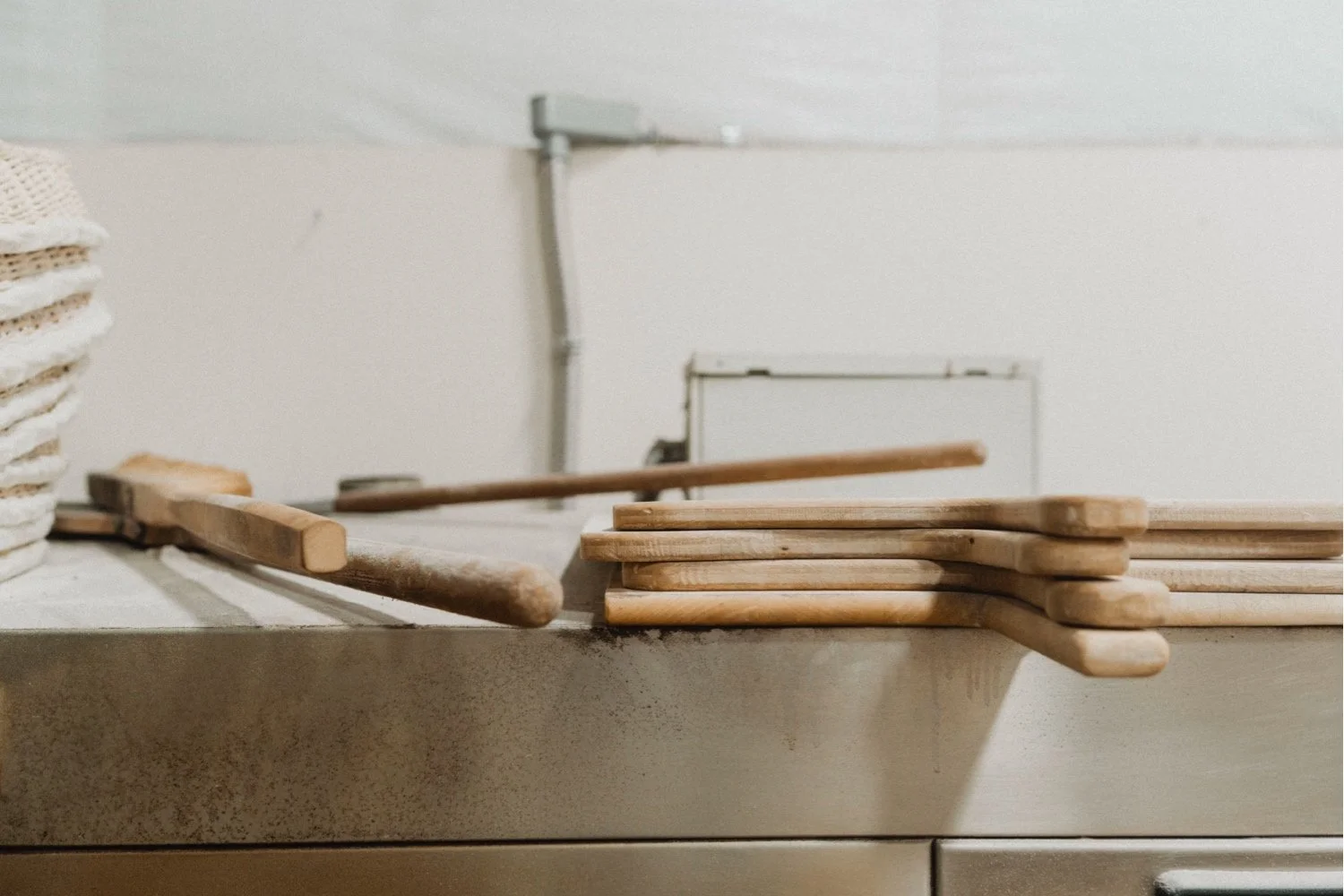
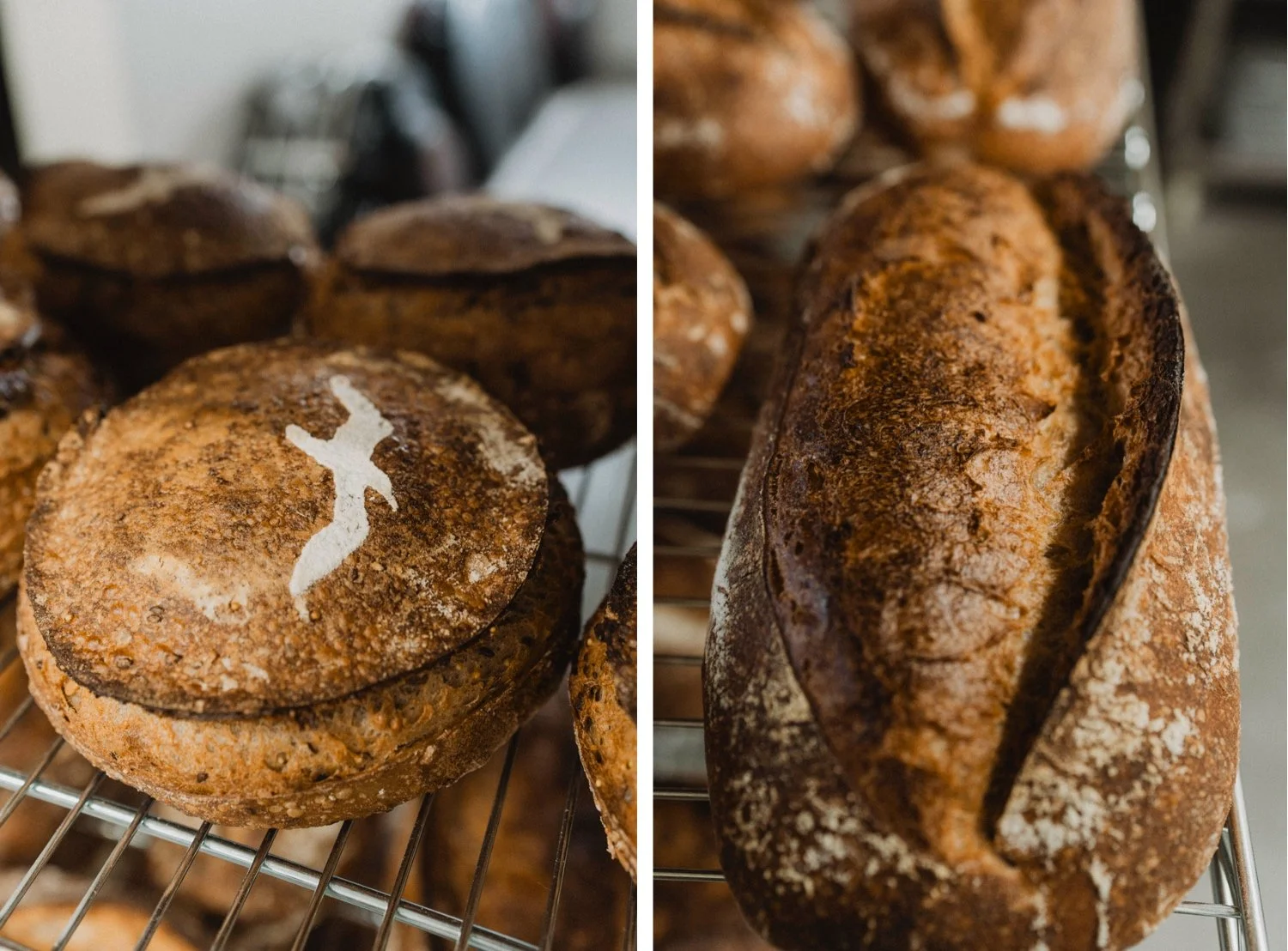
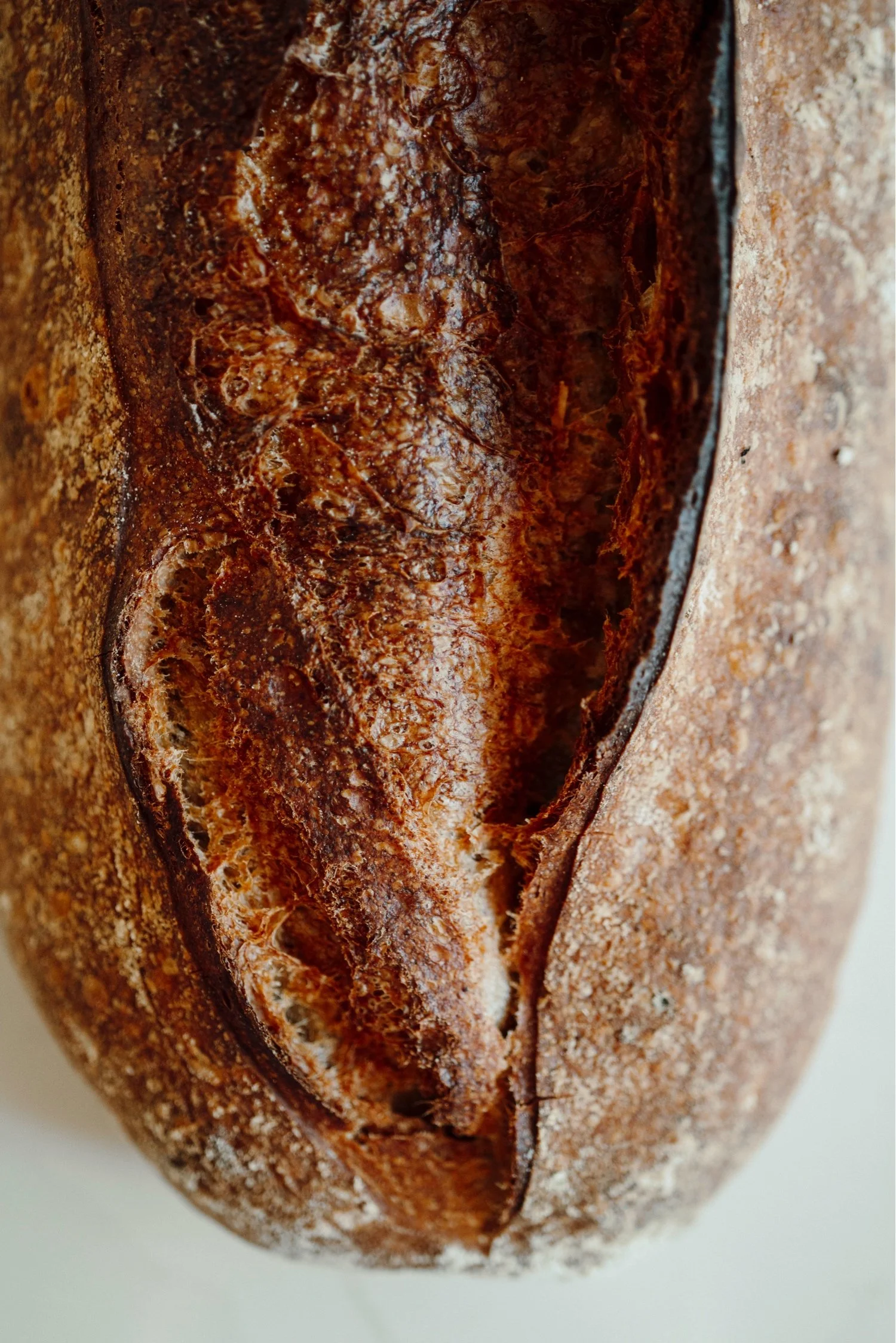
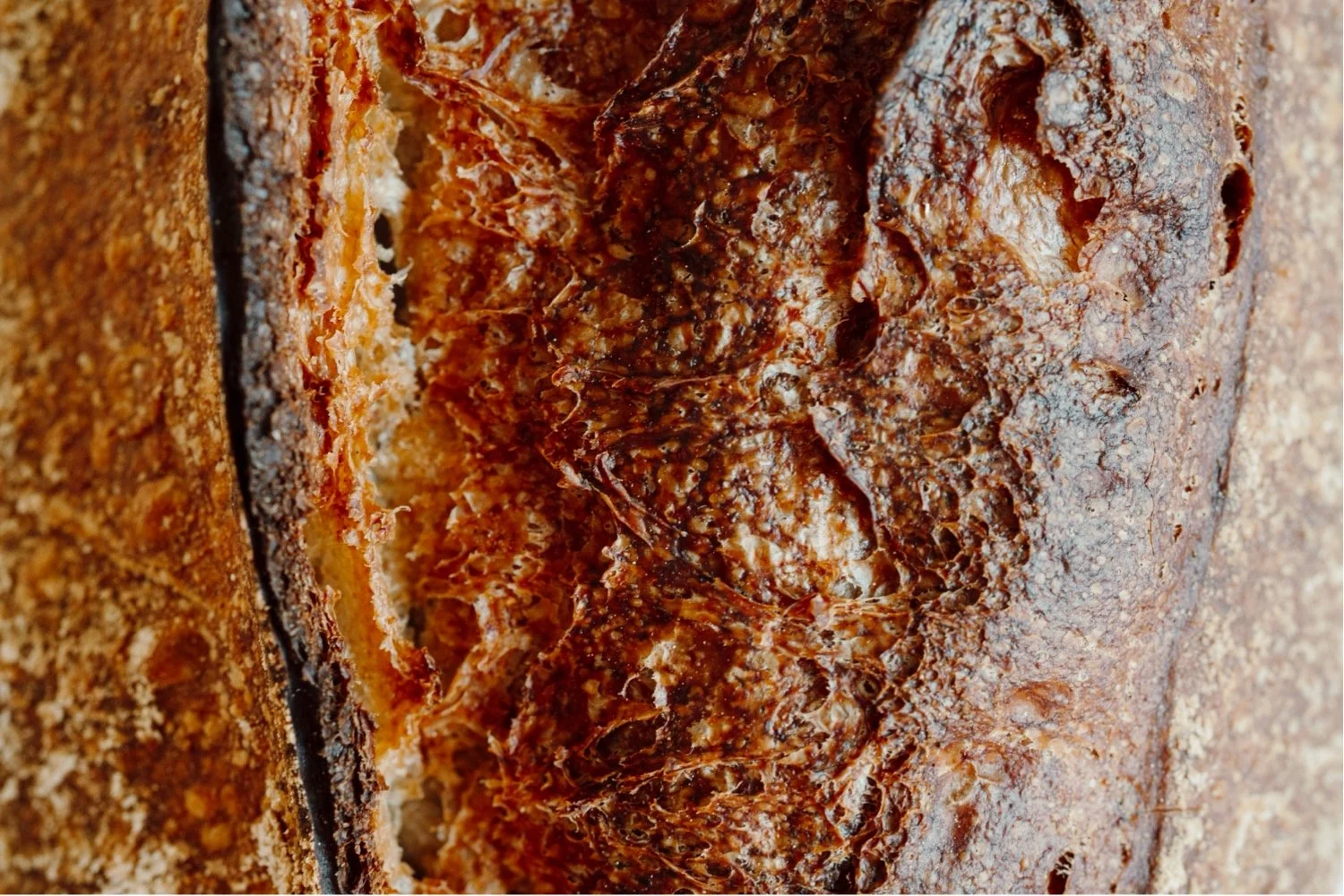
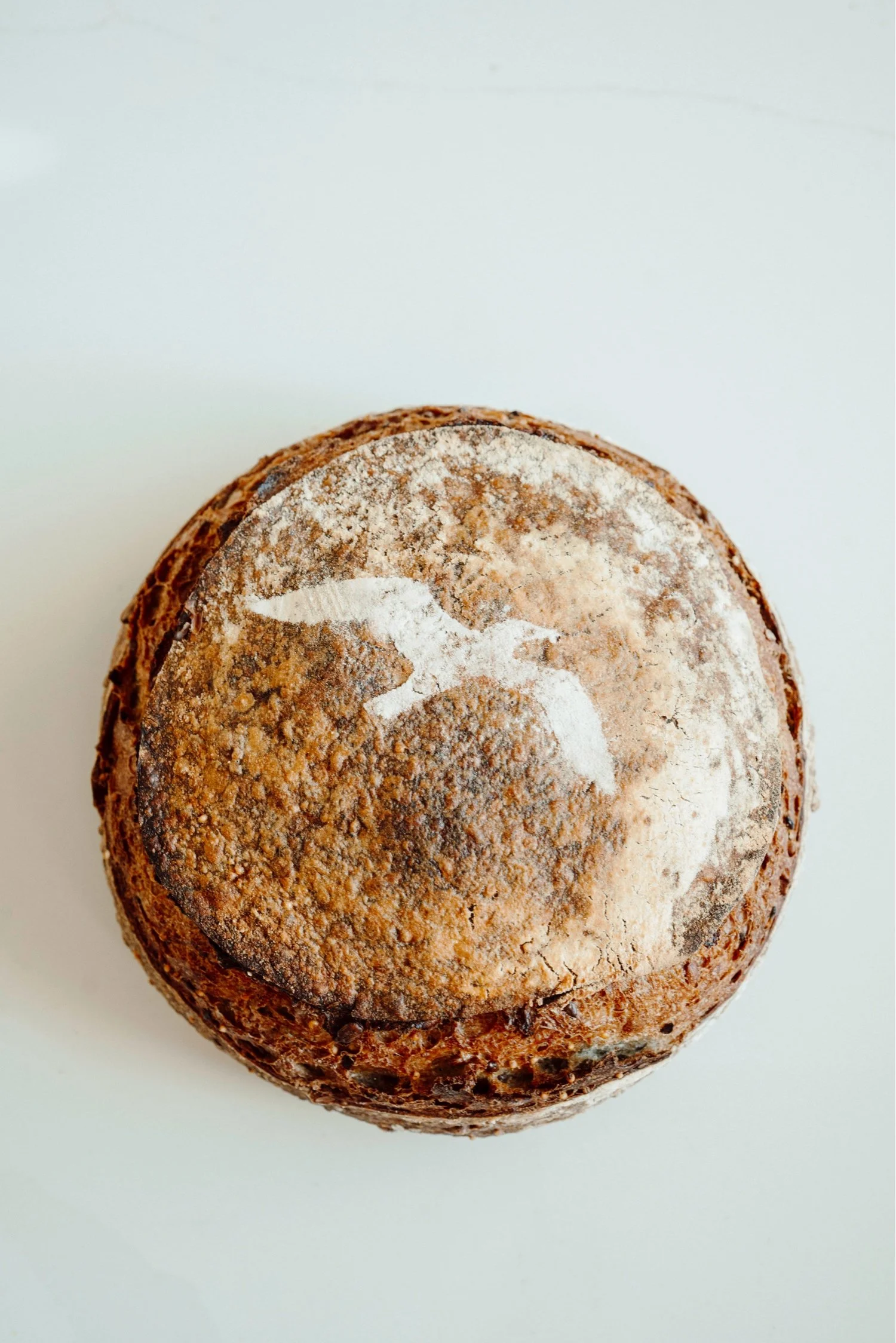
You can tell by a way a loaf is shaped, the experience of the bakers that they have. It's something that you will only notice by doing it so many times. There are these small things. A baguette, for example, there's like the slightest curve or the slightest bump that you can just even see and you'd be like, “this person hasn't shaped long enough, so there's some inexperience there.” But my biggest thing, especially with home bakers or smaller bakers, they don't bake their loaves long enough and it's very frustrating. Because you have to let the Maillard reaction take place, and it's really frustrating because there's so much flavor in the crust that comes out when you caramelize the sugars. A lot of bakers and smaller bakeries don't do. So that's one of the first things I look for is like the colorization of the bread. And then kind of just the creativity. We have some simple breads, like our sandwich bread is very basic. It's three ingredients. I think there's room for that and people want that simplicity, but I like to still have some creativeness. So even with our country, we add, rye and spelt from Chimacum Grains because I feel like it helps bring out more of an earthy flavor and it kind of brings out more sour because of the whole grain in it. And we do a fermentolyse on it so it also pulls out more of the sour. So, the comparison to a classic country, our country is going to be much more of an acetic acid, it's going to be much more of a punch you in a mouth sour. While the sandwich loaf is a bit more galactic and it's gonna be a kind of custardier, a bit more of a yogurty tang rather than an actual strong sour. So yeah, I would say shaping, color, and creativity.
Do you consider yourself a creative person?
Uh, no, ha ha, I think that I'm not incredibly imaginative. I wish I was more imaginative, but I think I do well enough in regards to the creativeness in bread, like, using interesting techniques to bring out more flavor and textures and structure in a loaf, compared to just mix it, let it bulk, and divide and shape it and bake it.
What does recipe development look like for you? What inspires you?
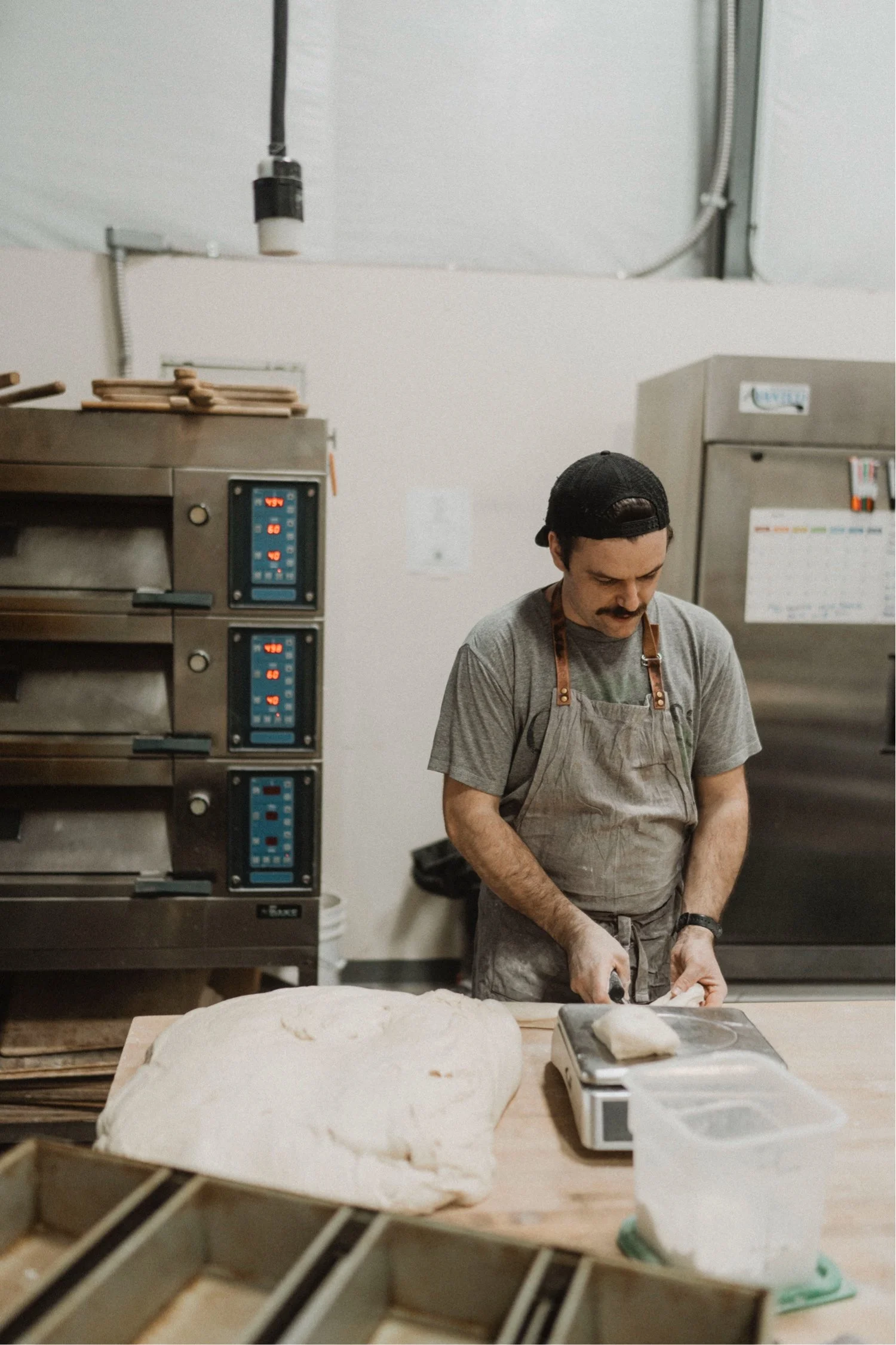
So when I'm developing a recipe, I just kind of start thinking of, “what sounds interesting or like good to me?” And what I do is make that loaf five different ways, and then I try each way and then I pick the one that I like the most, and then I break that down into another, like, three different ways.
That's what I did with just our baguette. I probably remade our baguette formula at least a dozen times until I was like at least mostly happy with it. I’m never gonna be fully satisfied, I wish I was.
How old is Dough’s Bakery? How old is your business? In what ways has everything changed?
We started in March 2023. So we are 3 years old. Man, we're still small, but we started very small, pretty much in line of like a cottage. We were doing a subscription service at the time where I was just making a different loaf every week, and that, again, going back to the creative side and recipe development, that was what really gave me the ability to just test a ton of bread and just try a bunch of different things and see what I liked and see what I didn't like. And every week it was kind of like crossing my fingers of hoping that people liked it. Because, you know, there's definitely been a lot of that imposter syndrome that I think a lot of people get. And I definitely had it of like, “am I worthy of being my own business?” Even with being in bakeries and restaurants for a while, I still feel like, am I... Am I worthy?
Yeah, so then going from making a different loaf every week to now having our standard loaves, that's been different. I still try to throw in a seasonal loaf to try and help the creative juices flow a bit, just because I don't want to get stuck and just making the same thing every day, because that just attributes a burnout. That's probably my biggest fear.
Do you have goals for the business? In one, five, ten years?
Yeah, in X amount of years to have a brick and mortar. And we're already kind of looking at what that what that entails, what that looks like. That's the main goal. Right now, on a smaller scale to get a transportation vehicle to try to help because like I'm stashing a lot of this bread, transporting it in my Corolla down to the co-op. And just continuing to grow and getting into another space that we could probably grow more into and bigger ovens and things like that. Ummm…and pastry production as well. Because I don't know if we could really make it just as a bread bakery. Like, I think it'd be fine, but you gotta have something people want to walk in for. And that makes kids actually happy. Because I've never, in all the years being a bakery, I've never seen a kid come in and be like, “Ooh, bread! Look at that loaf of whole wheat!”
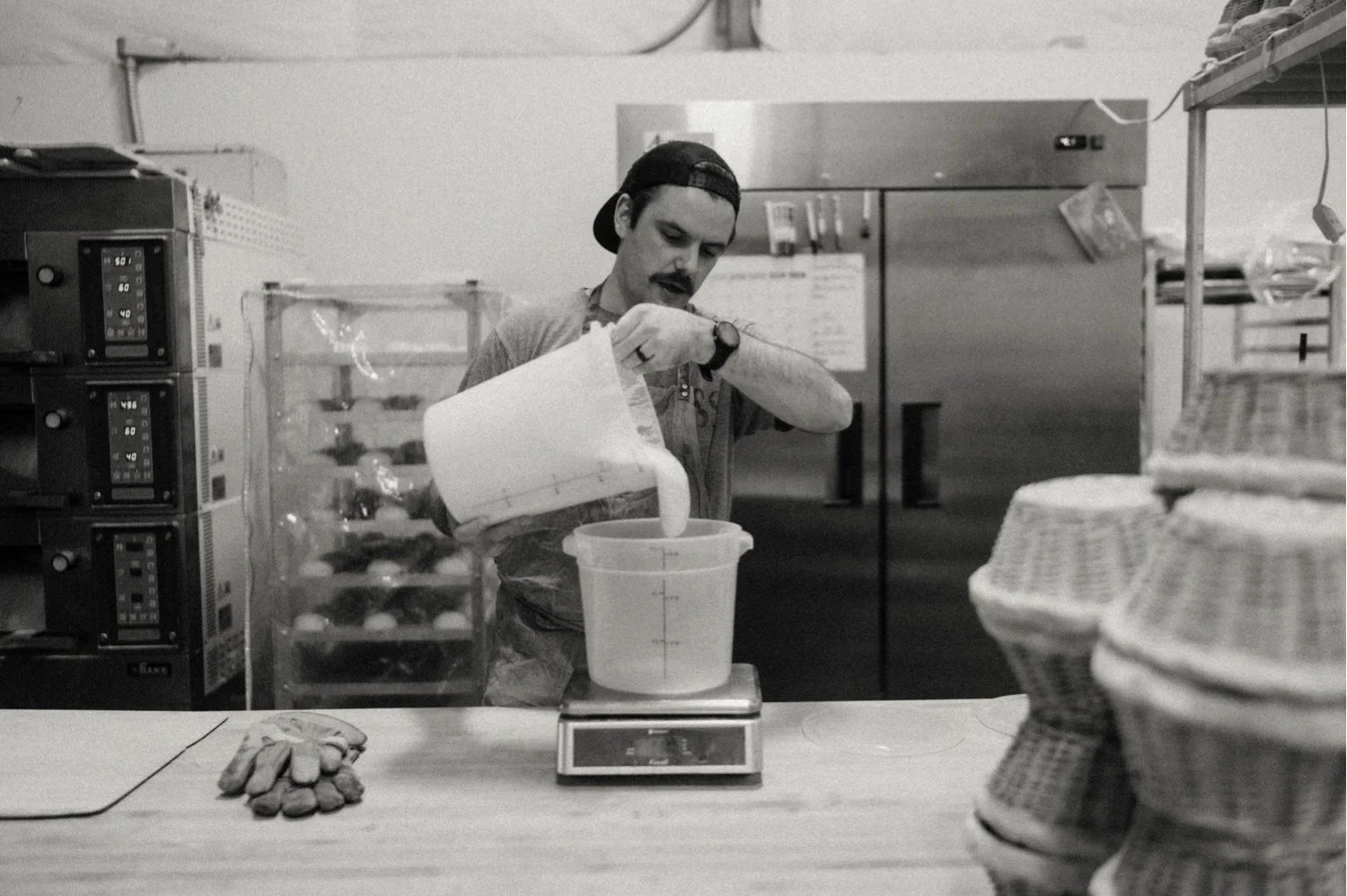
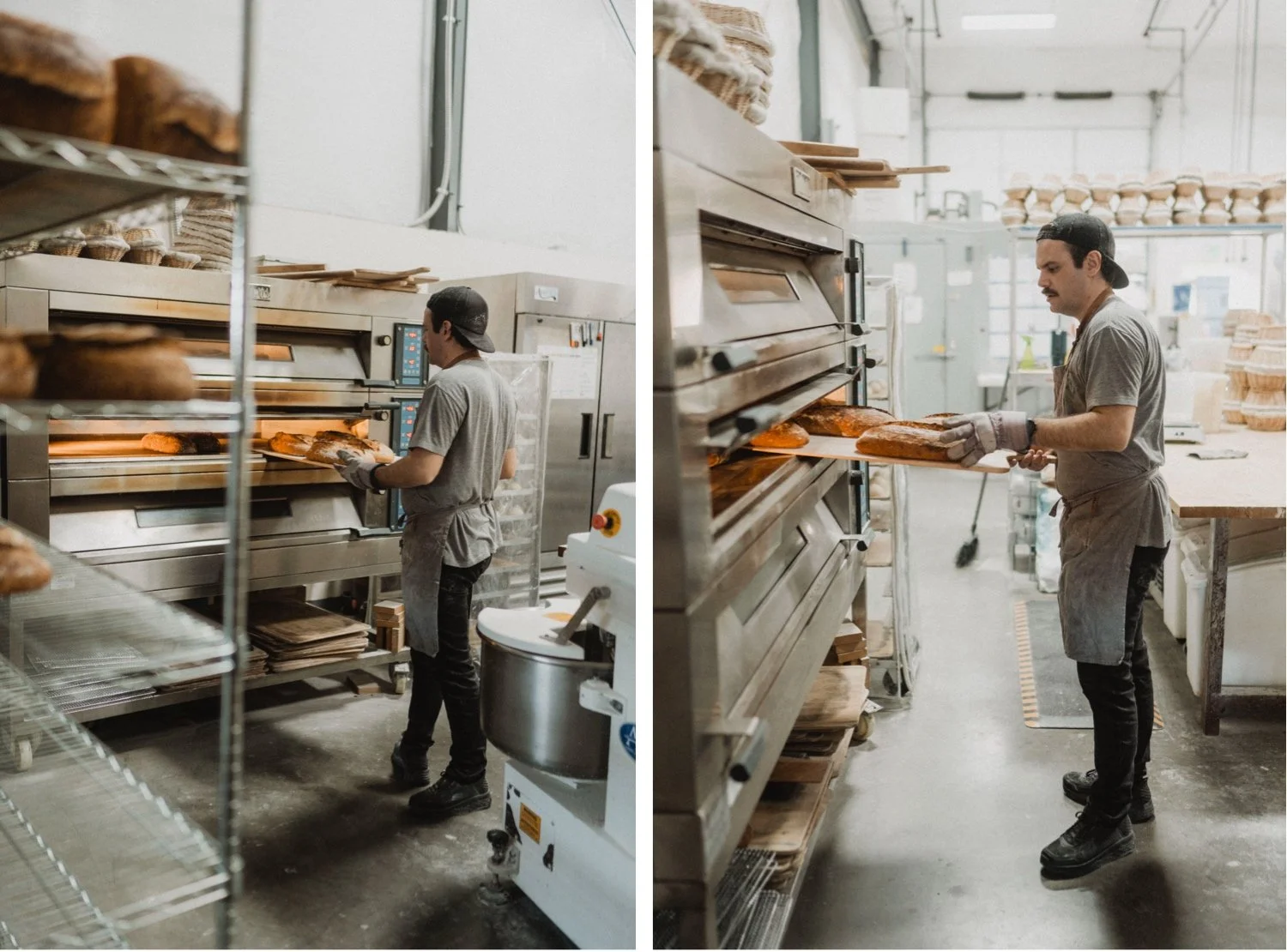
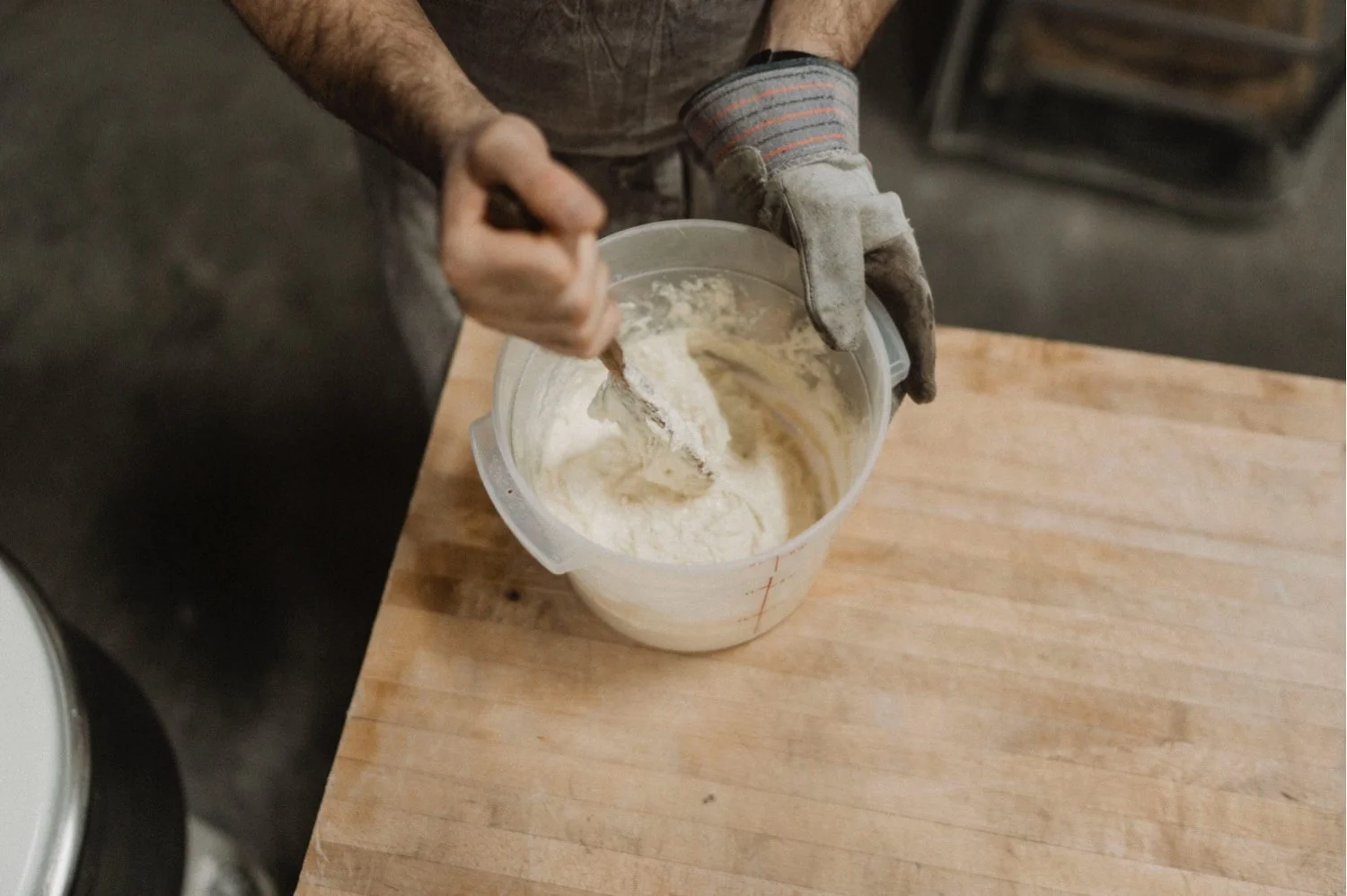
Describe the space you work in. Where are we?
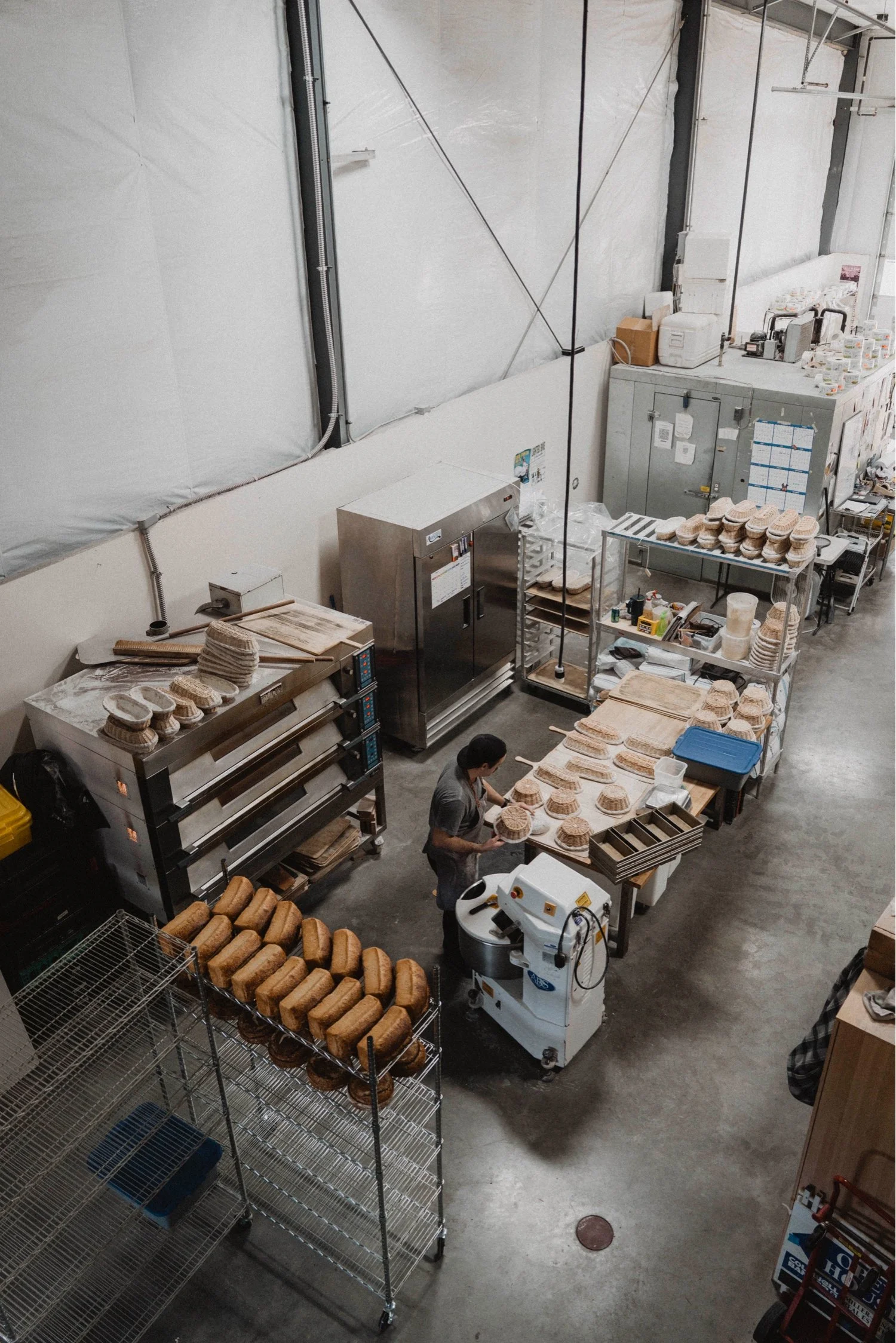
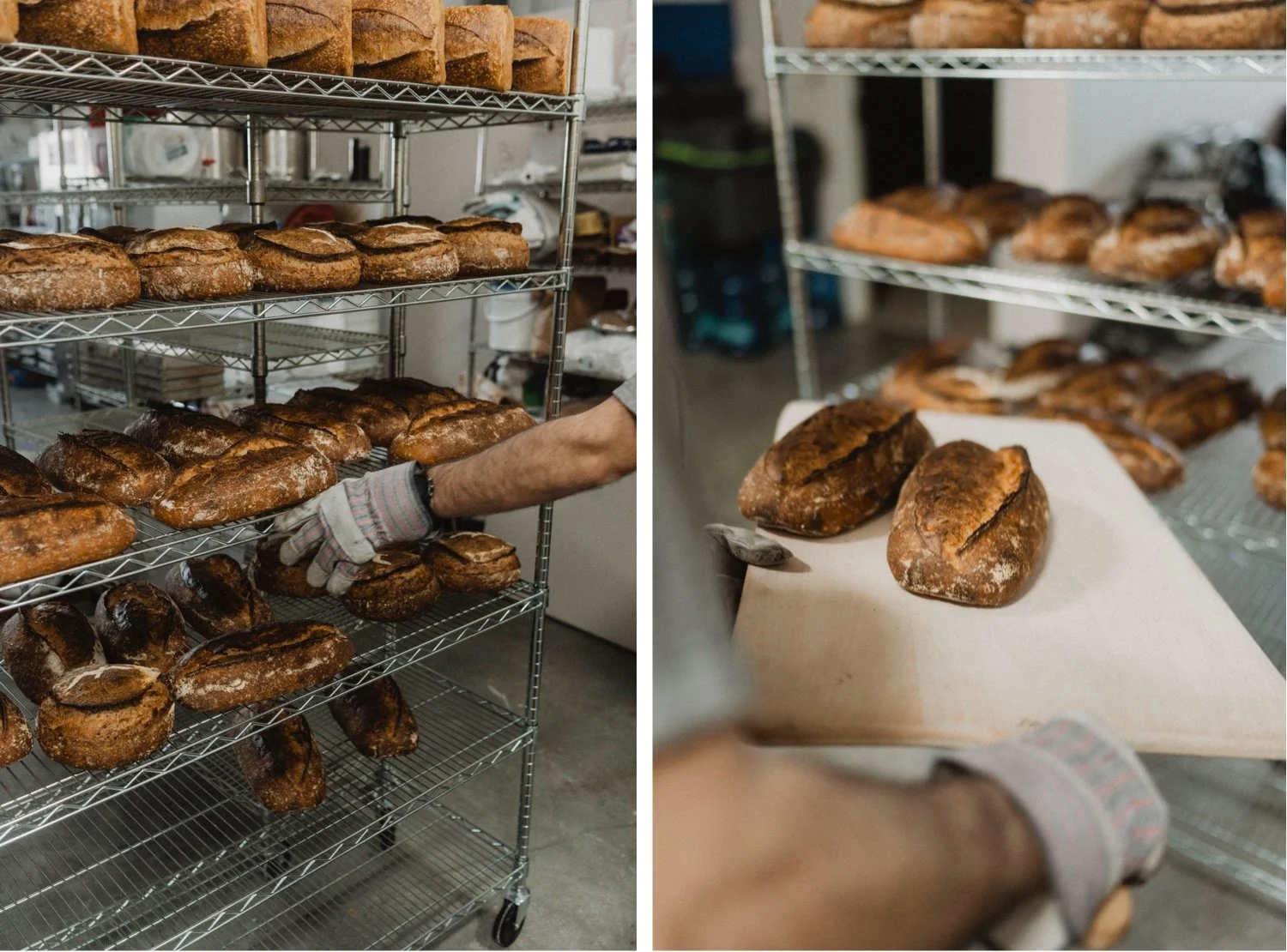
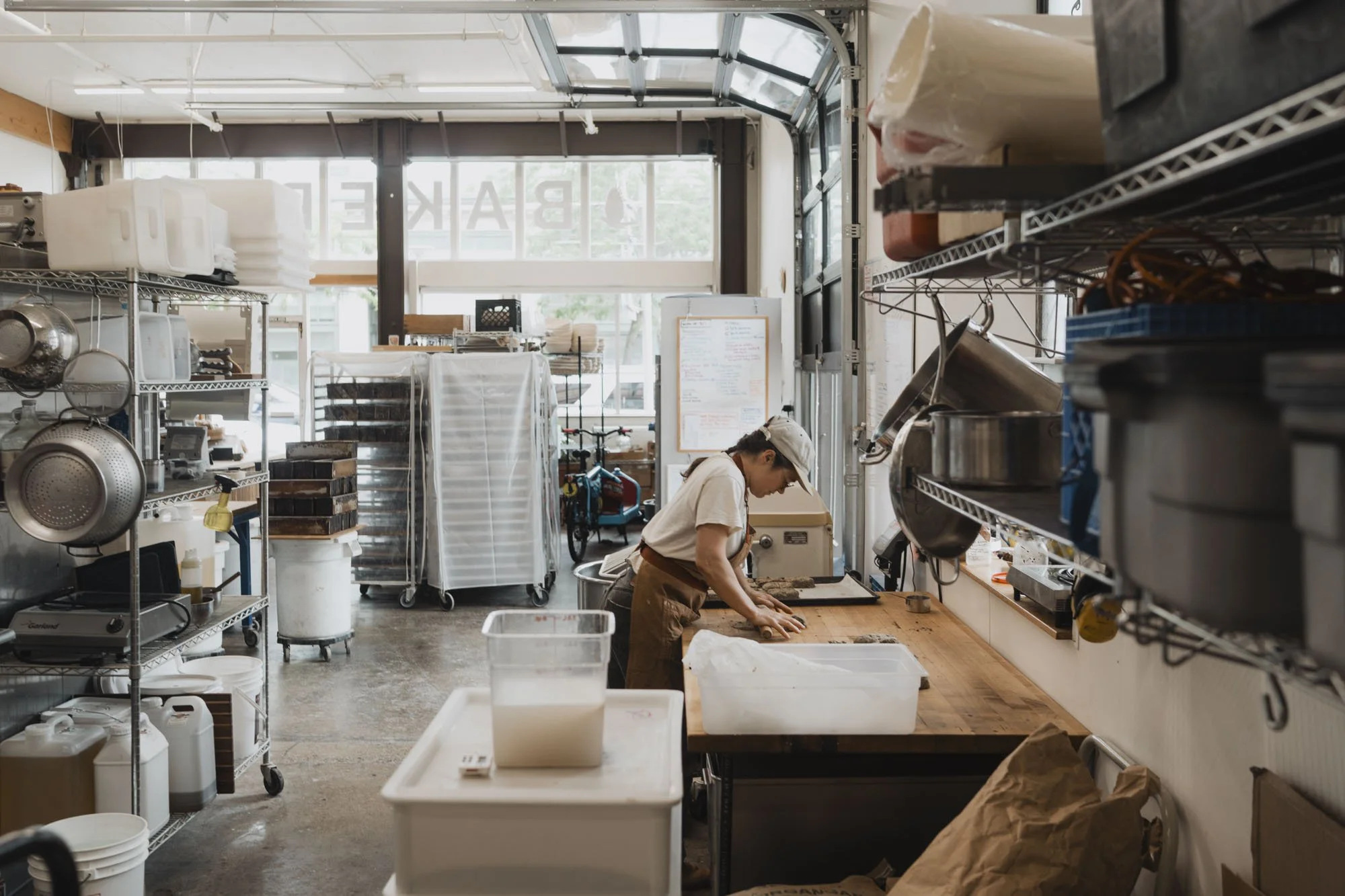
Sterile, ha ha…it’s great. This space is awesome. We share it with a lot of people. We are at the Bellingham Pasta Company space, and we sublet from them, and we share it with them as well as Paellaworks. Just some of the coolest people and we're so fortunate to be in this space. We have our own area in the space, which I don't know of any commissary kitchen that allows you to do that. It's very rare. And they're very gracious in regard to the price. So it's cool. Yeah, it's a it's a great space and we're fortunate to be here.
What's been your experience of being a baker and a creative in Bellingham?
I feel like it's been a lot of me trying to prove myself in a way. I just feel like I get kind of like a lot of people being like, well, “I make bread,” or, “my sister or my brother makes bread” or, “what makes your bread so special?” And I feel like when people actually are open to trying it, they kind of learn why the bread is more special, but, yeah, it's a lot of proving yourself as business owner and a creative in the space.
What did bread look like growing up in your household?
So my dad's a huge health nut, he owns an organic produce farm in Yakima. He drinks raw milk, only gets his beef from his next door neighbor. So we got these burger buns that were like this thin. And that was pretty much the bread that we eat. It was like all whole wheat and as minimal calories and carbs as possible. And that was our bread growing up, ha ha.
Did you have do you have nostalgic feelings for that?
No, I am like hate for that! Ha ha, no, no nostalgia at all.
You're kind of rectifying your youth!
Yeah, it's true. I'm trying to make it better!
Are there things you wish you knew five years ago? Or advice you would give to an aspiring baker?
I mean, that's tough because I feel like the best things I've learned are from mistakes. So I think it's okay to try weird things and then make mistakes and learn from them. Um, you know, like some of my breads even come from that. So I would actually say, just let yourself have mistakes and just try to learn from them as best as you can.
What's the best part of being a self employed baker?
Being able to make your own products and answer to yourself is nice. Working in bakeries you’d definitely be like, “why don't we make this?” and then you got, “why don't you shut up?” Yeah, they're like, we don't pay you to do that.
What's the worst part of being a self-employed baker?
Um, anxiety, ha ha, stress? And trying to make sure that you can keep being self-employed because it's all on you. You know any mistake or any problem that you have with the actual business typically stems from something that you did or didn't do. I feel like that's that's probably the biggest thing.
Do you listen to something when you're working?
I kind of try to change it up, I try to have an eclectic taste, so I listen to all sorts of different playlists. And I love video games, so I listened to a lot of video game podcasts and that's kind of nice while I'm shaping, because I just kind of space out and listen. That or my favorite kind of music is punk, I listen to a lot of punk music.
What do you look for when you're sourcing ingredients or what's priority? What's important to you?
Coming from a family that has always been big on gardening and growing their own products, I try to go through places that care about the soil and the sustainability of growth. So that's why we really like the people we work with, like Cairnsprings and Chimacum. They care about that. They care about the sustainability of grain. So that's probably the main thing that I look for.
What does that mean for the end product?
That you're getting a higher quality because you're not trying to add any sort of extra preservatives or they're not doing any sort of chemicals that are being sprayed on it. And while it's not necessarily organic, they’re caring about the end product. And that comes through in the bread incredibly. You can taste a loaf that has poor quality flour compared to high quality flour, and it's pretty outstanding difference.
Check out Dough’s Bakery here:
more fun!
“I'm hopeful for more peaceful worlds, starting with more peaceful neighborhoods and communities”