
Darcie Gray is the talented artist behind Range Design Studio. We met up over the course of the last year to document the making of projects both indoors and out and to chat about her transition in leaving the security of working as an apparel designer for large companies to the joy of starting her own business.
Tell me who you are and what you do.
I'm Darcie Gray, landscape, painter, and muralist.
Your work has like a very distinctive look and style. Describe that to me.
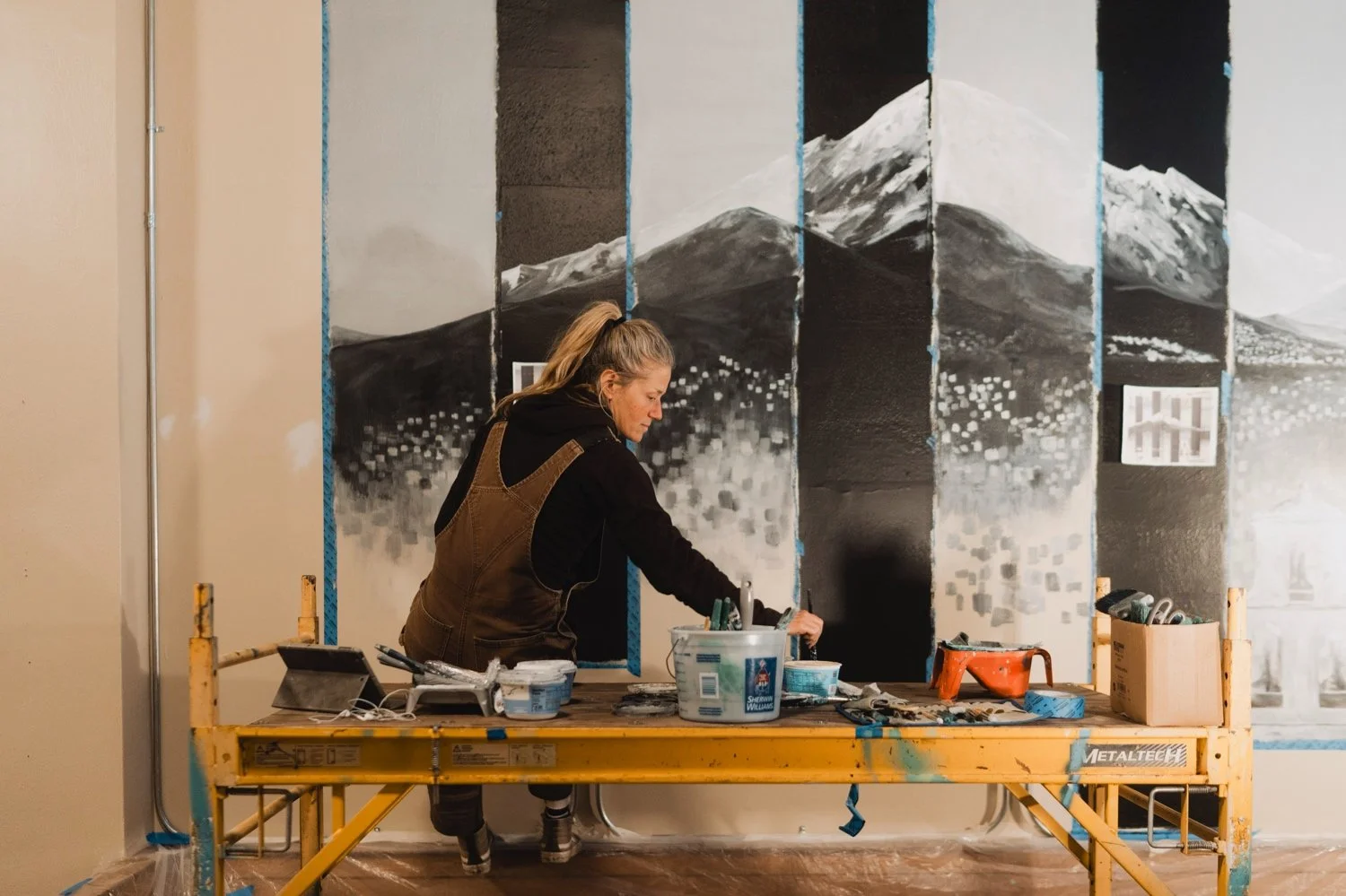
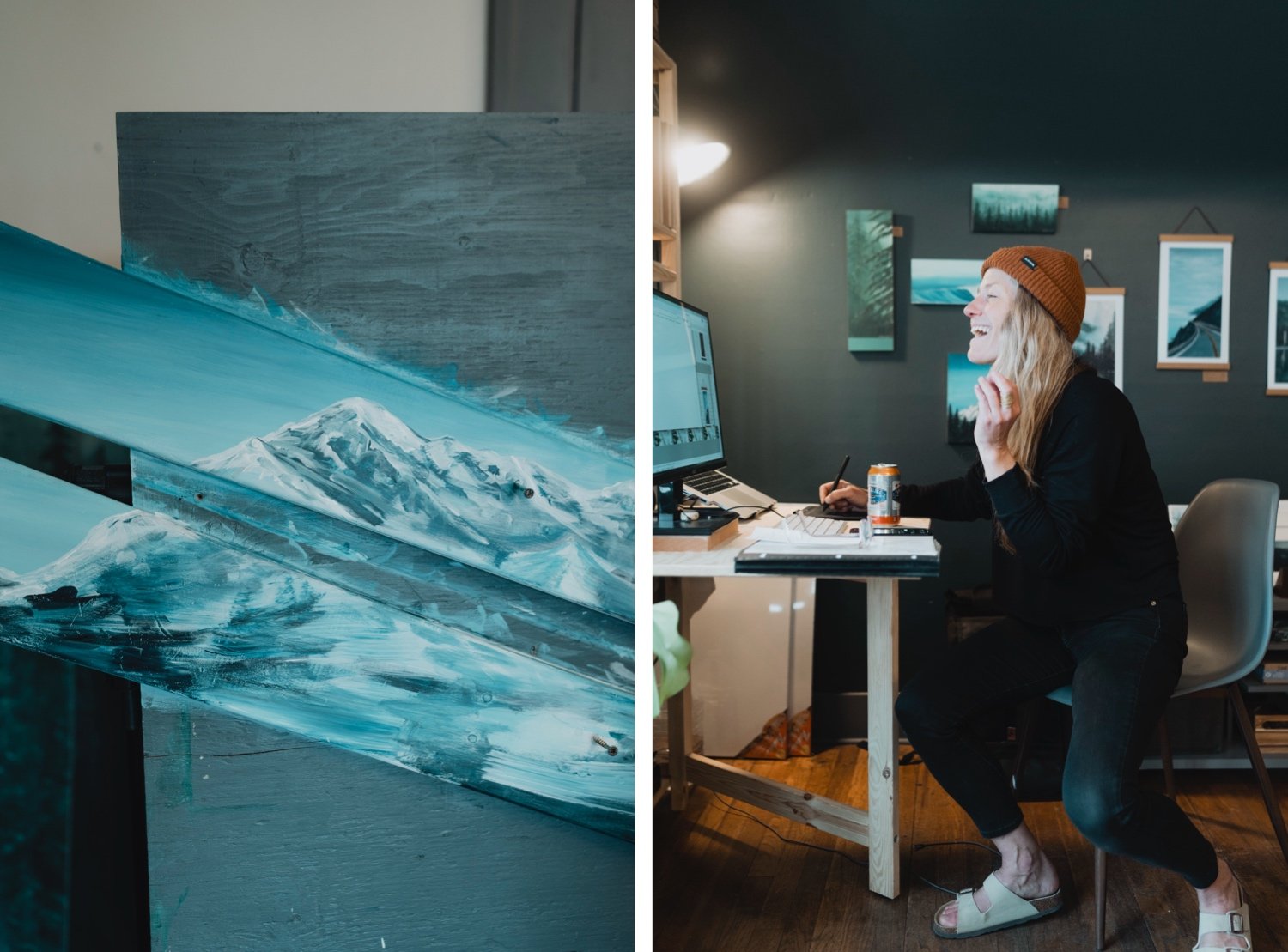
I work with a signature palette of just blue, green, black, and white, and I focus on a pretty limited subject matter of mountains, forests, oceans, and waves. That combination creates a recognizable style throughout my work.
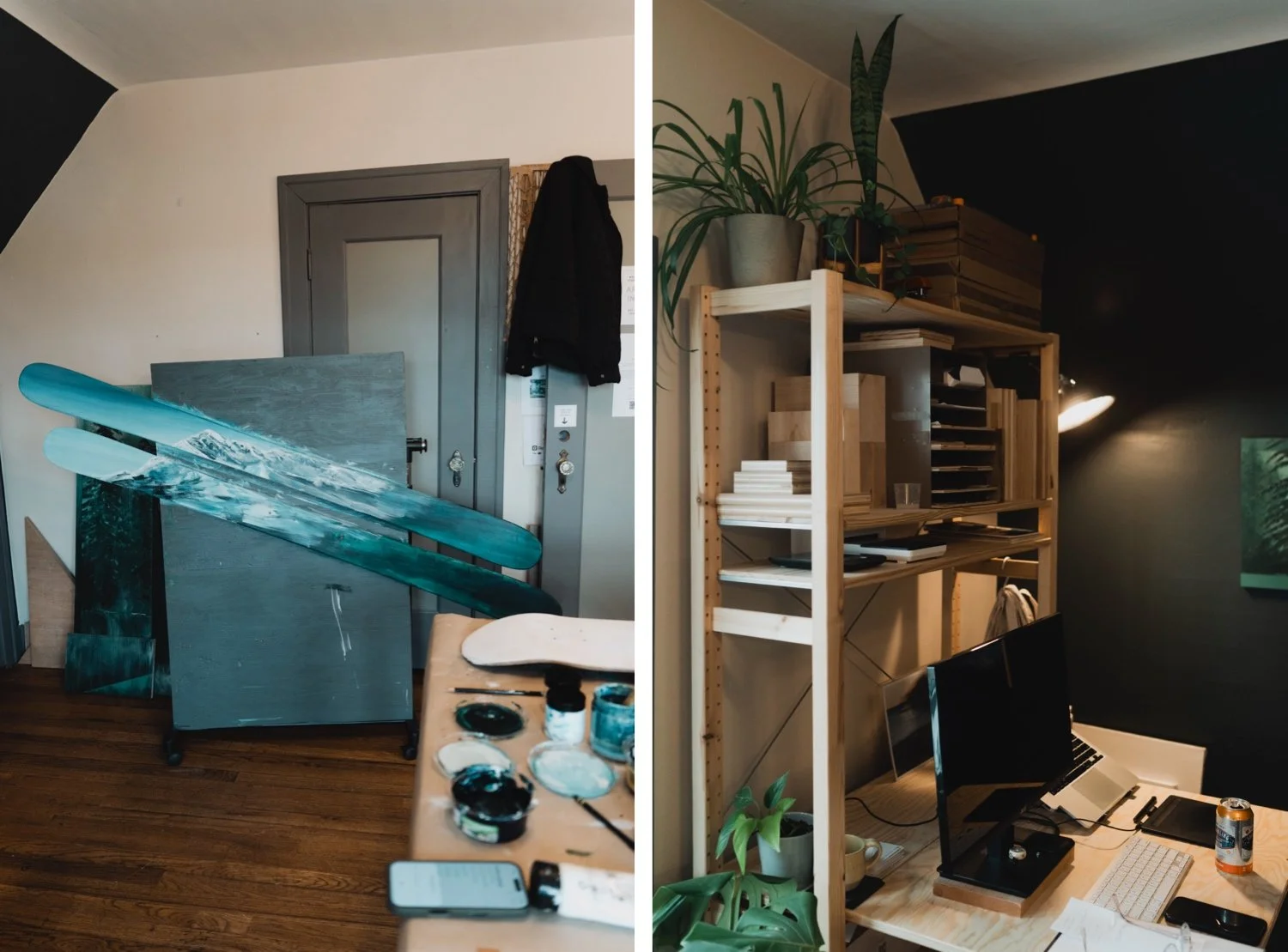
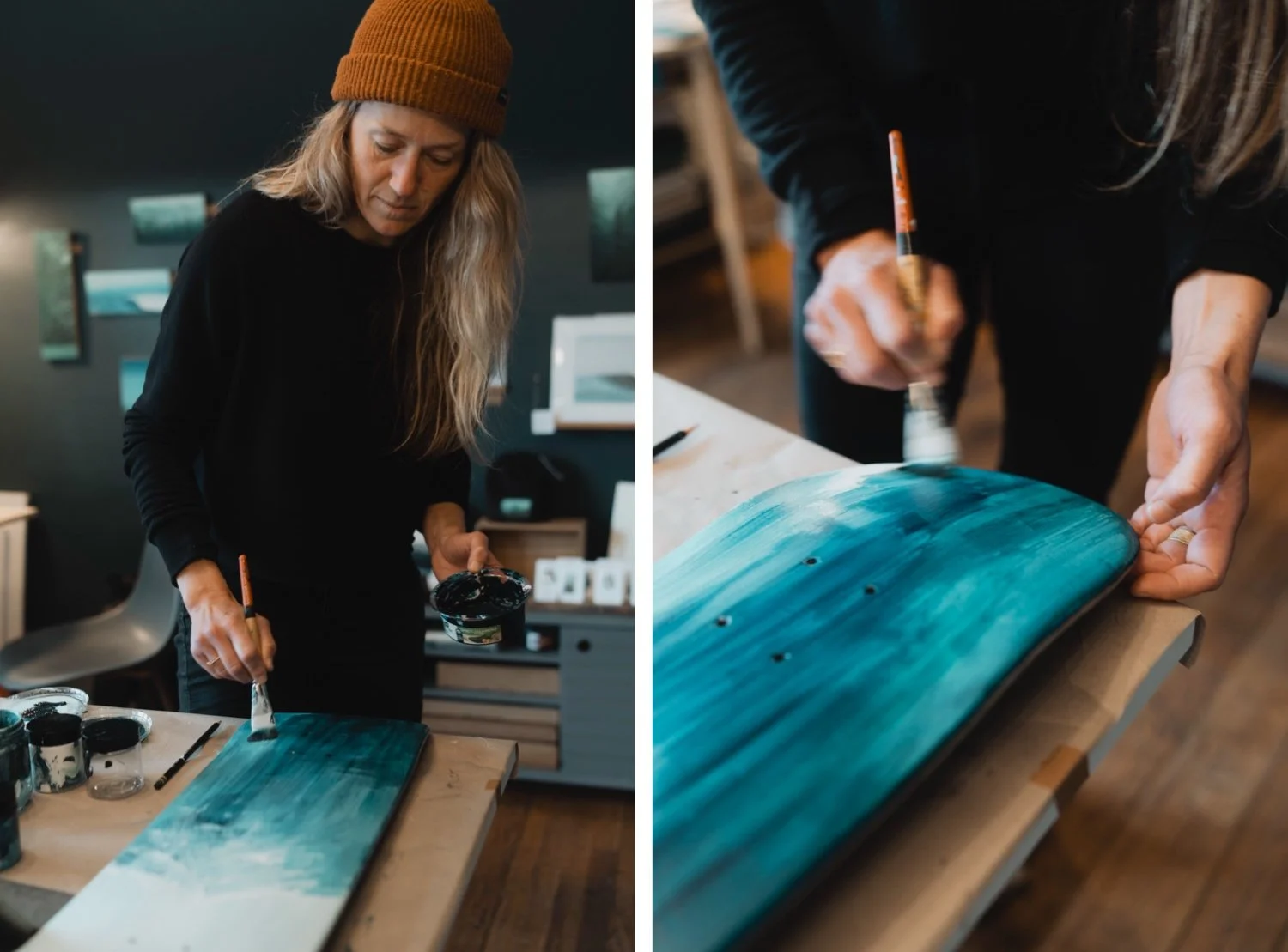
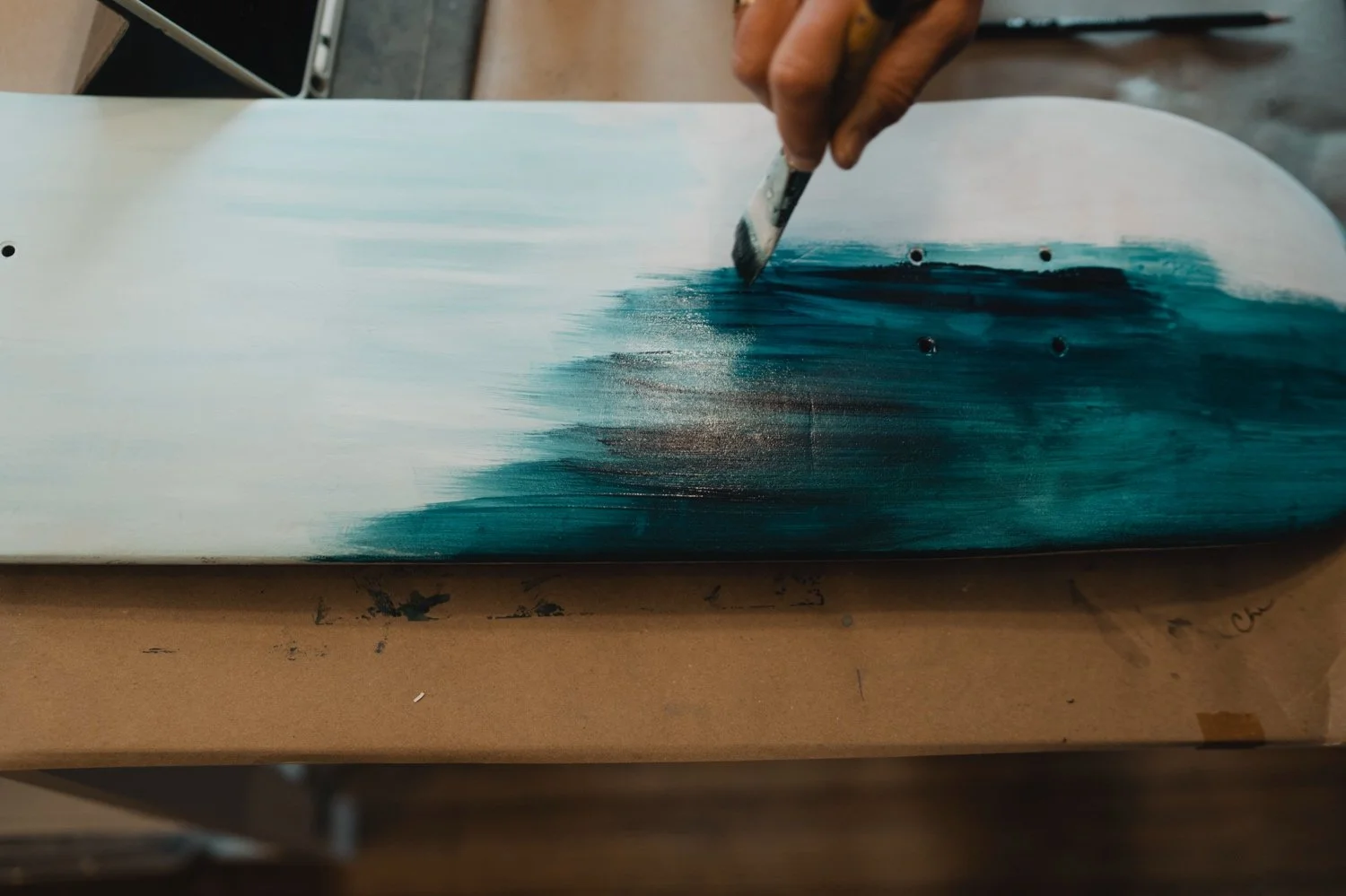
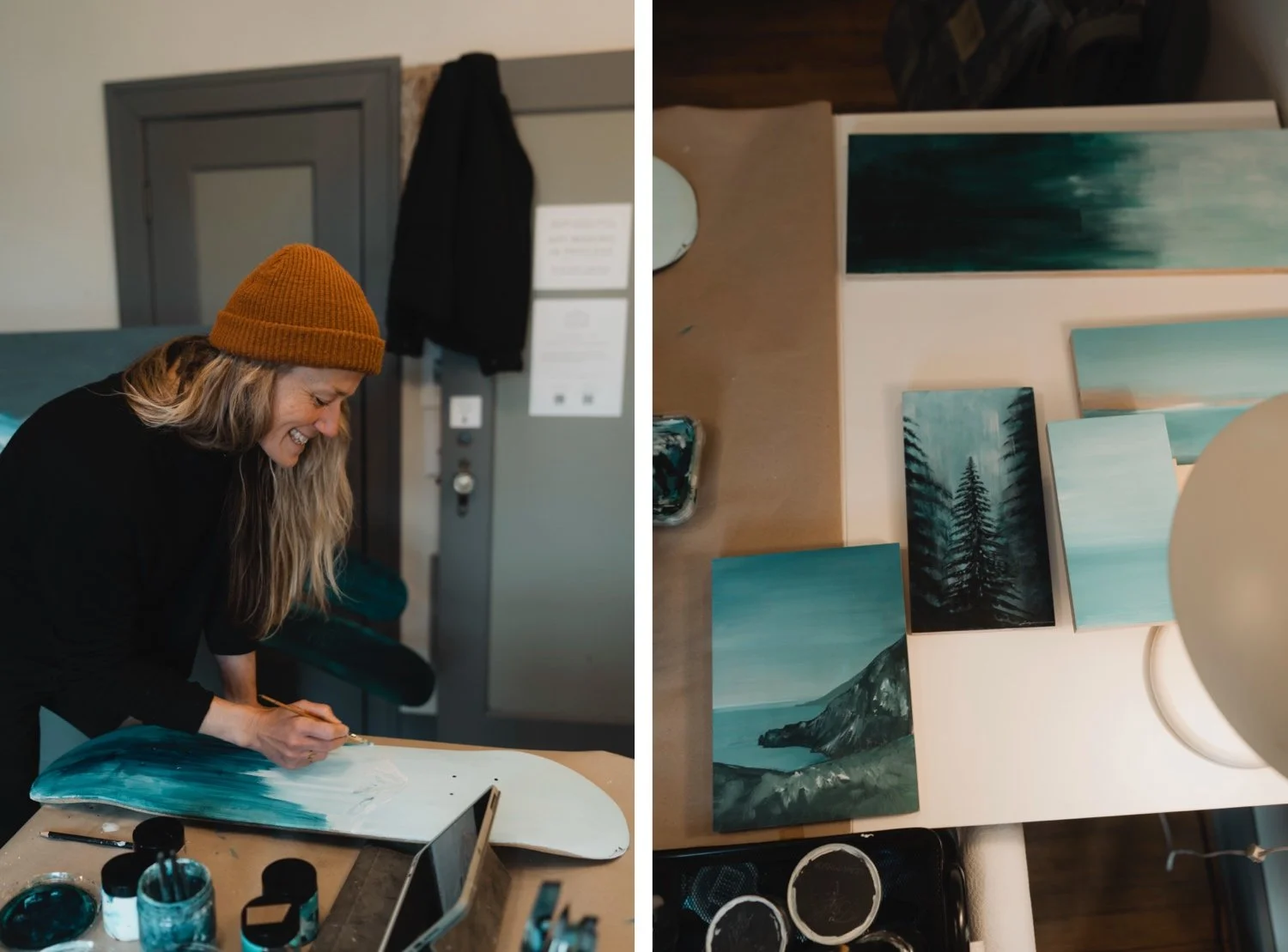
And while I'm very specific about what I paint and the colors I use, I'll paint on almost any surface. I primarily paint on upcycled wood, which is great here in Sunnyland, where my studio is located, because when I'm running low on wood, I just reach out to the woodworking shops around the corner and pick up their scraps, giving them a second life through art.
I also paint on skis, skateboards, surf fins, snowboards, walls, clothing, hats - all of it! So while the imagery and colors stay consistent, the surfaces are always changing.
How long have you been painting? How did you get into this? What did your life look like before this?
I've been painting since I was a kid. In middle school, I started taking classes with a local artist here in Bellingham, mostly painting with oils and exploring different mediums along the way. It feels very full circle to be back here in Bellingham as an adult making art full time. I left Bellingham for college and ended up with a degree in public relations, I spent five years working at a nonprofit in PR and fundraising before going back to school for apparel design, which had always been a dream of mine.
I worked as an apparel designer for the next seven and a half years. It was incredibly rewarding, but eventually I hit a point where I knew I needed a change. I left my job, moved to Mexico for a season, taught kiteboarding, and continued to travel for a year, landing in the Tetons. COVID hit, and like a lot of people, I found myself at home with time to figure out what was next. I started painting more, put some work online, and everything sold surprisingly quickly. That was the first moment I thought, maybe there's something here.
In 2021, I moved back to Bellingham. I arrived without a plan. After a month of wondering what this move meant, I decided to create a body of work and host an outdoor art sale with a friend who made jewelry. At the time, gathering people together outdoors felt meaningful, and that event gave me the momentum I needed. Up until then, I'd only sold a handful of pieces through Instagram and Etsy. Art was still very much a side hobby.
What happened next is a big reason I'm here, making art now full time. Bellingham is the kind of place where you show up with a dream and people want to help make it happen. The community showed up, supported the work, and opened doors. In the beginning, I worked as a barista and server while building my art business, and many of my early opportunities came through those jobs. My first shows happened because people I worked with gave me a chance. Five years later, I'm a full-time artist with no side hustles. Looking back, it feels like the community helped build this career alongside me.
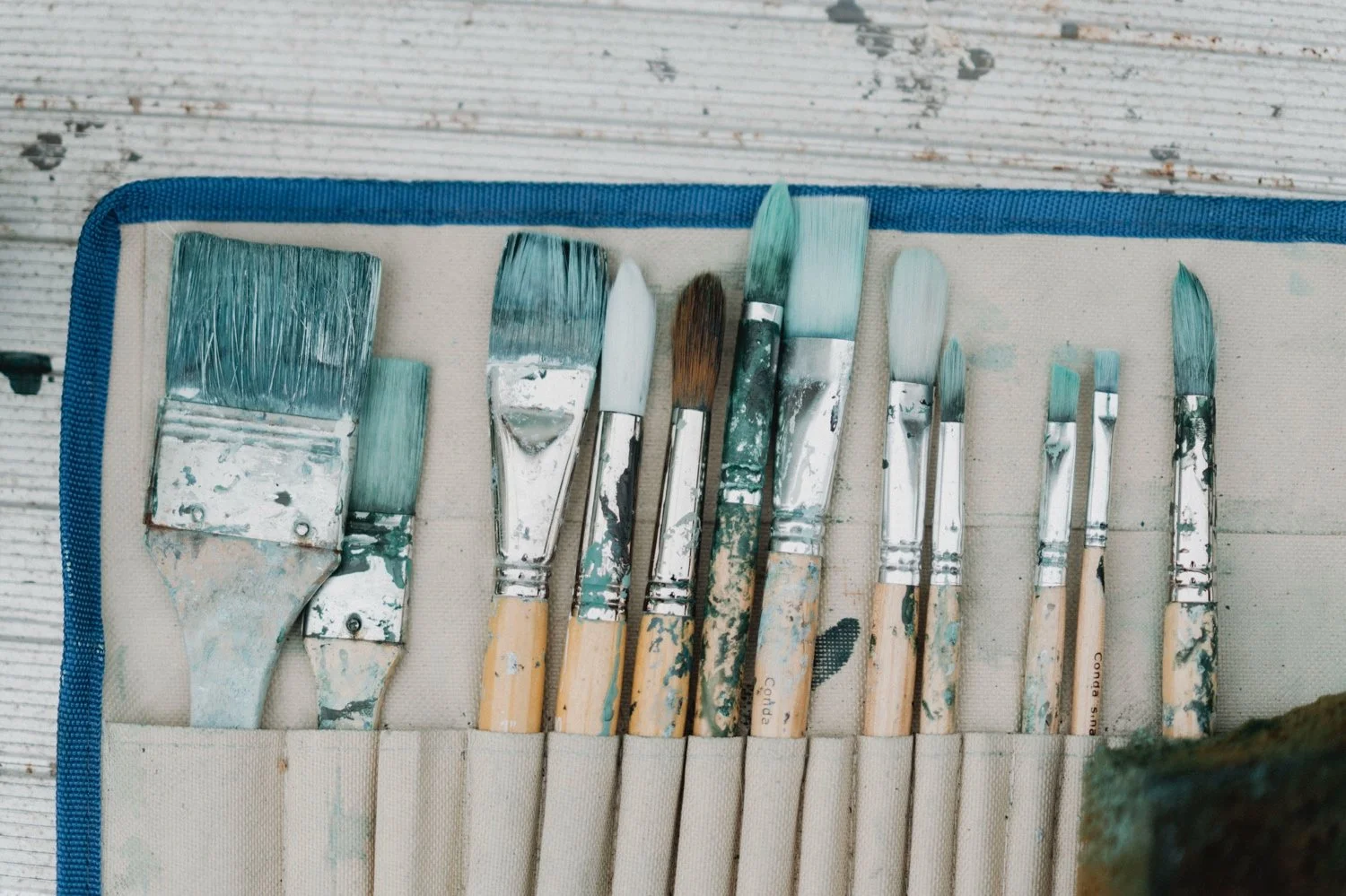
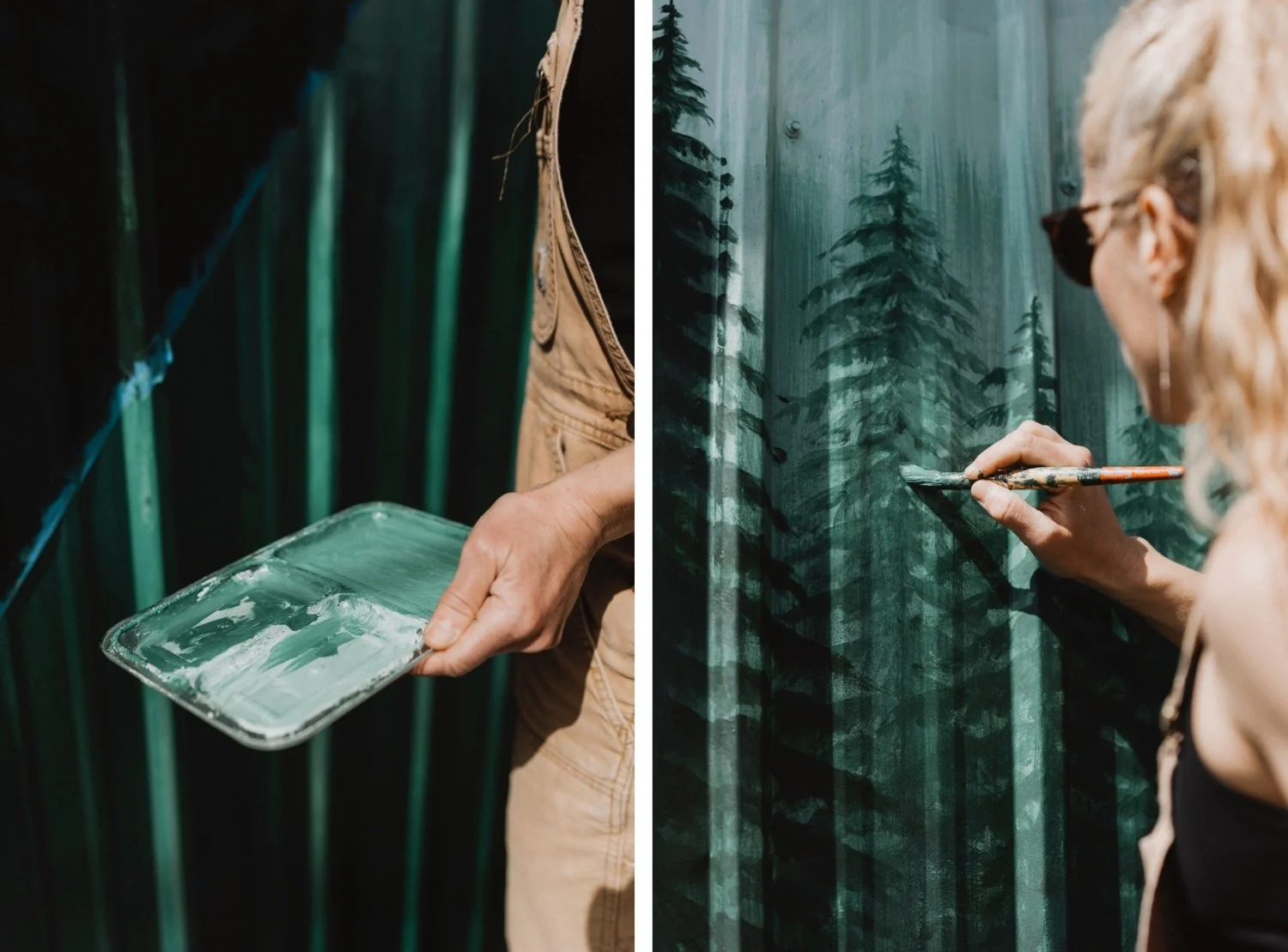
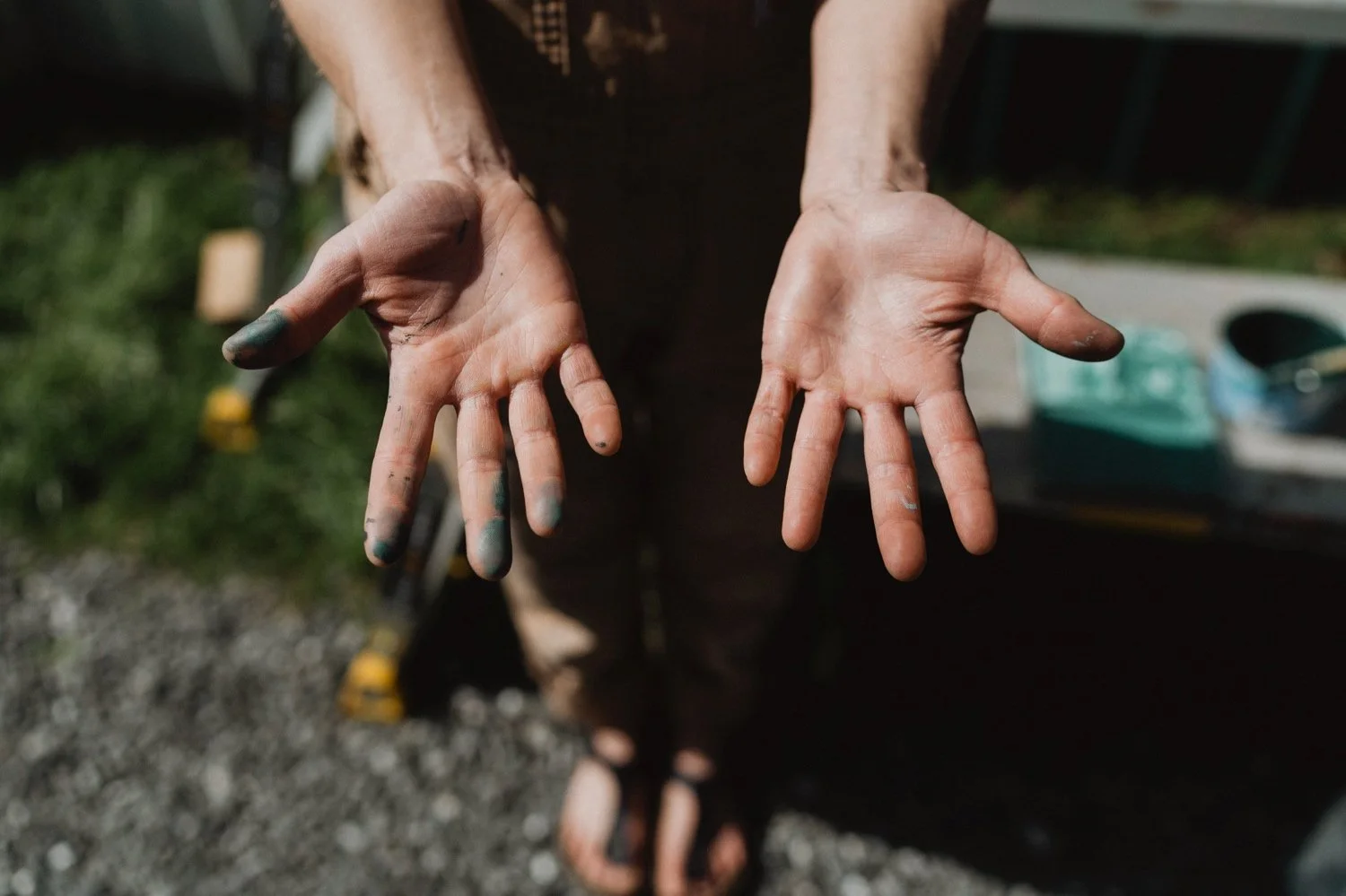
That's leading into exactly what I want to talk about. Did you have any hesitancy when you started sharing your art? I get the sense, the way you talk about it, that you've always been really excited to share it and I think what I hear from a lot of artists is, they go through that process of having the confidence to put it up and getting to the place where they feel comfortable even calling themselves an artist. And I don't get that sense from you at all. And maybe that's because you worked in a creative capacity for a long time before but, have you always felt that about yourself that you're, like, I am an artist, I'm excited to share stuff, or was there a process?
Yeah, I think you nailed it. Coming from apparel design, I create art now the same way I created apparel. I'm making it for the person who's going to enjoy it and live with it. That's probably shaped how I approach being an artist. I love everything I create. I'm surrounded by my work every day in my studio, and if I didn't love it, it would be hard to spend so much time with it. But because the intention has always been that it's for someone else, I don't feel overly protective about it. I think that's a result of my background. If I hadn't spent years in apparel design, where you're constantly creating products for other people, I might feel differently. But I've always approached creative work through the lens of making something that brings value or joy to someone else's life. So while the work is personal, the goal has never been for it to stay with me. The goal is for it to find a home with someone else.
In that sense, anytime you send a piece of finished artwork to someone, what is your hope of what their experience with that will be?
Honestly, I hope it ends up on their wall. I love buying art from friends. I have a box of this art sitting at home, appropriately labelled ‘Friends Art’, that all needs to be hung. I’m sorry friends! Every time I look at it, I think, "The whole point of buying this was to put it on the wall." So one thing I do with my work, is make it completely ready to hang. When someone buys a piece, it has everything it needs to go straight on the wall. I guess my hope is that it doesn't end up in a box like mine. And at the end of the day, I hope it brings people joy and becomes part of their space and their life.
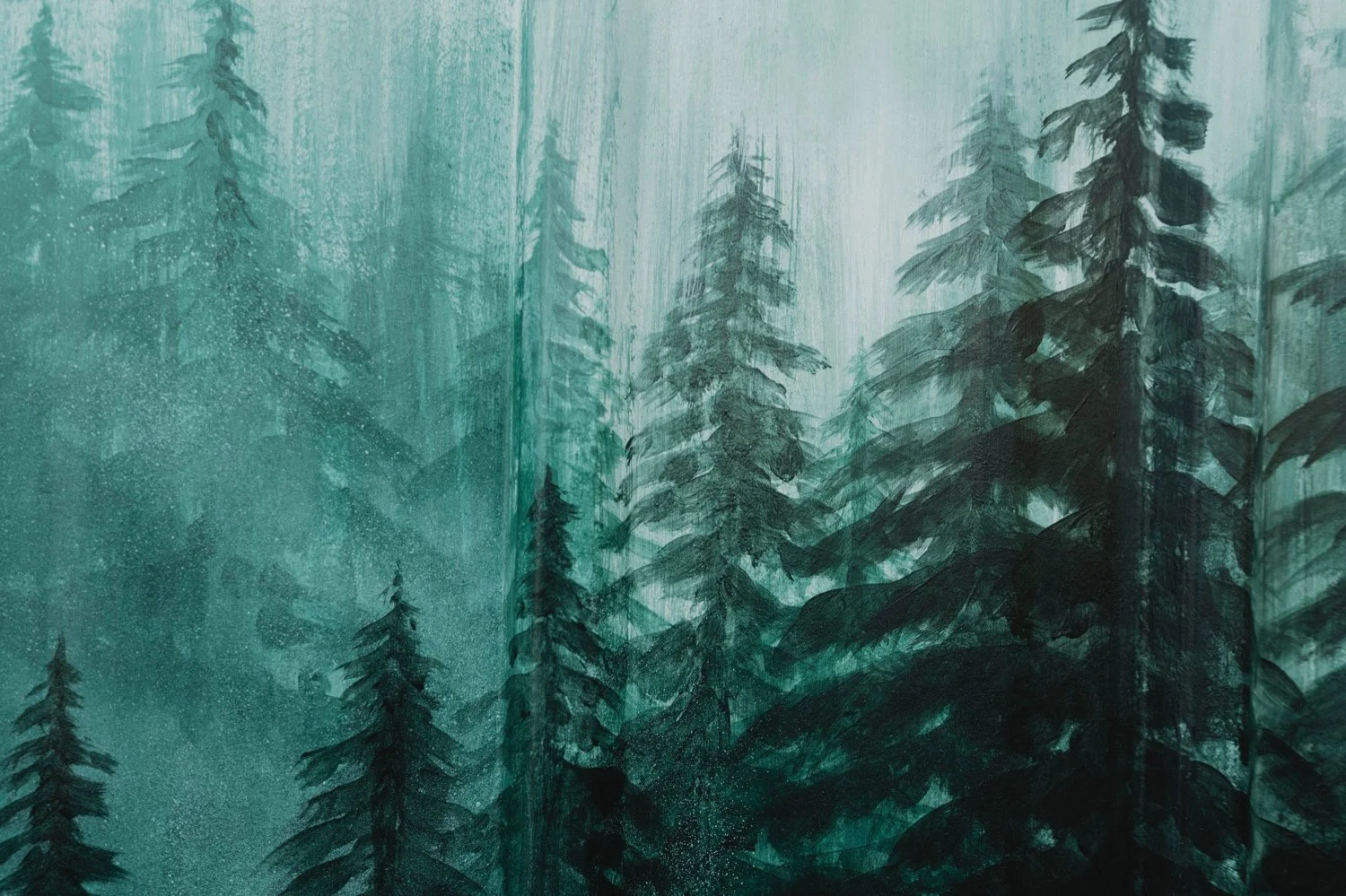
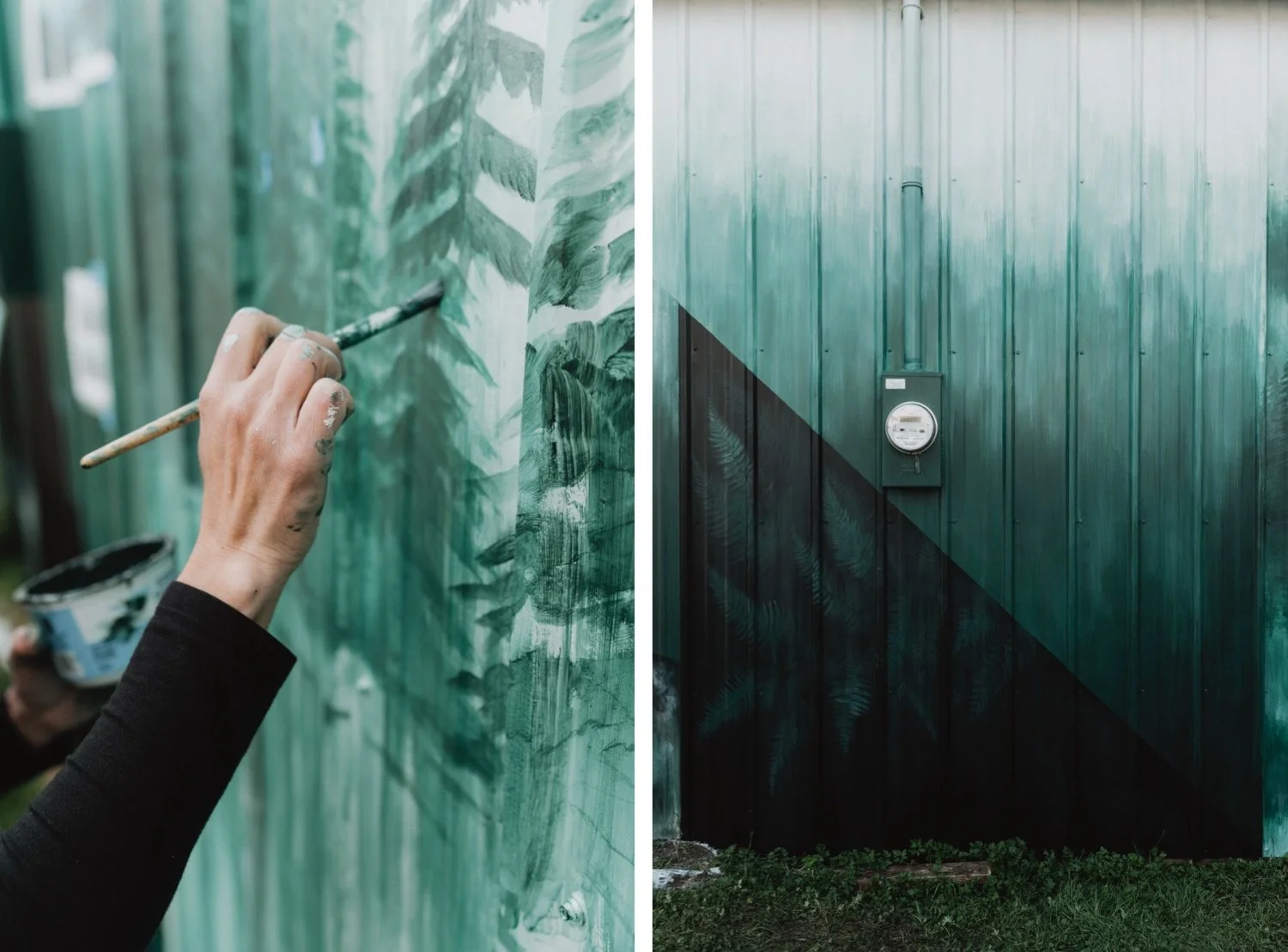
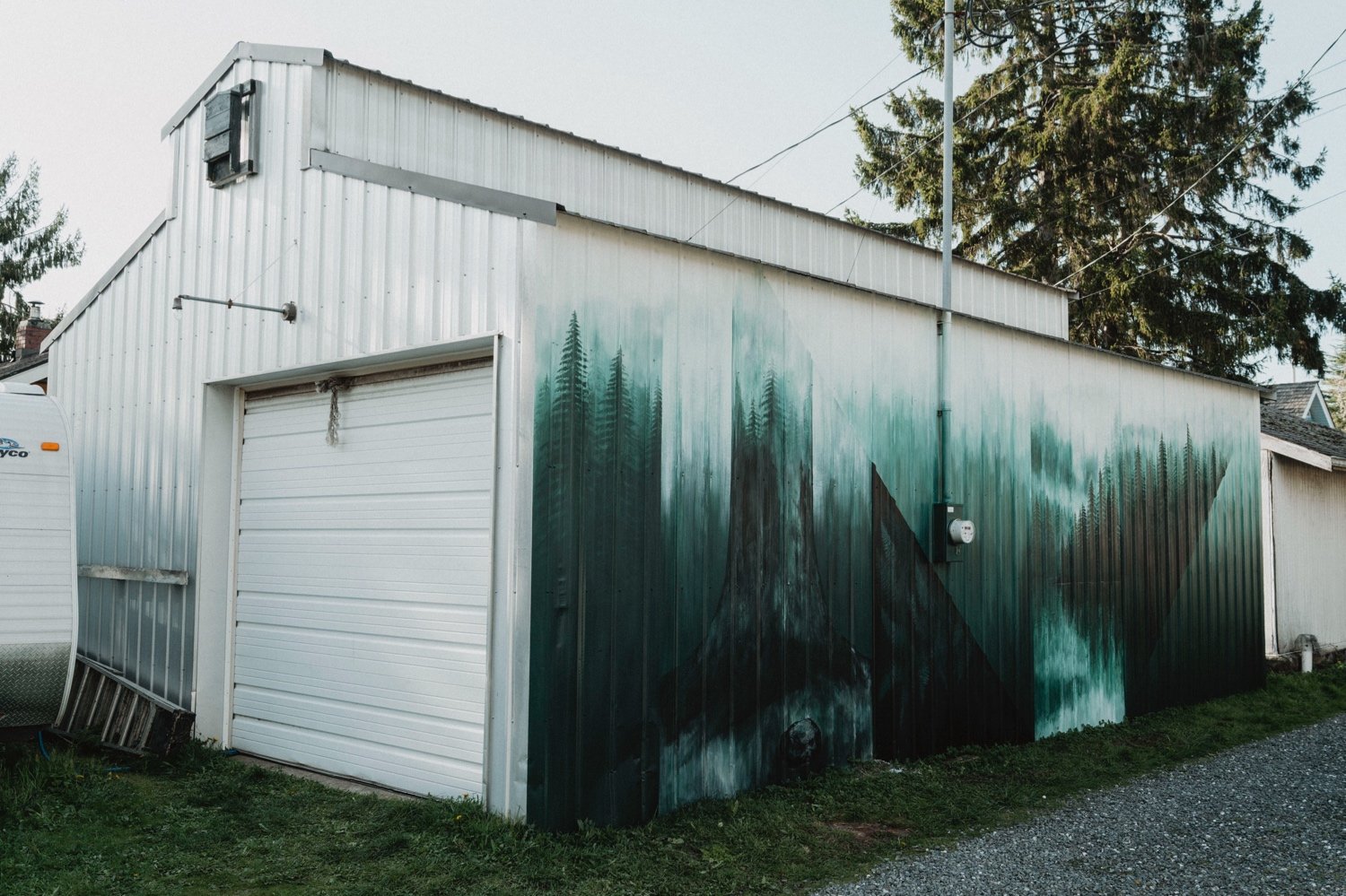
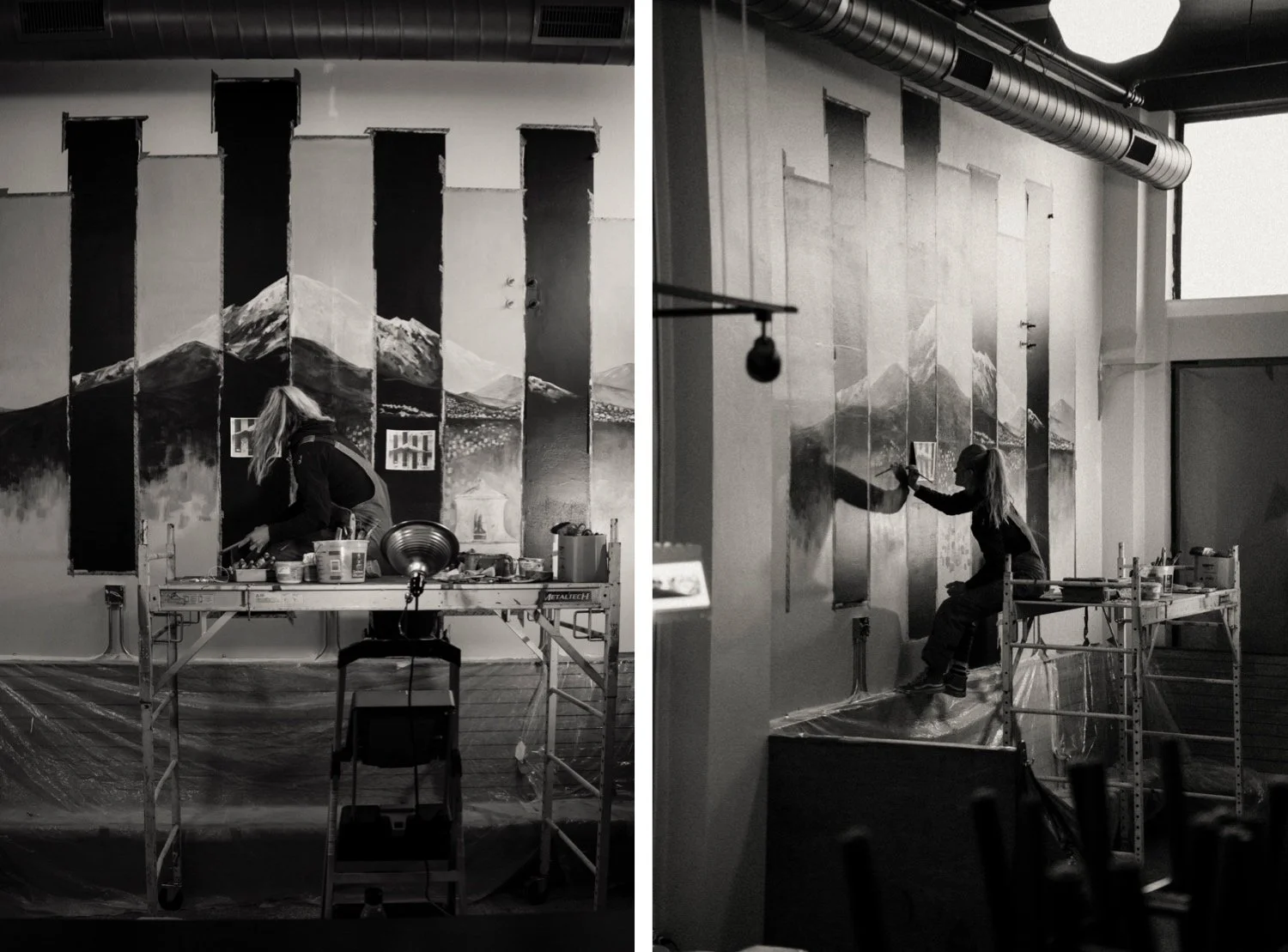
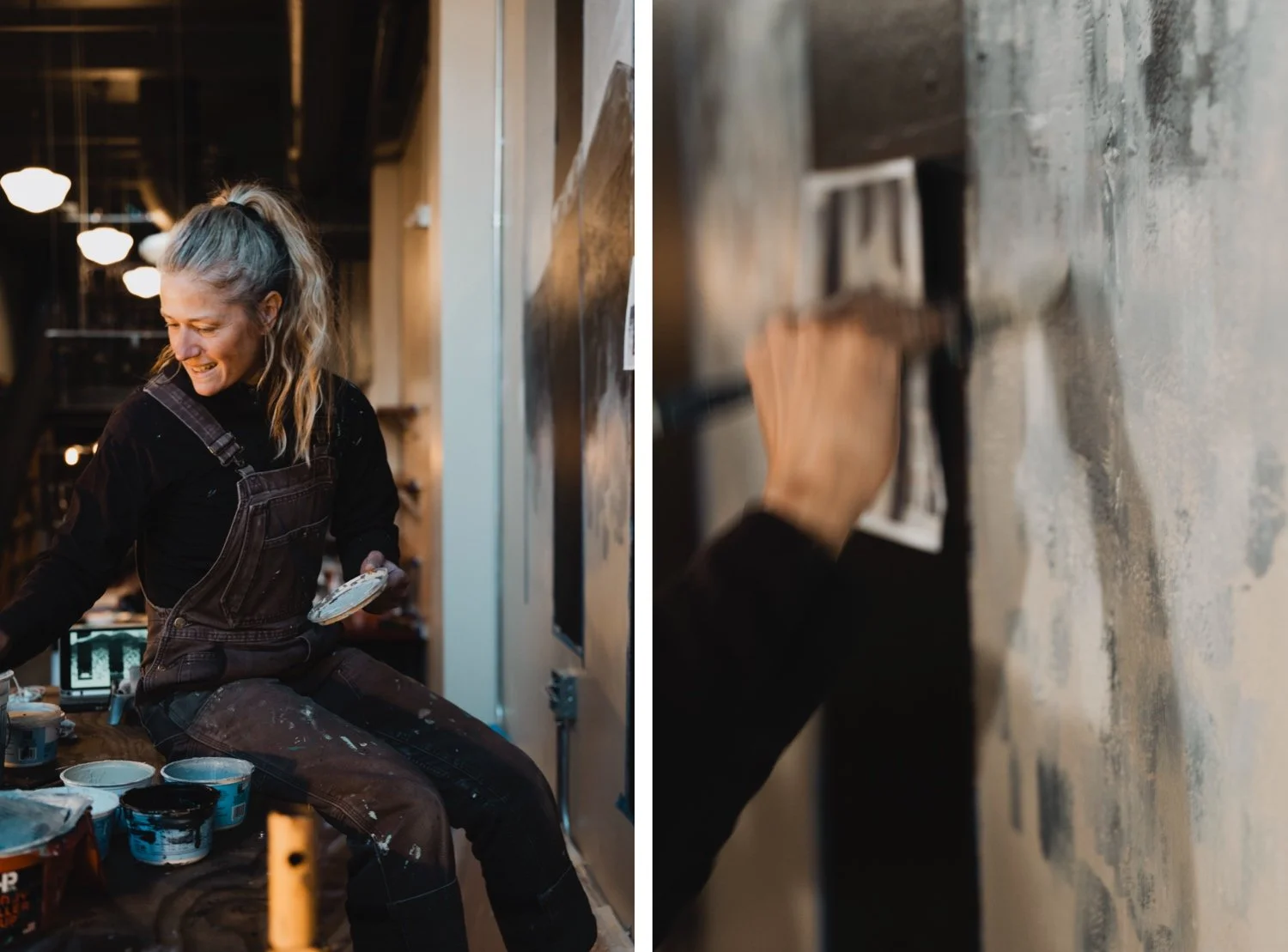
So, you're doing a lot. I've seen you work out in public spaces, your mural work, and then you're obviously doing a lot in your studio. Talk to me about where we are and what the differences, similarities of doing something here versus on location.
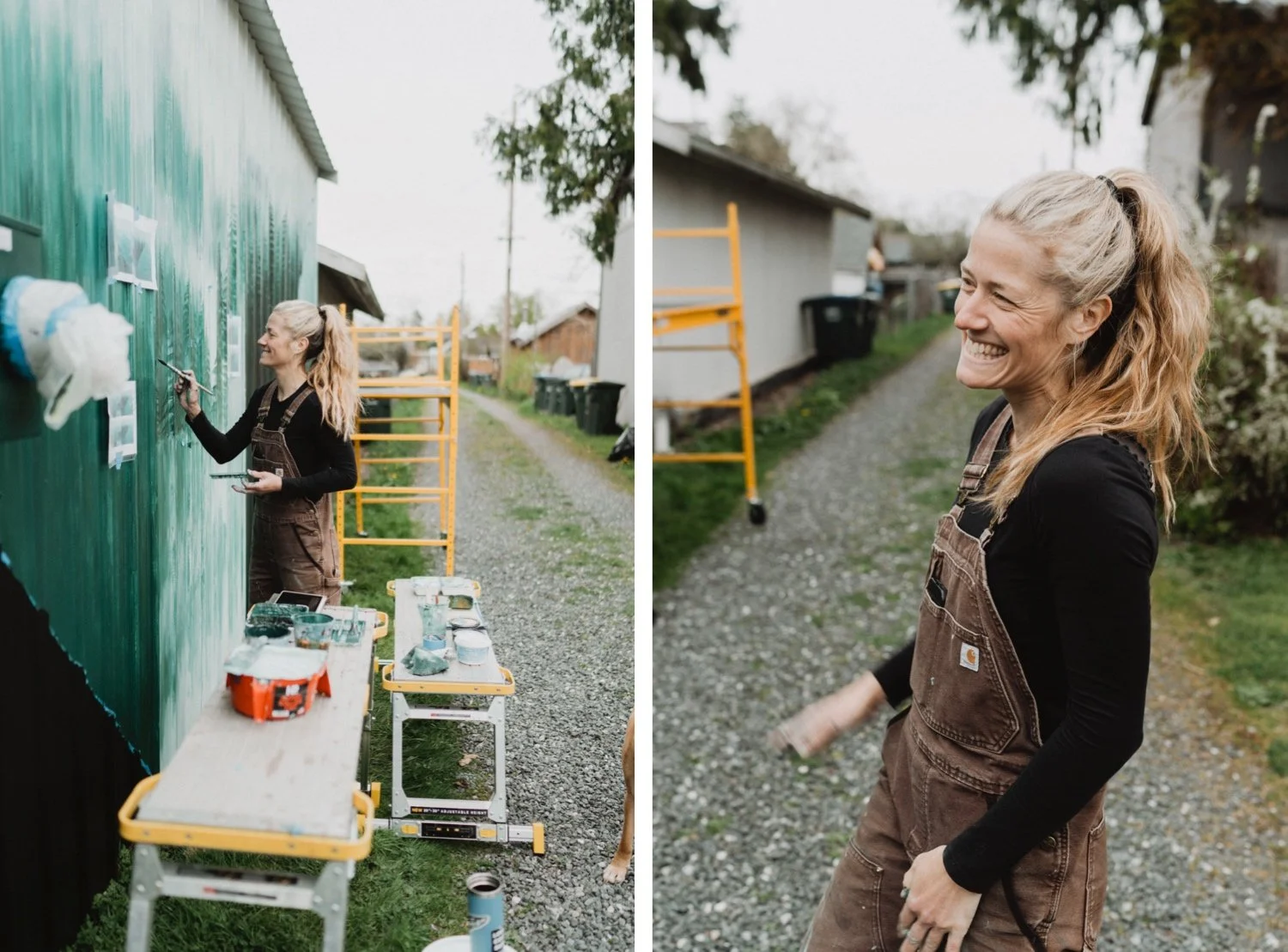
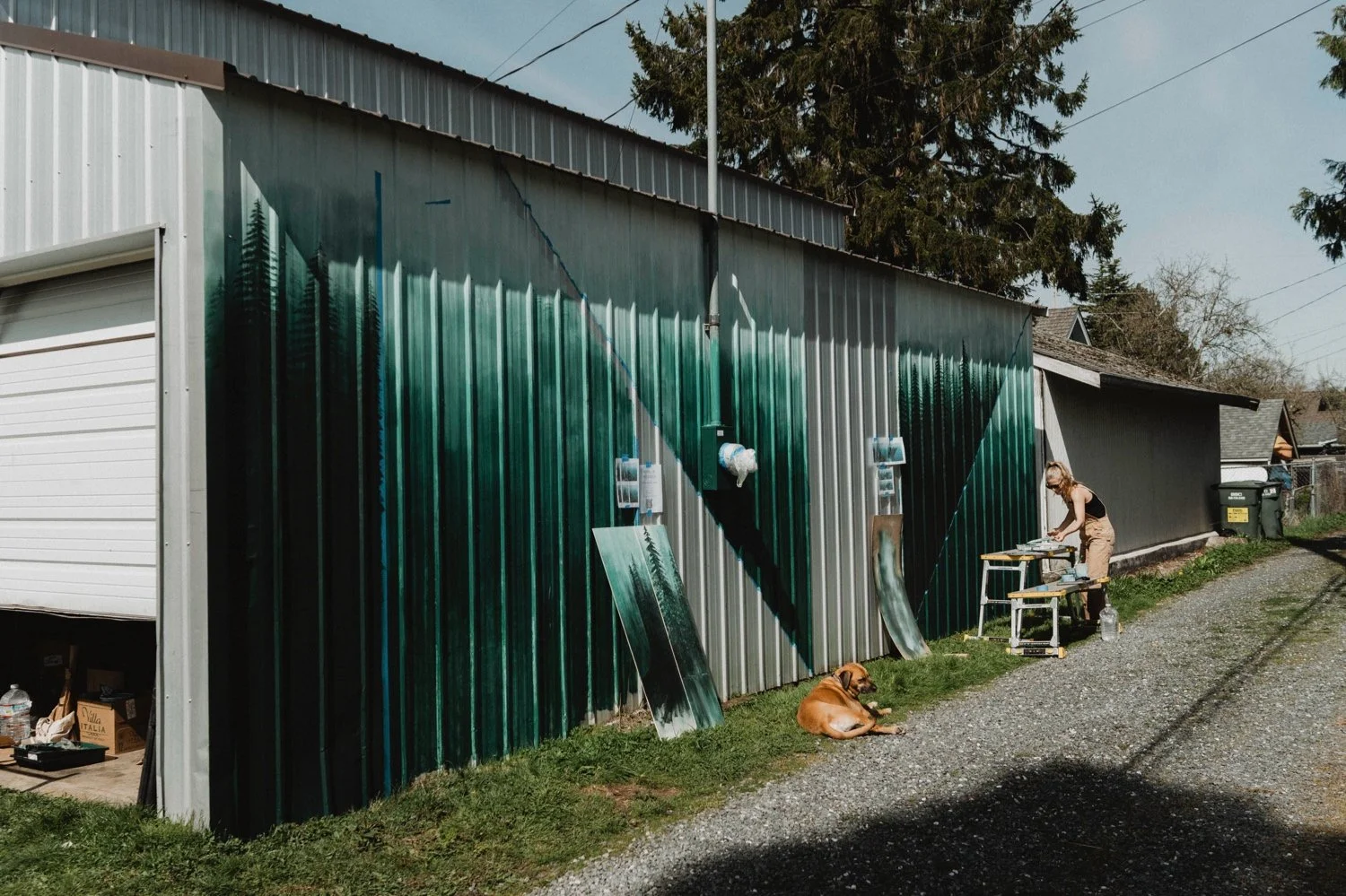
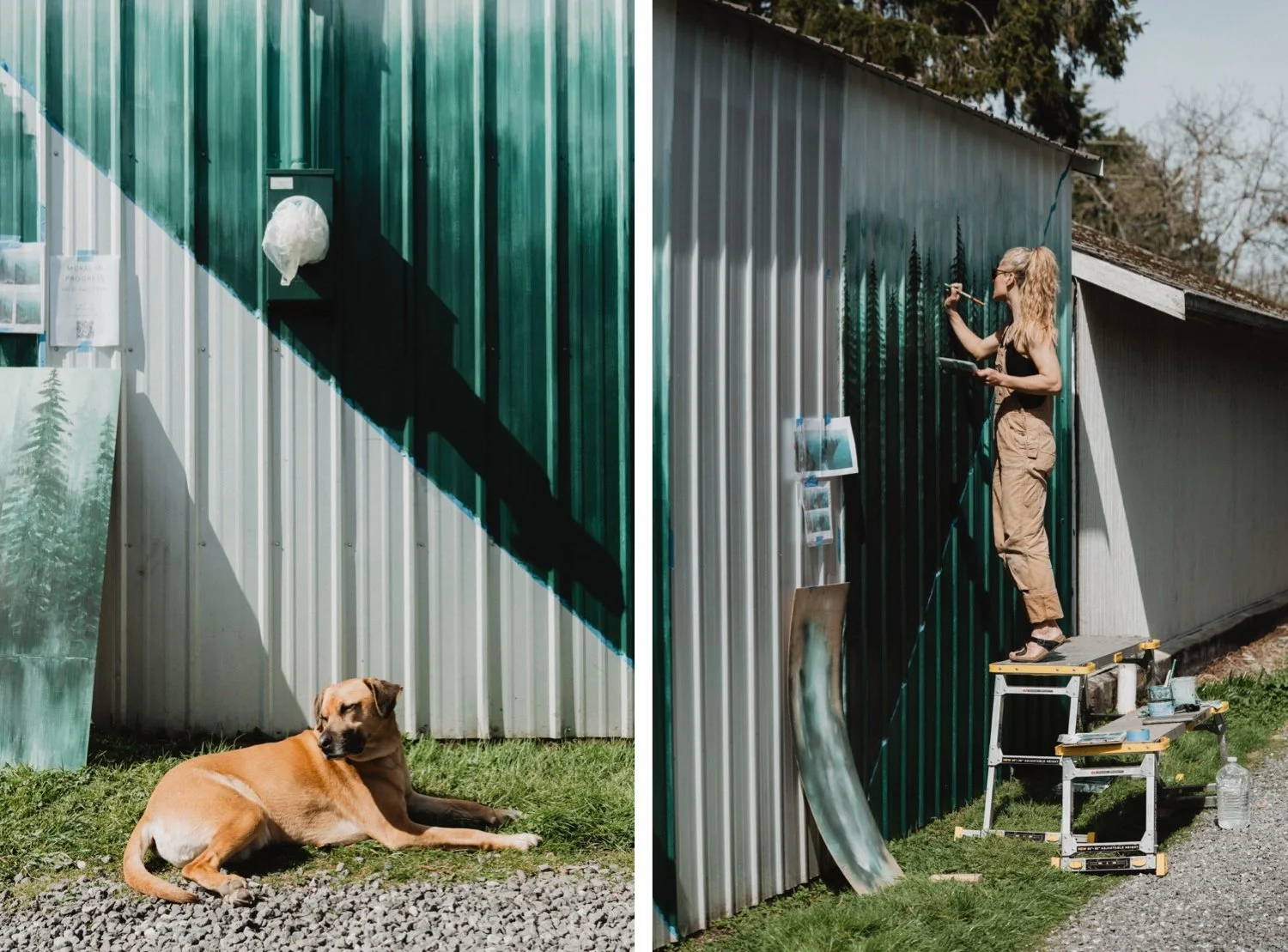
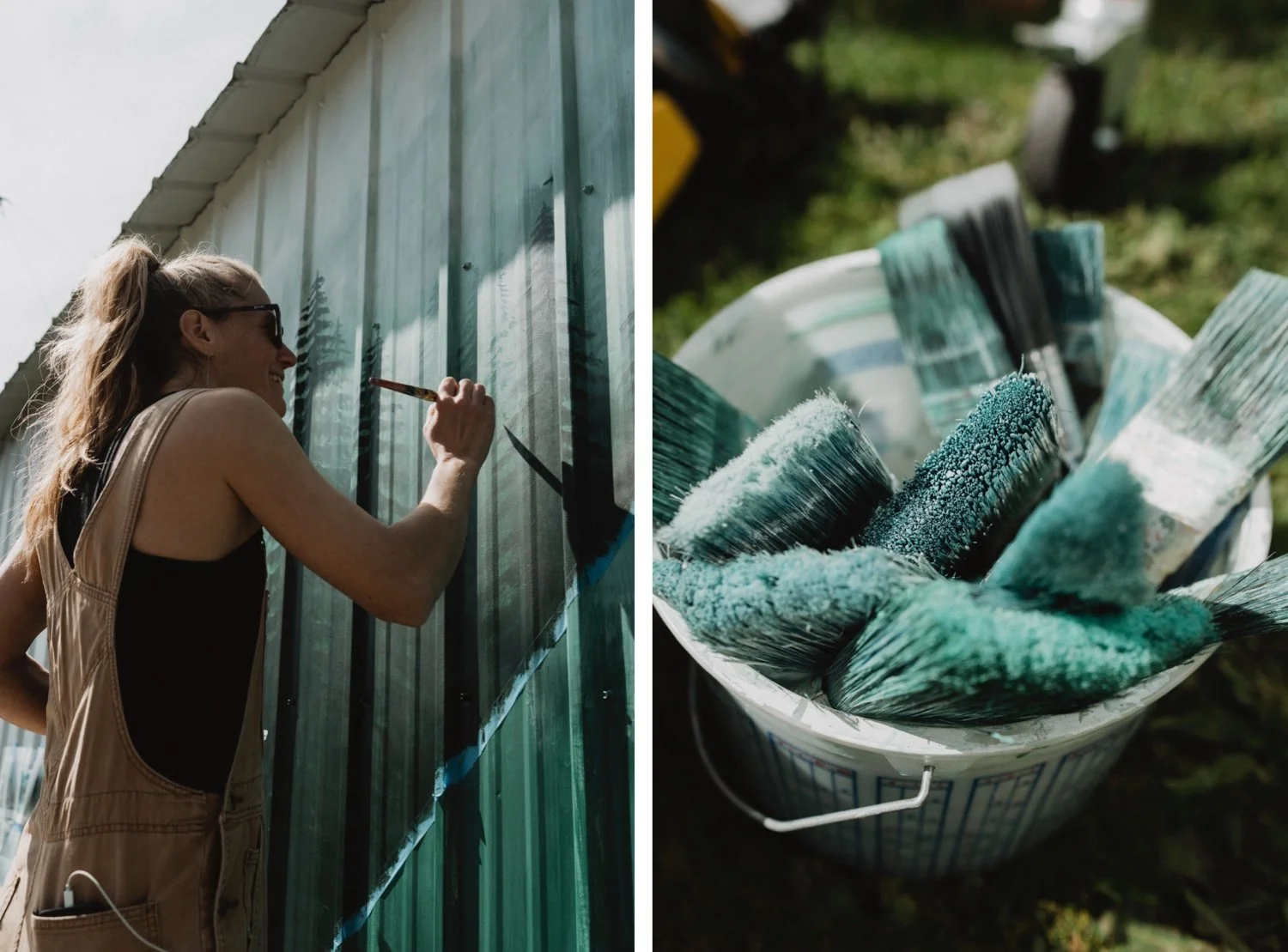
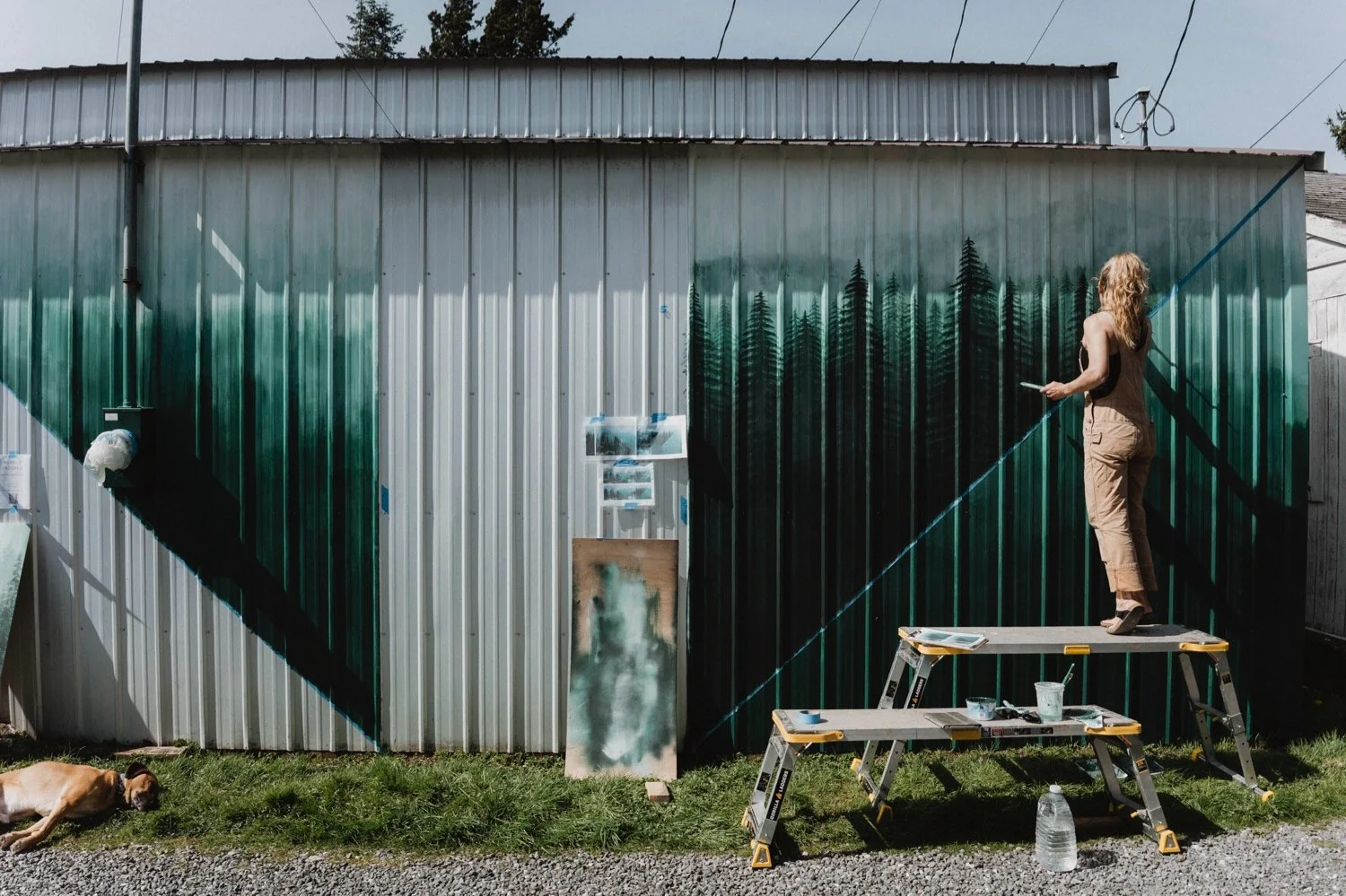
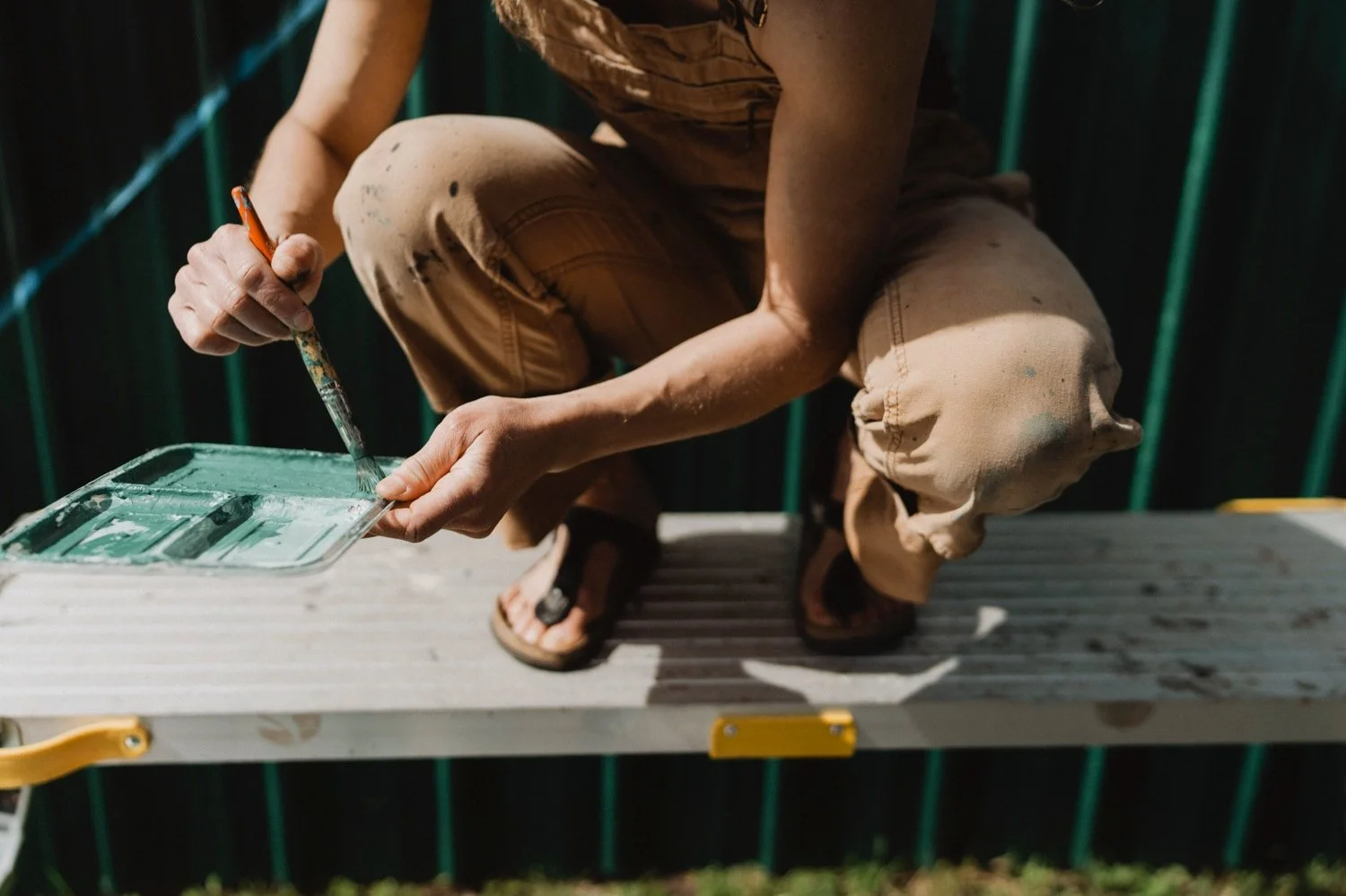
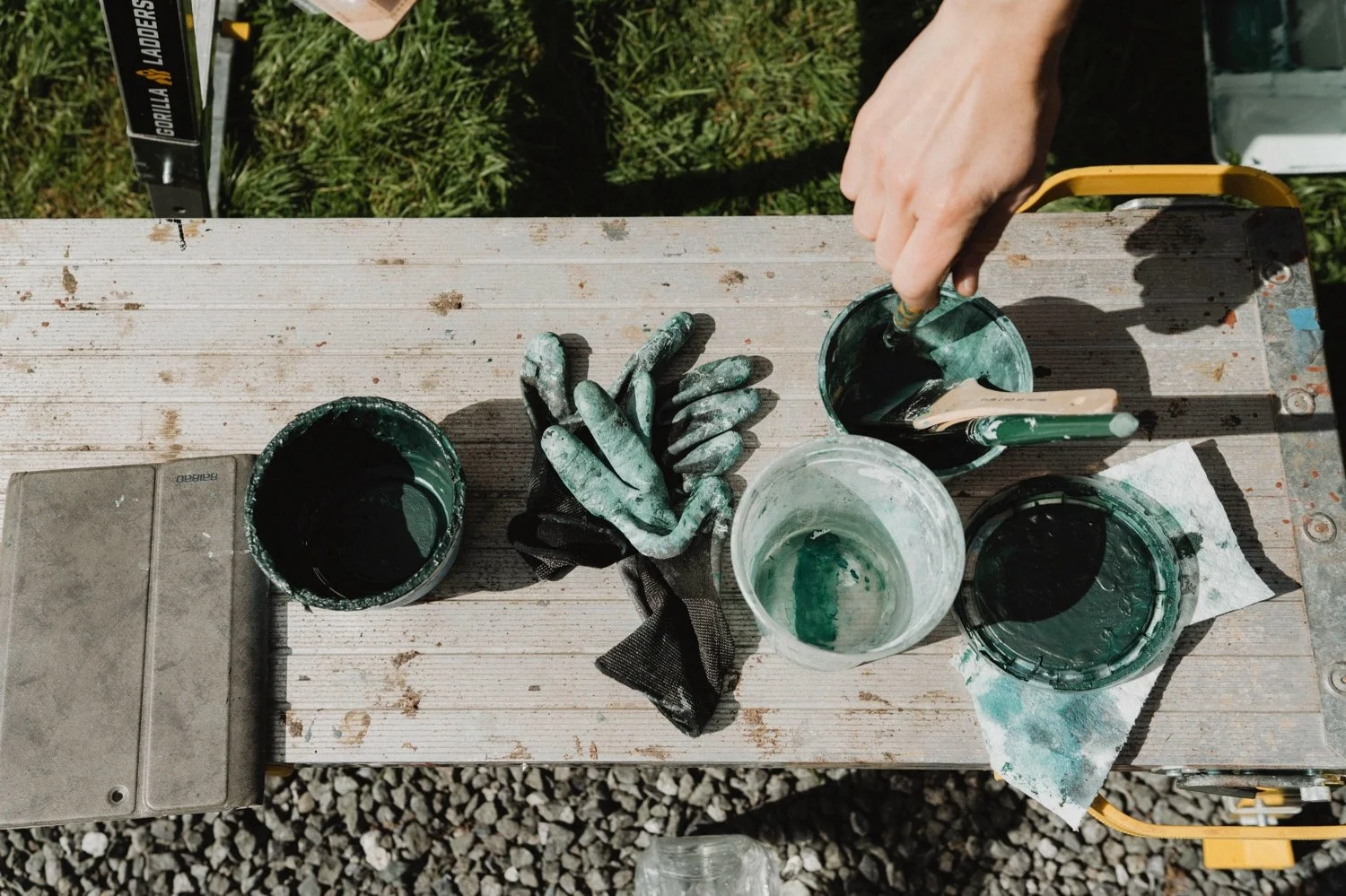
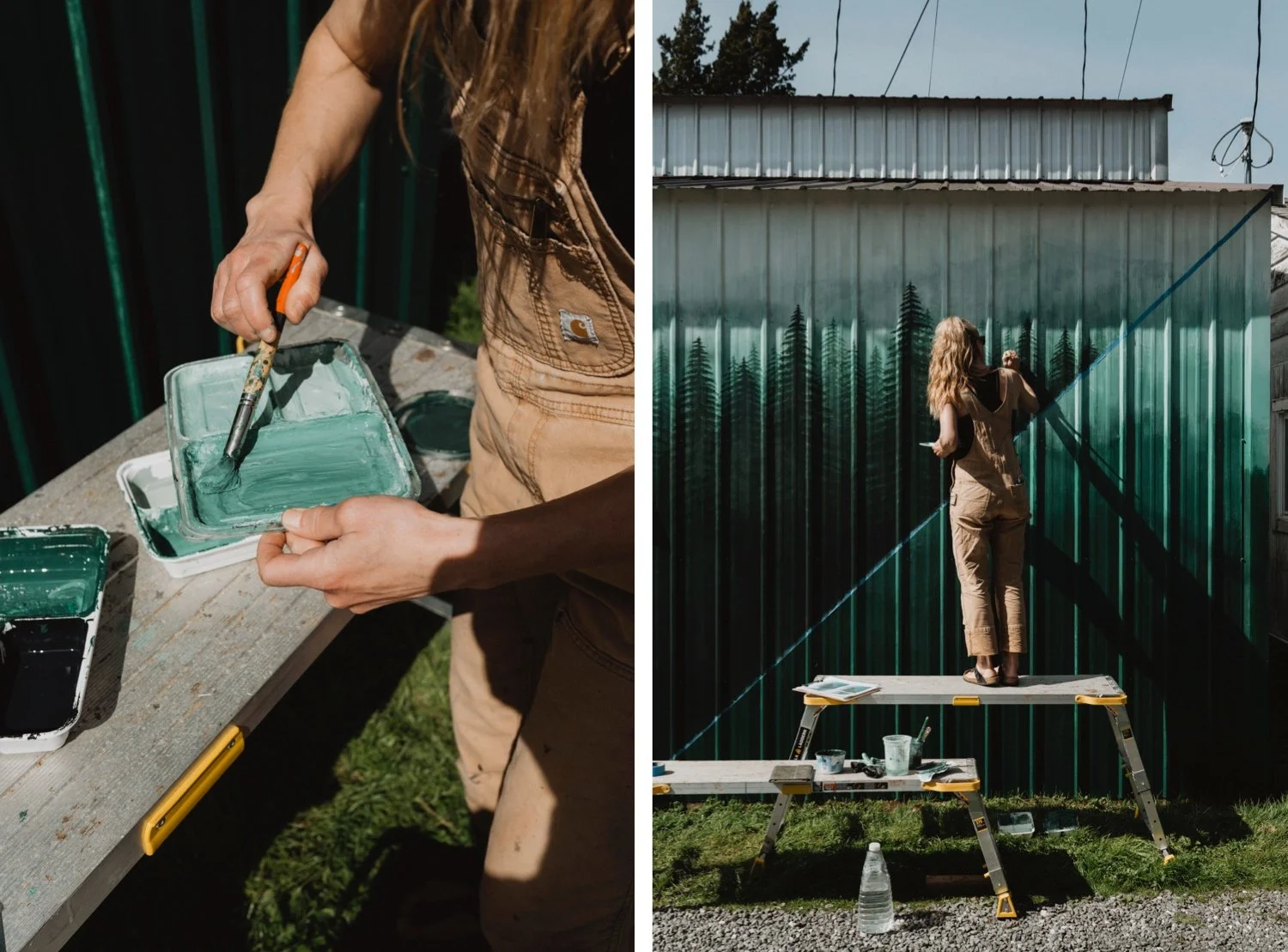
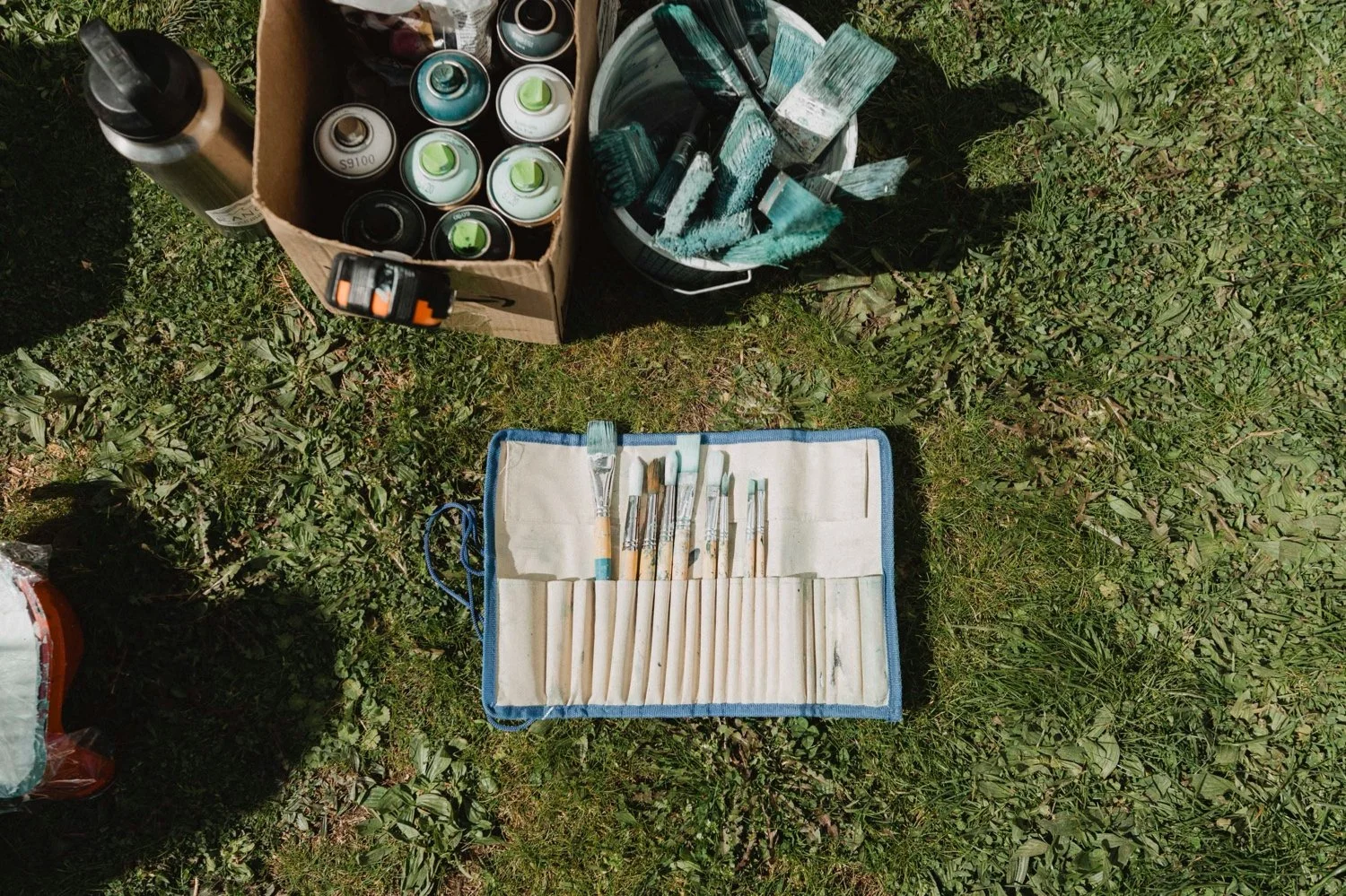
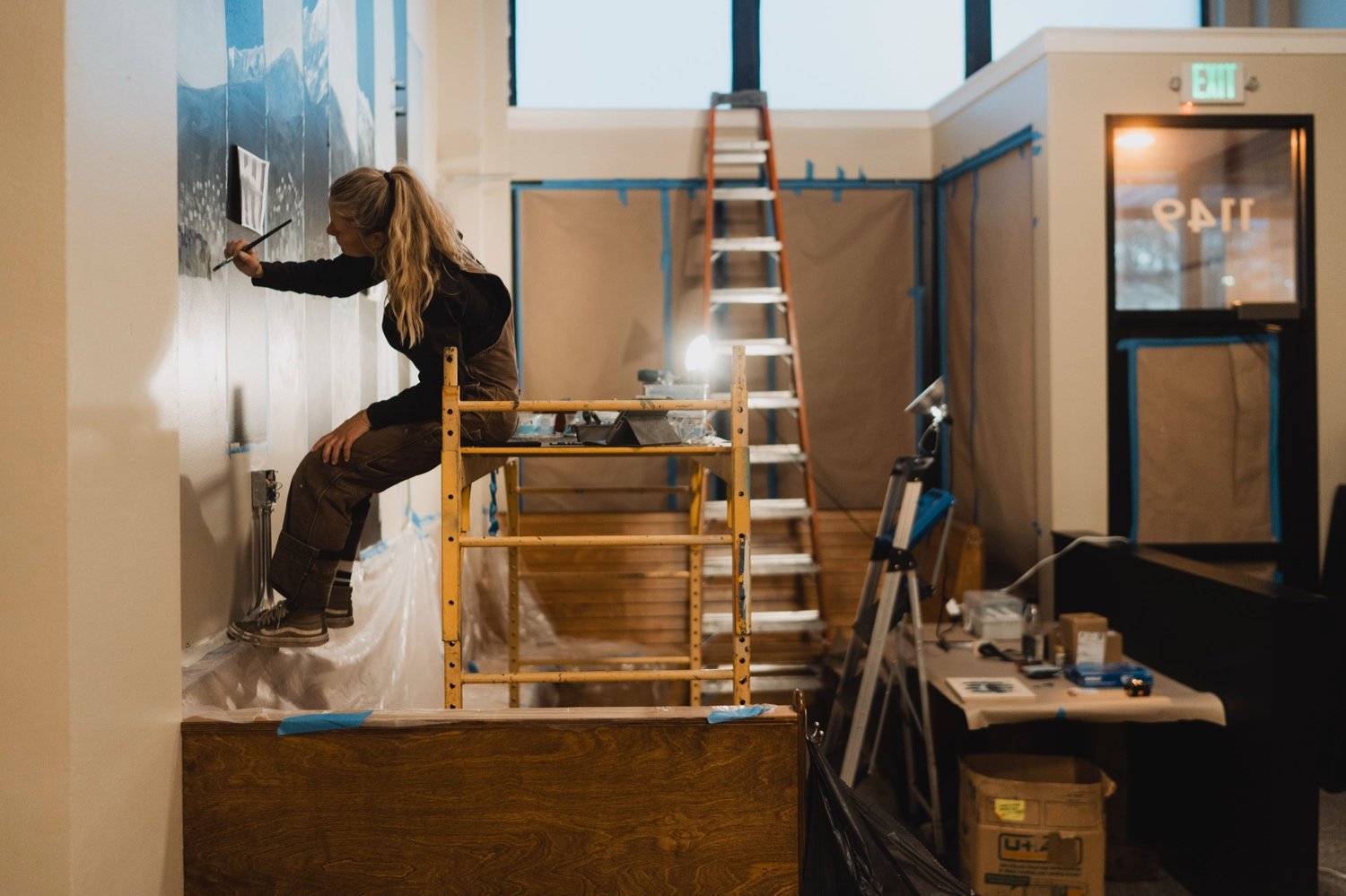
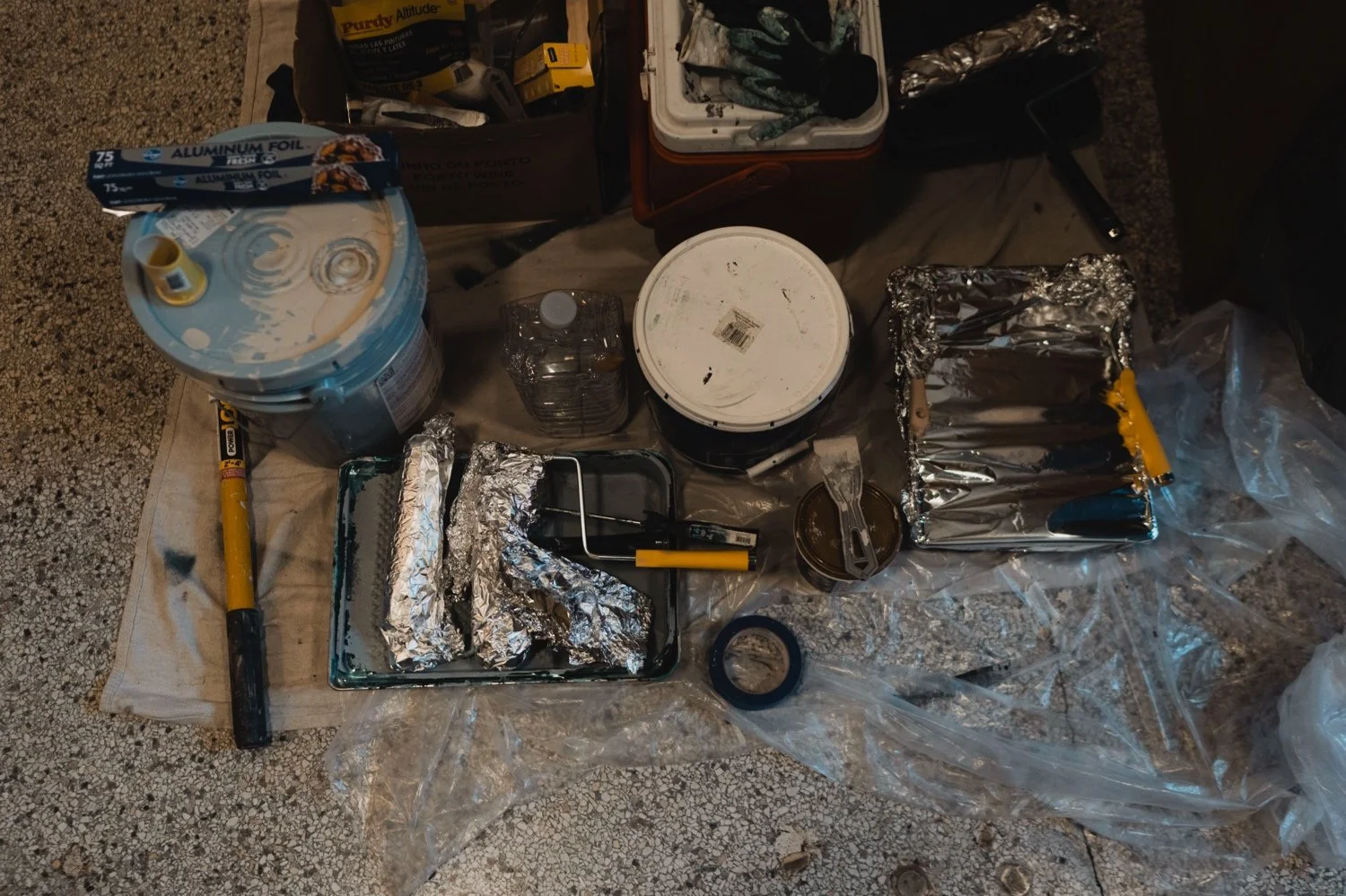
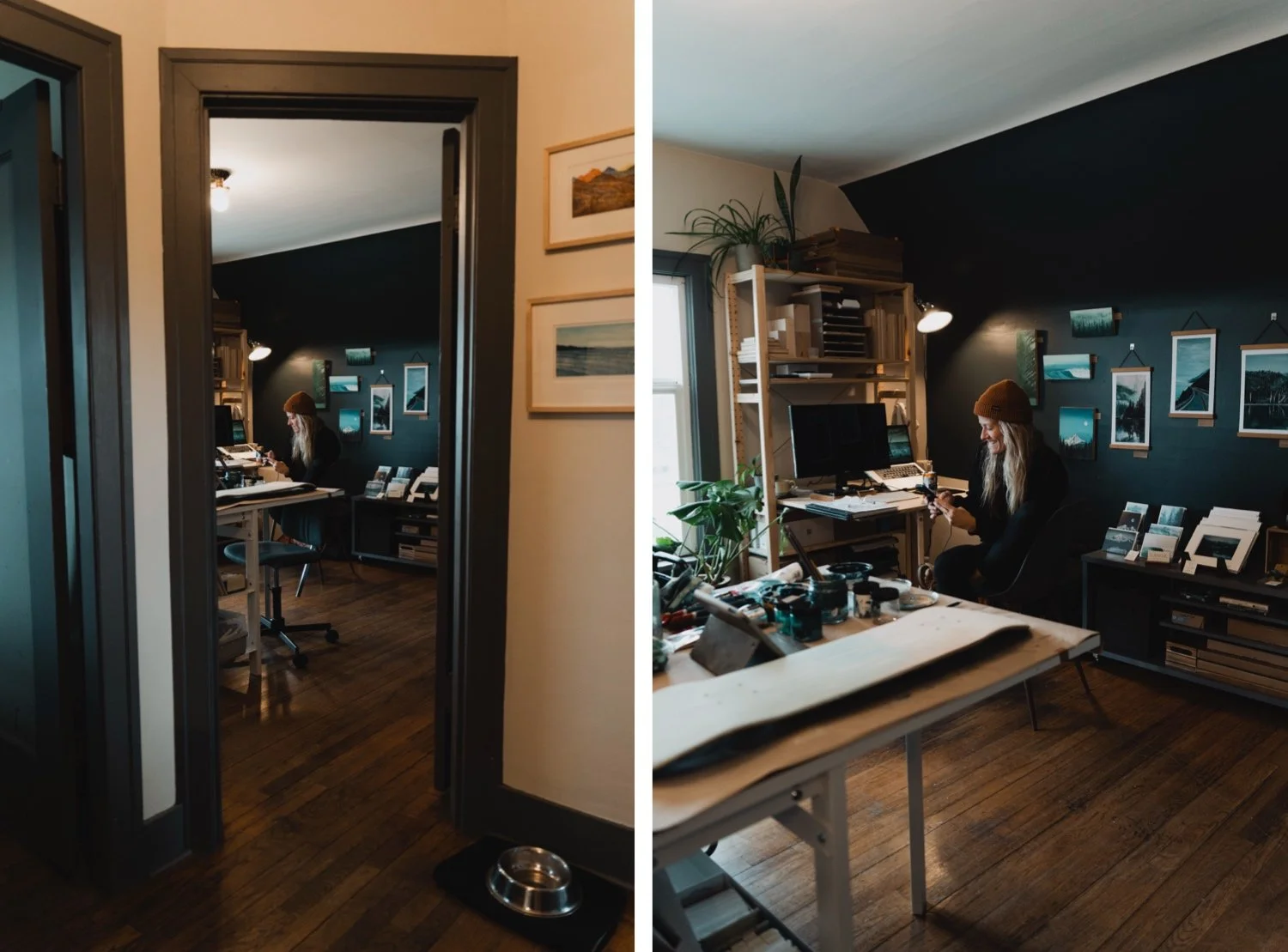
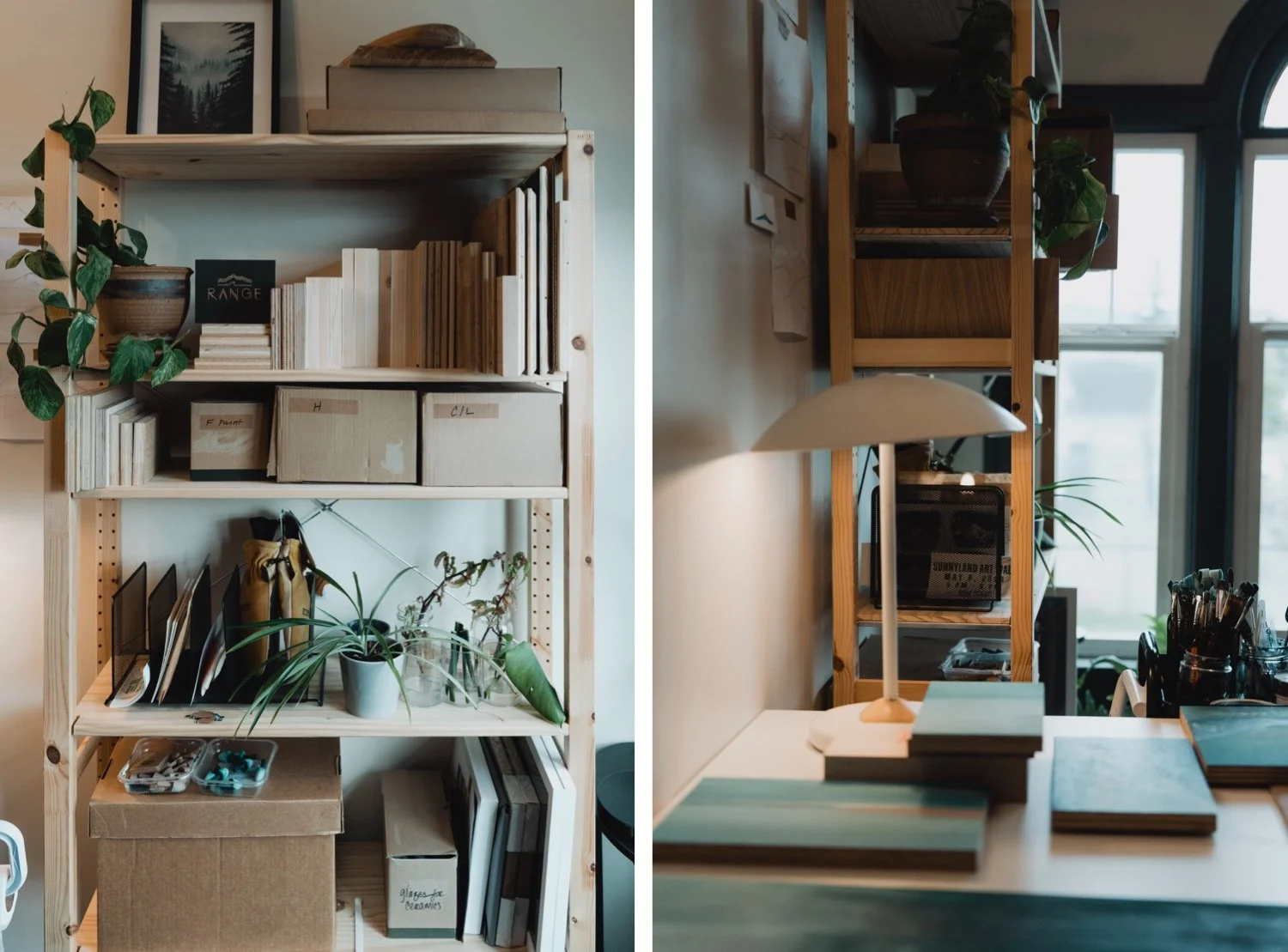
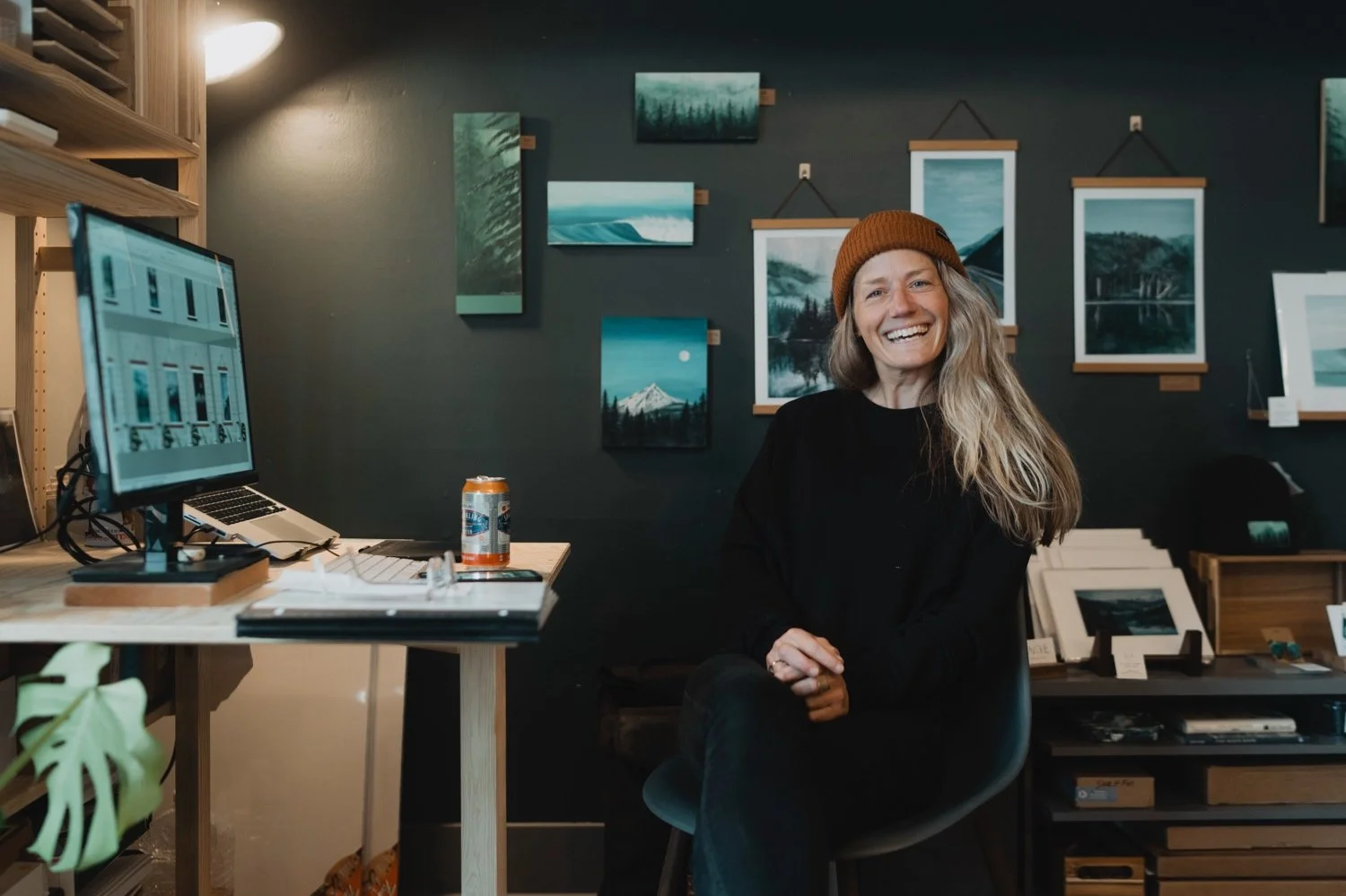
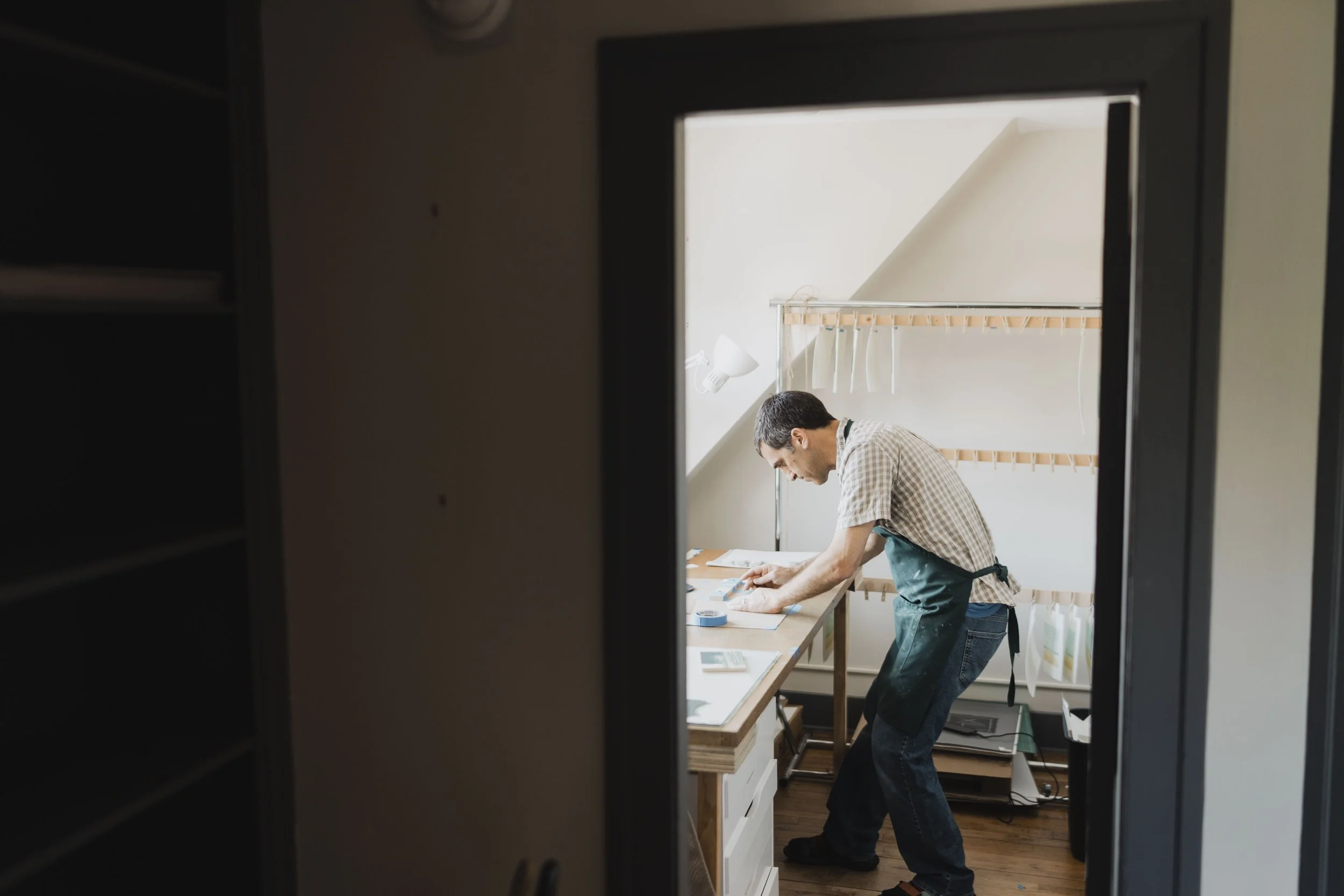
Okay, this building is the most amazing, my studio is inside Martini Mercantile, where three other artists have open studios, so people can walk in and see the creative process as it's happening. The studio is always changing depending on what I'm working on. One day I'm painting landscapes, the next I'm ironing clothes, and sometimes I'm just doing accounting. Sometimes people walk in and ask, "So... what exactly do you do here?" and honestly, it's a fair question. That's part of what I love about having an open studio, people get to see the whole process, not just the finished work. Prior to having an open studio I had done murals, so I think that has helped me be a lot more comfortable with this space and inviting people in during the creative process. One of the things I love most murals is that people get to see everything, not just the finished piece, but the entire process, including what I call the "messy middle," when nothing looks good yet. The difference is that murals come with extra challenges. You're dealing with weather, ladders, a van full of supplies, and sometimes weeks of painting in public spaces. In the studio, it's a little calmer. But whether I'm here or on a mural site, I love inviting people into the process and letting them see how the work comes to life.
What's your experience of being a self-employed full-time artist in Bellingham like?
It's been incredibly supportive. Honestly, I think Bellingham is a rare place when it comes to supporting artists. There are so many opportunities to show your work, whether that's in local coffee shops, restaurants or public spaces. The organization Paper Whale has done an amazing job creating opportunities for artists and helping build a more vibrant creative community. There are a lot of people here working hard to make art visible and accessible. For someone who wanted to become a full-time artist, I can't imagine a better place to do it. That said, it's not the easiest career path. You have to keep evolving, putting yourself out there, and finding new opportunities. But when you're able to make it work, it's incredibly rewarding.
Do you have short term, long term goals? Do you have projects you would love to do that you haven't done yet? Where do you want to be in a year or two or three years?
Okay, here we are five years in, and the business is growing, which is really exciting. I think this is the first time I’ve really started looking at it strategically and asking, how do I take this to the next level? I’ve gotten to a place where I’m sustaining this full-time through selling my art, doing markets, shows, and murals, which is amazing. Now I’m thinking about how to expand that. A big goal over the last few years has been getting my work outside of Washington, which has been really fun. I jokingly call it ‘art tour.’ I’ve been working on getting my work into more places, doing shows in Oregon and California, and eventually I’d love to make it out to the East Coast. Continuing to grow into more public art opportunities is also a huge goal of mine. Murals have been such a big part of my path, but I’m excited about what is next, moving beyond just painting walls and creating larger public art experiences and installations.
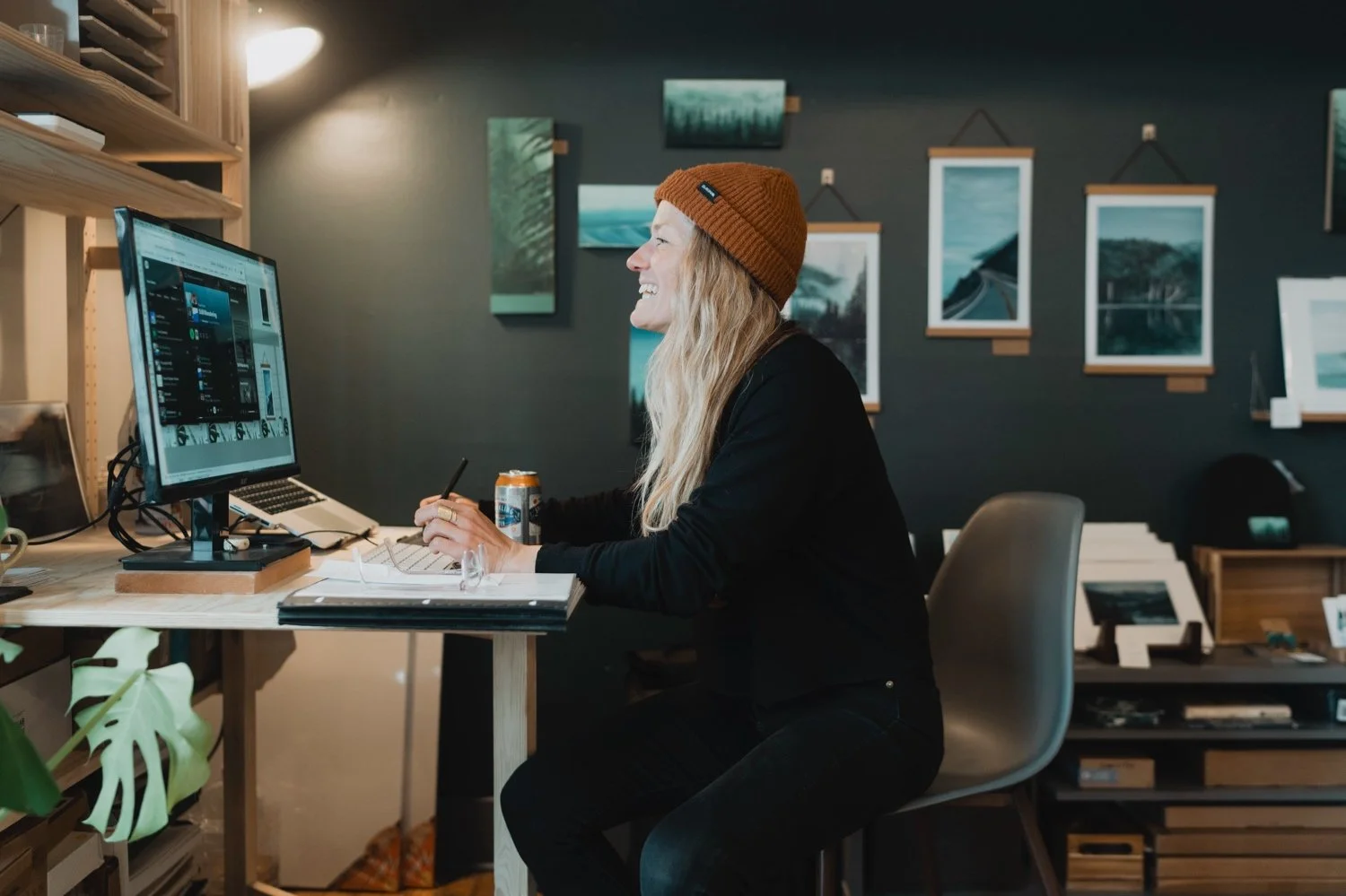
What’s on your playlist when you're creating?
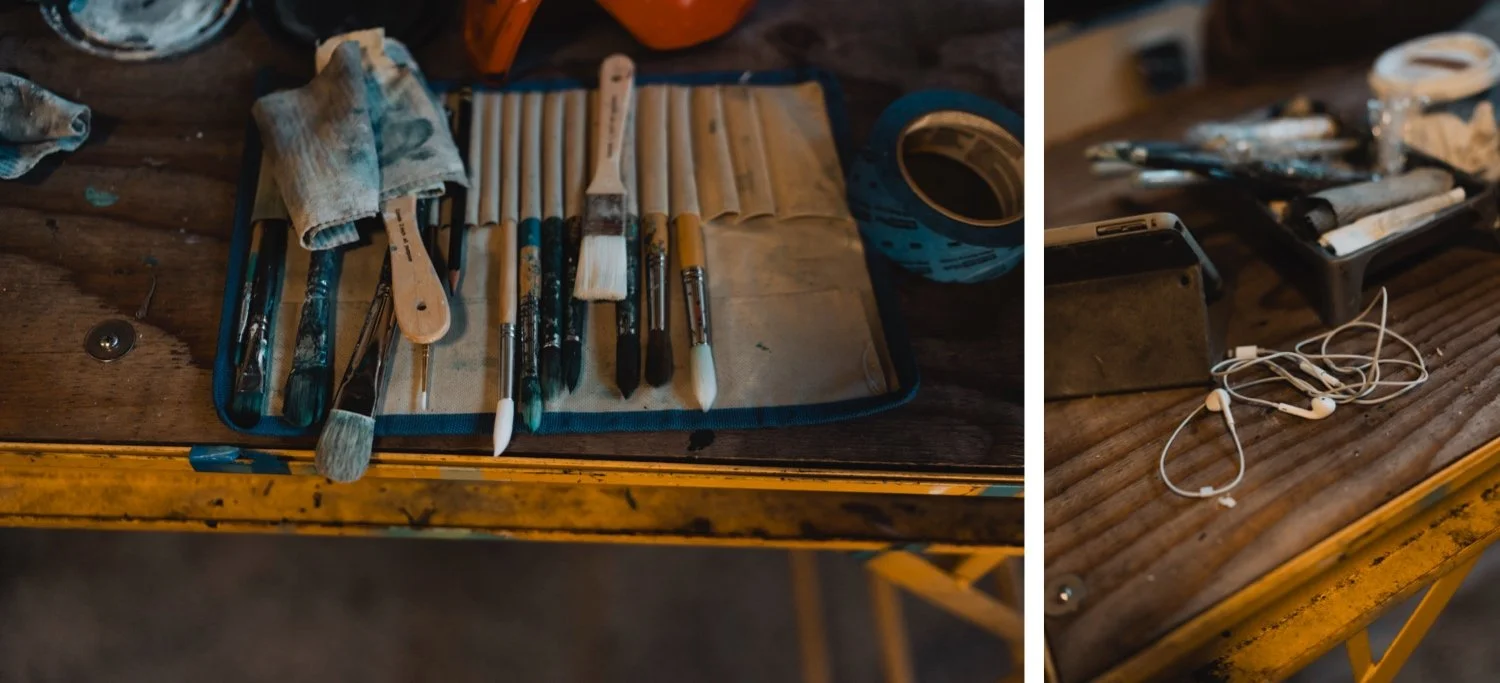
This is actually a really important part of my process. Every mural has its own playlist. There are definitely some classics that will always get me into a groove. Beyoncé is definitely getting played when I need a little extra energy, but usually, there’s a mood or feeling behind each mural. Sometimes the artwork dictates it, and sometimes it’s what I’m going through in that moment. One of my first big murals was on a bank’s drive-through, it was a huge step for me because it was very public. Normally, with a painting, if something isn’t working, I can paint over it and try again. But with this one, once it started, it was happening. There was no going back, people were going to see the entire process. I was also going through a really challenging time personally, so I was digging deep to find the confidence to trust myself and take on something that felt bigger than anything I’d done before. I actually didn’t listen to music during that whole mural. I listened to Michelle Obama’s book, Becoming, and it carried me through the entire process. It was exactly what I needed in that moment; it helped quiet the doubt, stay focused, and believe in myself. So sometimes it’s music, sometimes it’s an audiobook, but there’s always something that helps set the tone for the work.
What role does inspiration play in your work? Are you inspired easily? Do you have to look for inspiration when you're making new pieces?
I feel like inspiration is something I’m constantly surrounded by because so much of my work comes from being outside. I’m always taking photos when I’m in nature hiking, in the mountains, on the water, on road trips. I don’t really go anywhere without my camera. One of the early realizations I had in my painting career was that I’m actually a photographer as well as a painter. Not every photo is something that turns into a painting, some are just little moments where I’m like, “I need to remember this place.” But those moments become the library I pull from when I’m creating. I realized that photography was a huge part of being a landscape painter because what I’m trying to capture in my paintings is the feeling of being in that place. I feel really lucky that I get to create work inspired by a lifestyle I genuinely love. I think the way you experience the world naturally shapes who you are as an artist, and for me, being outside is a huge part of that.
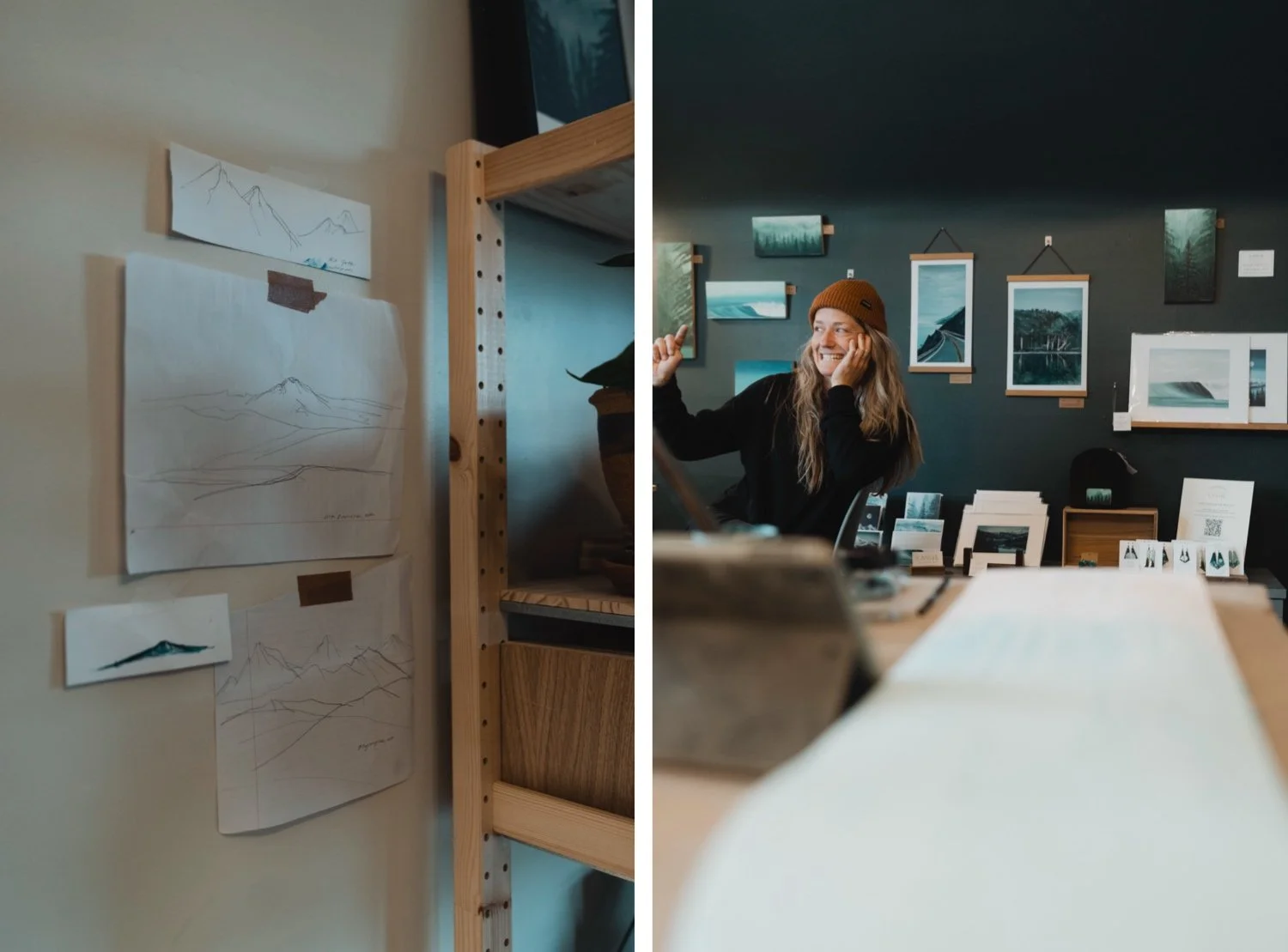
Did you grow up in a creative household? How has creativity shaped where you are now?
I’m really grateful that growing up, creativity was always encouraged. We had access to sewing machines, art supplies, and the freedom to make things. There have always painters, sewers, and creative people in my family. What’s been really cool is feeling like I’ve come full circle with my hand-painted clothing collection Murals in Motion. It feels like I’ve brought everything together - apparel design, sewing, art, murals and painting. I’m taking upcycled clothing, painting them in the same style of my murals, making them feel one-of–kind and fun. It’s been really exciting to see all those parts of my background come together.
Last question, what advice would you give to someone who is pursuing a career in art?
I think the biggest thing is to believe in yourself. If it’s your passion, people can feel that. The more you put your work out there and let people see it, the more people will connect with it and want to support it.
See more of Darcie’s work here:
more fun!
“I'm hopeful for more peaceful worlds, starting with more peaceful neighborhoods and communities”